All posts by Tarek Fayoumi…The Paterson of his Craft!

I am someone who strives to become a professional critic. I watch and review many movies. I view the eyes of movies as something as an art form. I have followed many critics over the years, but once I was thirteen I knew writing film reviews was going to be my passion. I learned from watching multiple episodes of Ebert And Roeper in my teen years, and then in middle school I began writing film reviews for a newspaper club. I am also an avid fan of the arts of Chicago including Theatre, Comedy, and music. Films, however, are my primary focus.

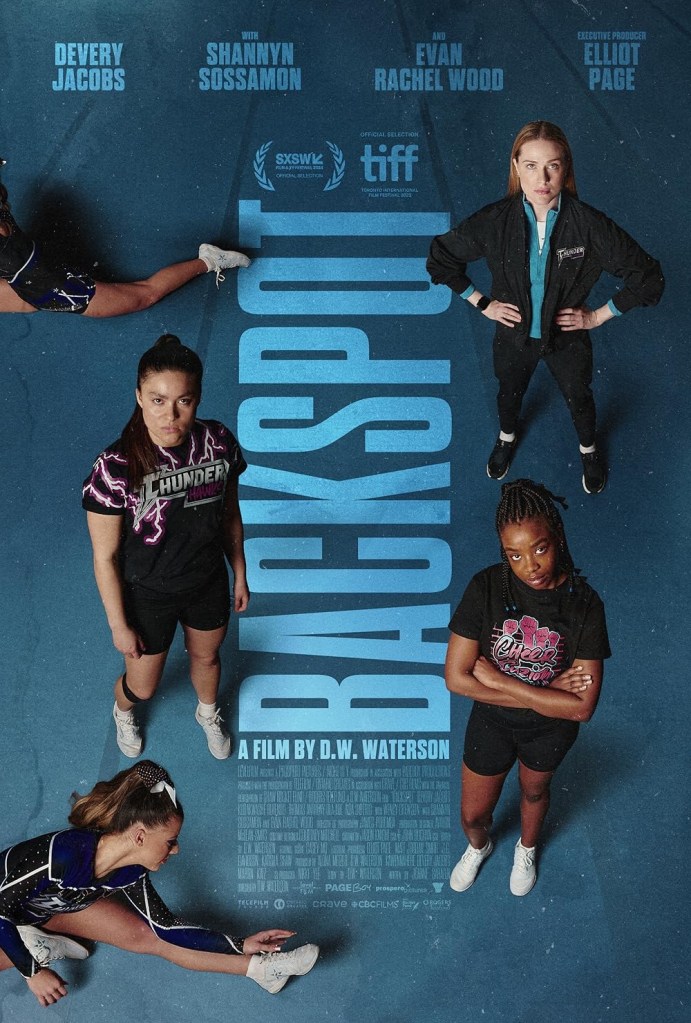
Backspot Review


In cheerleading, the one who helps with the bases of helping those get up on the flies and stunts is considered the “back spot.” The film is also titled Backspot. A sportsmanship film that thrives in its uniqueness and competitiveness. It captures the seriousness of a high school cheerleading team. It is a film about persistence. “Persistence” in focus and patience. Backspot is surreal in the tone of thinking competitively. Directed by D.W. Waterson, Backspot is the generations athletic film that younger audiences need today. Its clever track of remaining involved and not giving up is in the form of anticipation for a greater outcome.

The meaning of “greater outcome” is the efforts to give a fascination everything. I felt a heavy correlation to this aspect with Backspot. I was not an athlete in my high school days, I was a thespian of the theatricals. Even though that was not a sport it was one where each key moment of a performance counts just as much as one with athletics. Especially at the age of learning how to multi-task. One of the teammates works at a cinema on top of being on the cheerleading team. I worked in a cinema while doing my theatricals. Backspot is the true representation of multi-tasking for success and overcoming errors with a thorough and clear-headed mind.

The plot of the film is one solely focused on a cheerleader and her name is Riley (played by Devery Jacobs). Riley is one where cheerleading means everything to her, and it does as much for her two friends Amanda (played by Kudakwashe Rutendo) and Rachel (played by Noa DiBerto). Riley though, focuses all her energy on cheerleading alone. She puts cheerleading into every aspect of her mind. At the same time, she has that encouraging dynamic of friends between Amanda and Rachel where it comes as easy to overcome obstacles. This all changes when a new coach comes into the game. The new coach is Eileen, and she is played by Evan Rachel Wood. Eileen is a coach with a two-faced attitude where practice feels more anxiety-provoking for Rachel. Once Riley makes it to the high tier on the team, Backspot is a massive win for her. However, tension continues through the negative personality with Eileen’s coaching tactics.

The direction of making one proud is where Wood’s performance is surreal with strictness. There is a moment where she says, “It’s about what we do!” Eileen is not one for jokes, she is about the focus being only on winning and not letting any distraction come into play. She views any error as a form of foolishness and an excuse. There is also a moment where Eileen says, “This world is not kind to weak people!” The abusive and belittling words are what spiral the film of anxiousness for hopes for Riley to keep her determination. How is Riley mentally though?

Competitiveness is the layer of the underlying and strenuous activity—there is no stopping, only moving forward to perform better. Waterson’s style develops a vast presentation of the cheerleading team having doubts. Despite their turmoil of frustration, they move to find their routes to move forward. Backspot is keen on that pattern of falling and getting backrepeatedly. When one thrives accurately, everyone else does also. It is an honorable example of what persistence takes in the days of high school athletes.

Repetition and doing something until they are right is the vibe of brilliance in the sportsmanship sense in Backspot. The amount of joy for Riley, Amanda, and Rachel becomes anxious for a form of escape—they find themselves partying briefly in moments. Commonsense begins to hit a lacking point in their thinking. This form of direction is one where I felt the true stress of the film itself. The fact that sports and extra-curriculars can take a toll…especially when one is not feeling the fun and only the pressure of it. Eileen is belittling—she is always talking about improvements and barely shows any enthusiasm for encouragement.

A portrait of how there is brutality in being competitive. Riley’s overwhelmed state-of-mind gets to her. Her feelings of guilt and stressors do not matter to Eileen…only what can be accomplished. Tactics and all have their moments of breaking points, ultimately it is about not giving up. It continues down a positive path for glory. Three-and-a-half out of four stars for Backspot.
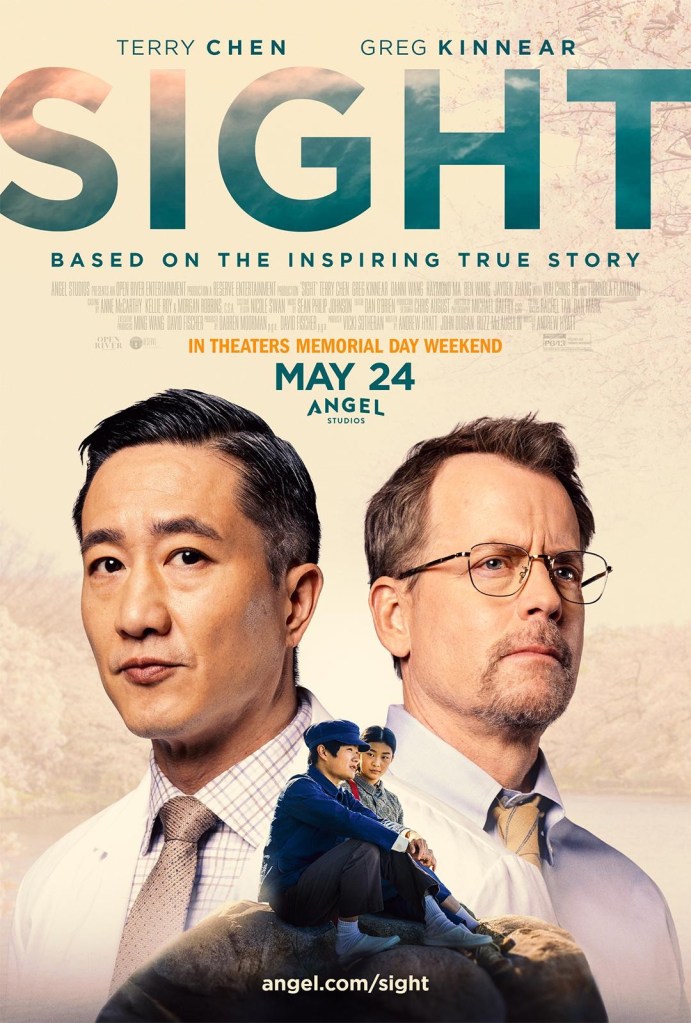
Sight Review


Empathy is faithful. There are lines between the levels of permanent, temporary, and risky. Sight is a film that parallels those values for a miracle. Written and directed by Andrew Hyatt, a revelation is one of realism. Sight is all about “realism” with monumental effects. The true story of Dr. Ming Wang provokes purpose in Sight. There is a broad and precise perspective. There are moments where the transitions struggle sometimes.

Terry Chen plays Dr. Ming Wang, and Greg Kinnear plays Dr Misha Bartnovsky. Ming is a Chinese Prodigy who grew up in China during the Cultural Revolution. Challenging events of Ming’s past had him around a blind individual. Ming found inspiration to restore people’s vision. His success has led him to become a world-renowned eye surgeon. His mentality is to the test. He is allowed to improve the vision of a young girl. Her name is Kajal (played by Mia Swaminathan). This procedure is risky. A young age means not much development.

What keeps coming to Ming’s mind is detrimental. Ming witnessed a horrific moment. Ming was a child. He was the witness of a stepmother blinding her adopted daughter. Sight’s writing finds its moments of shifting to the traumas of Ming repeatedly. It is thorough and faithful. The transitions between the present and the past just tended to throw me off in increments. It does give the notion that the procedure is risky for Kajal. With the help of Misha, Ming finds resilience in his research to create a miracle for those who are blind. 

Doing a procedure to change the view of life is presented with a surreal emotion in Sight. The thought of optimism is what is of importance. It is also an element that is a blur for Ming. With the human eye having many components to process, the complexity is mind-boggling. Can Ming create this miracle for Kajal?

The thought process of Ming is a layer of harrowing moments. He repeatedly thinks back to his past. He thinks about the time of his education, political tides, and the impact he has had on his own life. He feels that the past is the layer that can create an error in the procedure. Moving forward, he has a genuine heart.

There is a connection. There is also the sense that creating a permanent change for the better rises. Sight is a road of two directions. The first location is Ming and deep thought of his development. The second is the steps and the attention on the efforts to help Kajal gain her vision back. Sight soars with wonder. It leaves a mark of positive aspiration.

The center of creating enfranchisement dives into finding momentum poetically. The writing tries to over-examine moments. It thrives a heart of encouragement. The relationship between Ming and Misha (from the professional standpoint) creates that bind of medical studies. There are no results until a procedure is complete. Anxiousness of Sight has its eagerness as the moments of this task get closer.

My fascination with Sight is its context of persistence. Moments are blurred between transitioning (of the past and present), which creates the foundation of Ming’s successes. Ming dealt with political dynamics, but he fought to change lives. He does so by fixing the visions of his patients. When he does, they can see the many wonderful aspects of their own truly and indefinitely. Three out of four stars for Sight.

Wildcat Review


Written and directed by Ethan Hawke, Wildcat follows the true story of the writer Flannery O’Connor. Through the direction of Hawke, he casts his daughter Maya Hawke as O’Connor. It is an adaptation gearing on the real struggles of O’Connor boil. Artistry is divine in capturing verisimilitude. Wildcat soars with abundance as it searches for the talent of O’Connor to be recognized. It brings in the 1950s era with mental difficulty. It brings in the narrative of Maya’s voice as she battles her errors in her evolving writing days. The subtleness is superb. There is a reality that an in-depth invigoration precedes Wildcat.

The film begins with Flannery creating a story in her mind. From that point on, it goes to the reality that she is in. With facing rejections from her writing, the support around her is not hopeful. Her mother is Regina (played by Laura Linney). Regina tries to encourage Flannery to focus on other aspects of her life. Flannery’s writing is what brings meaning to herself. Her emptiness is sad and hard to bear. She is living in an era of many classes and segregation among races. She also is dealing with lupus. Her theme of writing is her life. 

Wildcat is breathtaking on Flannery to build her name. As her disease lingers, she only continues to form her creative mind. With some hopes for love, acceptance, and having a voice, Wildcat parallels all those values. The sense of Flannery in a blur is because of her window closing due to her disease. The narration continues through her moments of aches. Maya’s performance is revolutionary. Her portrayal of someone real delivers vast characterization. “Characterization” with constant thinking of connection. How though? Does Maya want to feel loved? Does Maya have other ambitions? Her disease and her voice are her focus.

My appreciation for Wildcat is its realism of encouragement. The “encouragement” is finding your voice. I try to find my voice as a critic every day. Flannery did her work. The theme of love serves as an important as well in Wildcat. Flannery finds herself in a moment with a man named Manley Pointer (played by Cooper Hoffman). At that moment, boundaries seemed blurred. Will Flannery be taken advantage of? Is that what Flannery wants? The cinematics of trial and error set the course of there being no defeat for Flannery to publish her story.

The vastness of moments is only the beginning of a triumphant story. When watching Maya perform as Flannery, the younger days of her father came to me. Ethan’s days in The Dead Poet’s Society and White Fang connect to his daughter. It does in the sense of having a gift and dealing with receiving little recognition. That is the inspiring factor of never quitting a craft of meaning.

Wildcat will enthrall its audience with a story of purpose. It keeps its momentum in keeping Flannery the focus of what she is striving for. Where does the story take its audience? Find out in Wildcat. Three-and-a-half out of four stars.