Category Archives: Film essays

Lynch/Oz on The Criterion Collection: A Deep Portrait of David Lynch’s fascination by the Wizard of Oz


“There is not a day that goes by where I don’t think of Wizard of Oz.”

-David Lynch

Written and directed by Alexandre O’Philippe, Lynch/Oz is now available on The Criterion Collection. I am a huge fan of the many films of David Lynch, as is Philippe. This surreal documentary opens with a vast introduction that opens with a fancy chandelier, a green curtain, a retro-microphone, and a stage. Philippe himself opens the film presenting himself as a Lynch-type character. With Philippe having tons of invigorations from Lynch, he has stated that he had watched Lynch’s Lost Highway so many times in a cinema. Philippe’s love for Lynch is portrayed truly by going deep into the cinema world of what makes the films of Lynch so enticing…it is Lynch’s love for the 1939 sensation The Wizard of Oz. A vast and in-depth rollercoaster ride of ambience that made me love and appreciate the films of Lynch so much more.

The film goes into chapters. In the chapters many in the industry are interviewed on their takes and their cinematic vibes from the perspective of Lynch. They all link back to The Wizard of Oz. The film dives deep into talking about how The Wizard of Ozwas a film of patterns—a film that only played on special opportunities before the era of advanced technologies that are around today. The correlation of The Wizard of Oz plays deeply into the films of Lynch…more than audiences think they know.

The masterpiece of art being defined in Lynch/Oz links back to the films of Lynch and The Wizard of Oz. The element and spoken word “transcendence” is one that is to have in mind throughout the entirety of the documentary. That is the key to the factors of the atmospheric dimensions with Lynch and his love for The Wizard of Oz. With the interview of Amy Nicholson, she goes deeply into elaborating of how wind is one of the elements where Lynch’s talent is heroic. I have seen this in the works of Lynch. Especially in Blue Velvet and Twin Peaks:Fire walk with Me—the levels of depths and foreshadowing in the aspects of cinematics feel the senses of art movement connected to The Wizard of Oz. Nicholson says, “Never be content to just take things at surface level,” and from my experience with Lynch/Oz, I realized the works of mind of Lynch are a much more thorough and an artistic language that is one of much more enriching value. When there is a curtain in a film by Lynch, it is an indicator for an entrance to a new world.

With the talks and all, the heights of surrealism and inspiring value only find more appreciation in Lynch/Oz. The different worlds of good and evil are what speaks to Lynch. When it comes to the evil witch in The Wizard of Oz, the real-world and nightmare world discussion is the vastest analysis of the film. The film has a chapter called Membranes and with Lynch that clearly means thinking or shifting of minds is one essential element of getting use to. From the perspective of Rodney Ascher, the good time of Blue Velvet is in tune with the happy times of The Wizard of Oz, and so does the bad times—the echoes of harsh occurrences prove accuracy of making dreams a reality in Lynch/Oz. What I love about the value of Lynch/Oz is its persistence. It does not only have its audience think of Lynch’s art…it also makes us think of the many films that expand horizons among reality. The two terms of importance of movie elements are “stimulation theory” and “layers of reality.” First, this is a theory where its audience is curious about which world is real. Second are influences shifting between worlds. Lynch is one who uses multiple realities—through having The Wizard of Oz in his head all the time.

The concept of dinging another world is where Lynch/Oz dives of faithful honesty in the films of Lynch. Brains of reality and fantasy prove a point of empathy in Lynch/Oz. The film also links back to many classics as connections. Films ranging from E.T., Where the Wild Things Are, and After Hours are connected to the discussions in Lynch/Oz. Lynch remains the central focus, but the inspiration also reminds society that fairytales and happy endings in movies transport audiences to moments to cherish within their hearts. Just like how Lynch admires The Wizard of Oz. Lynch/Oz leaves a dynamic of appreciation that is moving and alive. Four out of four stars for Lynch/Oz.
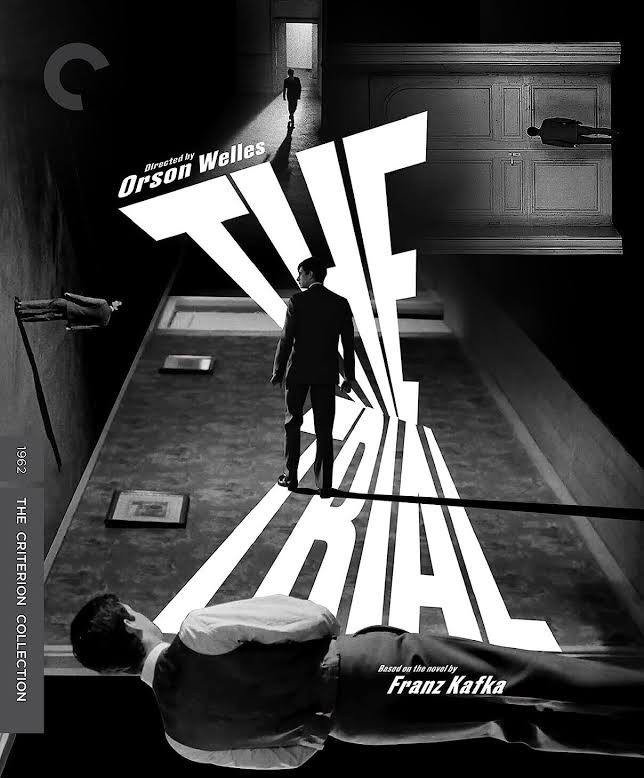
The Trial on The Criterion Collection: A cinematic masterpiece from Orson Welles


The 1962 classic The Trial is one of the most classic thrillers by Orson Welles. It is coming to the Criterion Collection September 19th. STUDIO CANAL and the Cinematheque Francaise took the steps to restore The Trial. Before this movie made it to the Criterion Collection, it had a 2015 2K restoration. There was also a restored DVD edition released in 2000. The restoration of The Trial is vivid with historic and cinematic grandeur. The essay (which comes with the Criterion version) goes in-depth about Welles’s fascination with the film and explains how The Trial was his special project filled with realism and faithfulness.The film is based on the novel by Franz Kafka, but Welles madeThe Trial a masterpiece. Welles sacrificed for The Trial, and it is seen through the Criterion Collection’s restoration of this invigorating story of suspense and deceit.

The reason that Welles is the hero of The Trial is because Kafka would not finish the writing of his projects. Both were visionaries but had different approaches. Welles was the artist of visuals, and Kafka was the creator of words. Kafka had an issue with committing to his craft. Welles committed to his craft but also had unfinished projects but fortunately he was able to reach completion with The Trial. To this day, the film has symbolic value due to its surreal characteristics.

The Trial focuses on Josef K. (played by Anthony Perkins) andbegins in the setting of his apartment. His morning begins with police inspectors informing him that he has been arrested. The police do not tell him why and therefore Josef assumes that maybe the conflict relates to his landlord, Mrs. Grubach (played by Madeleine Robinson) or his neighbor Marika Burstner (played by Jeanne Moreau). Josef keeps trying to explain his point of view to the authorities, but they continue to insist that Joe is the one in trouble. The black and white cinematography is effective in creating a pensive atmosphere as the life of Josef sees more darkness during the days his legal issues continue to follow him.

There are hidden underlying stressors in The Trial because Josef realizes those who try to help him may not be as honest either. With Josef’s career as a departmental assistant at a well-known company, his stress only gets worse. Perkins’ performance is where The Trial stands out as an essential classic in terms of dramatic character development in a very poetic film.

The film’s definition of trust is seen played out through the actions of Josef. His personal puzzle which involves the people around him paint a picture of how viewers think as they watch The Trial. Josef’s Uncle Max (played by Max Haufler) comes in to help. He helps Josef find his advocate, Albert Hastler (played by the legendary Orson Welles). Then there is the advocate’s mistress, Leni (played by Romy Schneider). There is also Hilda (played by Elsa Martinelli), the wife of one of the commission guards. Finally, there is Irmie (played by Naydra Shore), Josef’s cousin. Each person is someone that Josef must choose whether to trust. Some can help him put the puzzle together to find peace. Some betray him. Josef is still not told why he is under arrest. In the end, he must choose for himself how to put the strange and shady puzzle together to prove he is innocent.

The Criterion Collection’s restoration had amazing authenticity. My head was spinning with questions as I became hooked on the grandeur of this cinematic adventure. Is Josef’s help really of help? Is Josef’s case a growing conspiracy of unknowns? Is there more than meets the eye in the revelations of The Trial? This restoration offers a clearer and more faithful portrait of Josef’s Kafkaesque nightmare that is never-ending and triumphant. The Trial from the Criterion Collection is historic Welles at its finest. Four out of four stars.

Select Pix Critics Classics at Classic Cinemas Elk Grove: Clue, The Karate kid, and Terminator 2: Judgment Day


Critics Classics is presented by the Chicago Film Critics Association and takes place the first Wednesday of the month throughout the year. The screenings take place at Classic Cinemas in Elk Grove Village where they screen a variety of classics during matinees and evening screenings. After the evening screenings, the cinematic excitement is elevated thanksto a discussion led by a critic from the Chicago Film Critics Association. I have been fortunate my schedule has allowed me to attend the last three Critics Classics Screenings. Each movie experience followed by the discussion, has been cinematically enticing.

The first recent screening was the 1985 classic Clue. This mystery has humor, and the classic attitude of the characterizations are always witty and joyful. Watching this movie again was a hilarious and thought-provoking experience. In true murder mystery style, there are many pieces to the puzzle. The most invigorating part, however, was learning more from the discussion with the critics. I learned that there were many different endings to the movie. In fact, some formats of the film had different endings, and some never made changes. The theory of the changes in Clue made the film extremely entertaining and provided an enjoyable revisit to my early era of cinematic appreciation.

The second experience was the 1984 classic, The Karate Kid. For fans who love the series Cobra Kai, this movie offered a real treat. Revisiting the film made me realize why Cobra Kai followed diverse approaches in its series. What was even more interesting to me was learning from the discussion about the variety of approaches used in casting for the film. I also valued learning about the cultural side to discipline explored in the movie. Ultimately, the fact that this film experience reminds its young audience to find a positive inspiration in order to help overcome their struggles impacted me most.

The third (and the most crowded and nostalgic) was the 1991 classic, Terminator 2: Judgment Day. This movie made me feel I was experiencing something new for the very first time. I forgot about how this sequel to the franchise took Terminator to a whole new level. The crowd was really into the movie, and everyone knew the quotes which made it a true jam for Terminator fans. The discussion on the film’s budget, James Cameron’s directing techniques, and the in-depth use of technology were all captivating. Terminator 2: Judgment Day was a rollercoaster ride for cinema enthusiasts and critics like me.

The Select Pix Critics Classics at Elk Grove is a monthly experience that I do my best to attend. It keeps me in me in my cinematic mindset and never disappoints. If it’s a night where I do not have a press screening it is always a nice escape. I highly recommend other film lovers check their calendars and try to attend. There are many more classic events with discussions ahead. Hope to see you there!