Category Archives: Film reviews

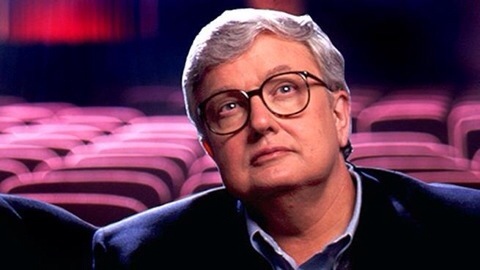
“Life Itself” Review By Tarek Fayoumi


20140716-142318-51798333.jpg

“Life Itself” is about a film critic that put so much effort into his film criticism to help people appreciate film as an art form. That man is Roger Ebert, he was a journalist since the age of fifteen, he got a job as a film critic, and became the biggest names of film critics in history. His criticism may have been outspoken often: since he was an only child, he was use to getting his way.

When Gene Siskel teamed up with Ebert for reviewing films, we see how both guys were different with film criticism. Ebert was all about the actual experience of the movie. I remember one time they were doing a segment on how to review films. He stated that if you give a movie a bad review, you need to know that your reader is going to read your review and know that they would like to see that movie. From this, Ebert taught many of us that there is no point in being extremely negative about a film to leave people feeling there is no reason they would want to see a certain film whatsoever. With Siskel, he liked to basically do his reviews moderate style and do it as if it was a current event to grab his readers attention. From this, I realized that Siskel was a bit more laid back than Roger, but that Roger may have been opinionated but his words made sense, just in a more negative tone at times.

James is able to keep his attention of important aspects of both critics to help viewers understand what they captivated Siskel and Ebert. I never knew that Ebert was not a TV person in the beginning compared to Siskel. Also I did not know that Ebert had to learn writing for TV before doing the show. No wonder why earlier on his TV segments, his talking seemed off, shy, or rushed.

Steve James’ film has the mellow-tone quality of how Ebert’s life was once he found out he had thyroid cancer. That is something he de does well with. We see Ebert’s motivation, his love of his life Chaz Ebert, and above all…how he wanted his voice to be heard when it came to the subject of movies.

The film sprints through two hours of mesmerizing interviews with friends, family, and celebrities. It makes a story that is not thorough to be a masterpiece. As Ebert once said, “No good movie is too long and no bad movie is short enough.” The length of the film is just right. The reason for the two hours of the film is because of how viewers have the opportunity to experience the life he lived. James made what he makes best was to prove that Life was, “The only thing that Roger loved more than movies.”

Dawn of The Planet of the Apes Review


dawn-planet-apes-new-release-date

“Dawn of the Planet of The Apes” is a daring film!

It is a great summer blockbuster, with great cinematography and captivating stunts that are similar to “Rise of the Planet of The Apes.” The technical aspects fits it. Cinematography: done by Michael Seresin (who did cinematography for “Midnight Express” (1978), and “Harry Potter and the Prisoner of Azkaban” (2004)). Editing: done by William Hoy (who did the editing for “I Robot” (2004), “300” (2007), and “Watchmen” (2009)) and is also done by Stan Stalfas (who did the editing for “Chernoby Diareis” (2012), and basically edited a bunch of TV shows).

Director Matt Reeves does a perfect continuation after “Rise of The Planet of the Apes” which released in 2011. in the beginning, the opening drags a little. It opens more with us viewers getting an idea of how the apes live their lives and the sign language they use to get around, given that most of them do not quite talk yet except Caesar (their leader and played by Andy Serkis who was brilliant as Gollum in “The Lord of the Rings Trilogy).

The opening introduces us to the corrupt world of human-life and how the apes live in it. Malcolm (Jason Clarke) is a man trying to generate electricity in New Orleans, Louisiana (the city where everyone is in). The problem is the growing nation has been evolved by apes and led by Caesar. The apes feel that human survivors are a threat of the devastating virus (unexplained) that was released a decade before everything turned to a disaster.

Flash forward with the friendship between Caesar and Koba (Toby Kebbell), where Caesar helped Koba break-free from the prison they were held in, in “Rise of the Planet of the Apes.” As Caesar starts to get along with the humans, Koba despises humans and begins to hate Caesar for it. For Koba to get his way and put humans at harm (which is what he enjoys doing), he gets acquainted with humans negatively to learn how to use their weaponry and kill them. This builds tension and soon builds a war between humans and apes, and apes who have been betrayed by other apes.

“Apes don’t want war!” Apparently, that statement is what causes anarchy between Koba and Caesar. As I watched “Planet of the Apes” this statement was what had me captivated, because most of the time in end-of-the-world films, it is started out with a conflict happening, and then boom war. With Caesar and Koba, Koba corrupts their friendship as he says, “Caesar loves humans more than apes,” and that is not all entirely true, but Caesar is quite aware that humans can also do good for the world and provide a proper home if everyone gets along.

This film is by far…a great summer blast. has its moments that dragged a bit but at moments of action it definitely blows you out of the water with apes flying everywhere and shooting machine guns. Literally…it is the whole bam, bam, bam, concept that you do not want to end. Three stars.

Film Phonetic Experience: After Hours Film Society


Image

For years now, I have watched many films and have thought about how they can be enjoyed as an art form. Being a fan of film critic Roger Ebert for years, I have always realized he had a unique style of film criticism. As he once said, “No good movie is too long and no bad movie is short enough,” I became hooked with watching many of his top films and started to write my own movie reviews. As I entered a course called Living World of Film (an English film course), my doors opened with people that have the same or similar tastes in movies.


At age twenty, I was introduced to After Hours Film Society. I went to the Tivoli Theater in the heart of Downers Grove, and became hooked to attending the screenings at After Hours Film Society. The purpose of it is to view independent or for foreign films, have some coffee and cookies (after the film), and then have a discussion about whichever films was viewed. When I participated in the discussions, my opinions on movies expanded.


What makes After Hours Film Society great is connecting the films that are viewed to how it relates to the society we live in. when the foreign film, The Hunt was viewed, I was haunted, but also amazed. The film is about a teacher in Sweden who gets in a bunch of trouble, because a lie was told about him. That lie is a small child claiming he is a pedophile. What captivated me though, was how the audience shared their similar or same experiences with the issue in the film. That creates a place of honesty on how movies do a brilliant job of showing the world we live in.


Like I said, Ebert taught many people how to appreciate films as an art form. After Hours Film Society provides that aspect very well, you feel you just cannot miss a screening. It is a joy in many aspects, and has been like a second home to me.


After Hours Film Society has been an honor to be a part of. The people that I share interests with has been an experience, and I enjoy any aspect that is talked about to shape me up as a better film critic.