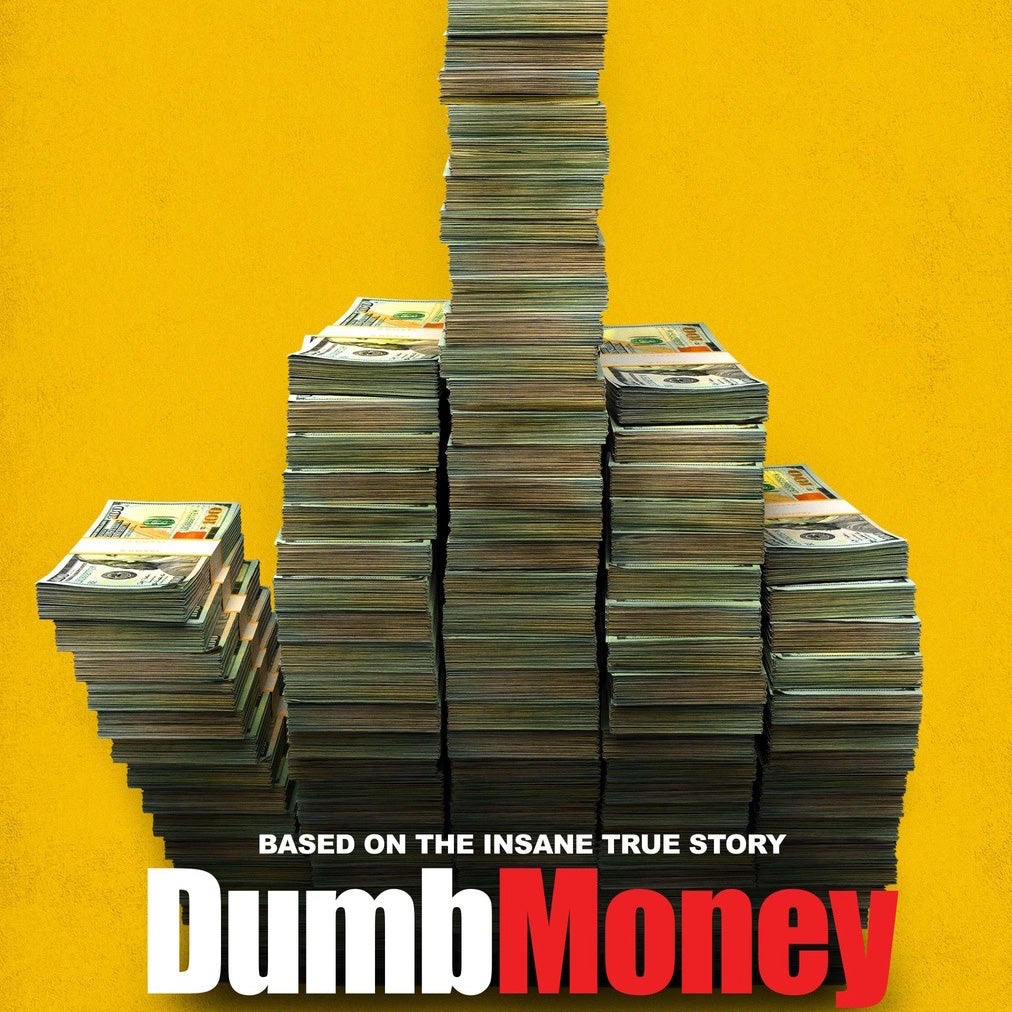
Dumb Money Review


In this post-covid era there are still the ups and downs of the stock market, and the many curiosities of Wall Street. Dumb Money, directed by Craig Gillespie, takes place during the Covid era and it is an accurate representation of some of the most curious events that have ever occurred with the stock market.

The characters in Dumb Money range from wealthy, to middle class, to poor. It’s the story of how one man turned Game Stop into a high-value company and helped many people make a lot of money by manipulating the stock market. It’s an incredible film one that will grab viewers’ attention.

Dumb Money begins with Gabe Plotkin (played by Seth Rogen), Steve Cohen (played by Vincent D’Onofrio), and Ken Griffin (played by Nick Offerman), three wealthy businessmen with fancy homes, expensive hobbies, and excesses galore. They accumulated much of their wealth through stocks and they think they understand the stock market until, that is, Game Stop starts growing massively because Keith Gill (played by Paul Dano) is using social media and market strategies to convince people to invest in it. Keith begins to live stream and as his audience grows, so does the Game Stop stock.

Keith is a naturally gifted soul. He has a wife, Caroline (played by Shailene Woodley), and a brother, Kevin (played by Pete Davidson), who struggles to hold down a job and makes poor choices. Keith’s personality grabs the attention of others who take his market advice seriously. Those people include a Game Stop employee, Marcus (played by Anthony Ramos), and a lady who works in a retirement home, Jenny (played by America Ferrera).

As Game Stop increases in value the big wigs on Wall Street and the wealthy people who got rich from the stock market start getting concerned. Keith keeps pounding the message that people get ripped off a lot in our economy, and he tells people how to beat the fat cats at their own game.

Dumb Money is a film that is written with class and a sense of humor. It is a wild, inviting comedy with bizarre characters in serious situations. It is a monumental and unique masterpiece. Four out of four stars for Dumb Money.
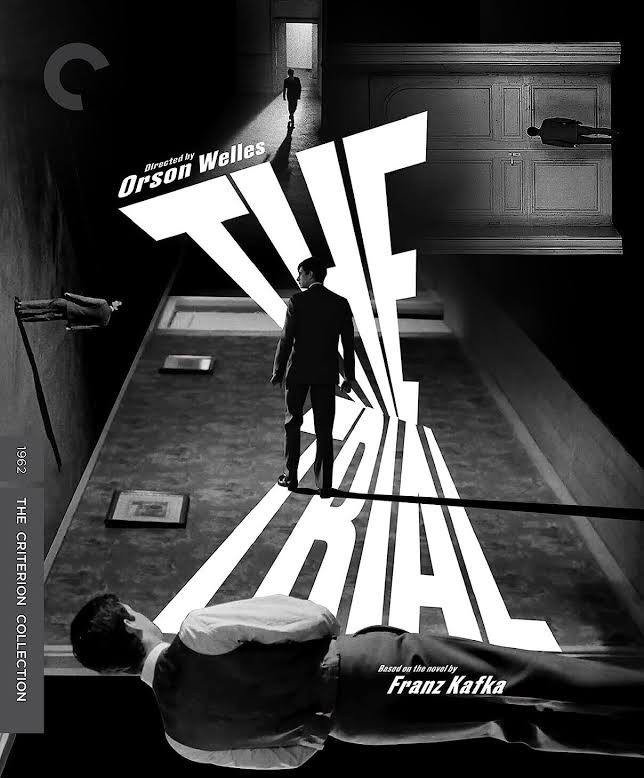
The Trial on The Criterion Collection: A cinematic masterpiece from Orson Welles


The 1962 classic The Trial is one of the most classic thrillers by Orson Welles. It is coming to the Criterion Collection September 19th. STUDIO CANAL and the Cinematheque Francaise took the steps to restore The Trial. Before this movie made it to the Criterion Collection, it had a 2015 2K restoration. There was also a restored DVD edition released in 2000. The restoration of The Trial is vivid with historic and cinematic grandeur. The essay (which comes with the Criterion version) goes in-depth about Welles’s fascination with the film and explains how The Trial was his special project filled with realism and faithfulness.The film is based on the novel by Franz Kafka, but Welles madeThe Trial a masterpiece. Welles sacrificed for The Trial, and it is seen through the Criterion Collection’s restoration of this invigorating story of suspense and deceit.

The reason that Welles is the hero of The Trial is because Kafka would not finish the writing of his projects. Both were visionaries but had different approaches. Welles was the artist of visuals, and Kafka was the creator of words. Kafka had an issue with committing to his craft. Welles committed to his craft but also had unfinished projects but fortunately he was able to reach completion with The Trial. To this day, the film has symbolic value due to its surreal characteristics.

The Trial focuses on Josef K. (played by Anthony Perkins) andbegins in the setting of his apartment. His morning begins with police inspectors informing him that he has been arrested. The police do not tell him why and therefore Josef assumes that maybe the conflict relates to his landlord, Mrs. Grubach (played by Madeleine Robinson) or his neighbor Marika Burstner (played by Jeanne Moreau). Josef keeps trying to explain his point of view to the authorities, but they continue to insist that Joe is the one in trouble. The black and white cinematography is effective in creating a pensive atmosphere as the life of Josef sees more darkness during the days his legal issues continue to follow him.

There are hidden underlying stressors in The Trial because Josef realizes those who try to help him may not be as honest either. With Josef’s career as a departmental assistant at a well-known company, his stress only gets worse. Perkins’ performance is where The Trial stands out as an essential classic in terms of dramatic character development in a very poetic film.

The film’s definition of trust is seen played out through the actions of Josef. His personal puzzle which involves the people around him paint a picture of how viewers think as they watch The Trial. Josef’s Uncle Max (played by Max Haufler) comes in to help. He helps Josef find his advocate, Albert Hastler (played by the legendary Orson Welles). Then there is the advocate’s mistress, Leni (played by Romy Schneider). There is also Hilda (played by Elsa Martinelli), the wife of one of the commission guards. Finally, there is Irmie (played by Naydra Shore), Josef’s cousin. Each person is someone that Josef must choose whether to trust. Some can help him put the puzzle together to find peace. Some betray him. Josef is still not told why he is under arrest. In the end, he must choose for himself how to put the strange and shady puzzle together to prove he is innocent.

The Criterion Collection’s restoration had amazing authenticity. My head was spinning with questions as I became hooked on the grandeur of this cinematic adventure. Is Josef’s help really of help? Is Josef’s case a growing conspiracy of unknowns? Is there more than meets the eye in the revelations of The Trial? This restoration offers a clearer and more faithful portrait of Josef’s Kafkaesque nightmare that is never-ending and triumphant. The Trial from the Criterion Collection is historic Welles at its finest. Four out of four stars.

The Dive


The crystal blue water creates an ambience of nature’s beauty in the opening of The Dive. The setting represents an escape from reality for the two main characters who are going diving in the film. The approach of the film is what I would call 127 Hours (2010) meets Open Water (2004). Both films are peril flicks and guilty pleasures of mine. The Dive, however, is not so much of a favorite. The depth of the ocean signals that problematic moments are bound to worsen. The film’s presentation lacks perspective and the concept of saving those at risk is poorly written in The Dive.

The film focuses on two sisters, May and Drew (played by Louisa Krause and Sophie Lowe). The sisters who have an interesting relationship go on a diving exhibition on a remote island located somewhere near Germany. As they go deep into the sea, the dangers abruptly ensue. Rocks start collapsing and suddenly May ends up stuck due to a rock collapsing onto her. She is trapped 28 meters below the surface and her oxygen level is scarce. Drew must find all the right resources with little time to save her sister and must even get back to the land to get backup oxygen tanks. The problem is that Drew lacks the knowledge to deal with diving emergencies. Her sister May is more experienced in these matters, but being trapped is much more dangerous than anticipated.

Once Drew gets out of the water, the clock starts ticking. Unfortunately, the film is lacking when it comes to delivering upon the theme of being in survival mode. For example, in moments where Drew should be putting her mind into savingher sister, she gets distracted and only wastes time. The movie is presented in the form of a low-grade independent production. Under the water, the film just seemed like a universal blur. The survival resources are scattered. Drew is told consistently to get new oxygen tanks by May, but Drew continuously ignores that instruction. While the back-up oxygen tanks are what could save them, it depends upon Drew risking her life trying to save May. An important quote for survival in The Dive is, “Five seconds in. Five seconds out.” This refers to the count required to preserve the oxygen levels so the supply can last longer.

Drew leaving the water for help decreases the chance of survivaland is where the film somewhat lost my interest. Given that her sister’s life is in grave peril, it was hard to watch Drew keep getting distracted when she is above the water. The Divecontinues to turn in the wrong direction when it comes to time being of the essence and eventually becomes a waste of energy.

All in all, this film’s cinematography and scenery is vivid. The directing and writing are where the film is catastrophe. It takes too long for the life and death moments to find meaning. The story also gets personal and emotional but involves too muchself-centered thinking between the two sisters. The Dive is not a terrible film. However, its potentially invigorating qualities are ignored by the director, making it a challenge to get into. Therefore, I give The Dive two out of four stars.

Treating cinema in many forms of art!