The title of this film comes to mind as concerning in that it implies a parent senses wrongful or disconcerting matters. Thestoryline vibes with housewives’ scenarios going awry discreetly. Mothers’ Instinct tackles the subject matter on an eerie path. It follows the personalities of two friends who are neighbors. In the wake of a devastating event, a series of detrimental consequences are unleashed. Directed by Benoit Delhomme, Mothers’ Instinct is written with an underlying layer of mistrust guided by red flag patterns.
The plot is centered around the 1950’s time frame. It is set in a time when the husbands are the ones making the dough to provide for families, and the wives are staying home to do the many home duties including taking care of the children. The film focuses on two friends who are also mothers, housewives, and neighbors, and they are Alice (played by Jessica Chastain) and Celine (played by Anne Hathaway). Both are stay-at-home moms with husbands on successful career paths. The happy life of one is disrupted by an upsetting tragedy. That tragic event opens a can of worms with unforeseen consequences in Mothers’ Instinct.
With the term “unforeseen” there is a blur between the film’s line of friendship and trust. This is all in the performances of Chastain and Hathaway and under the direction of Delhomme. The tragedy has occurred in the life of Celine, and Alice is the one who senses what may have gone wrong in the told scenario is not the full truth. She suspects Celine is detrimental and insane. The characterizations are faithful to the context of knowing little leading to major consequences. Its execution though, not so exhilarating.
In all, a clear context, yet the storyline is a setup around discomfort that does not have value. It only finds itself to create peril through characterizations created by stressful moments. The pattern begins with a fatality, moves on to another detrimental situation, and then continues with even more weird moving parts. A lot of it has to do with the thoughts of a mother wanting to protect her child. The dangerous one is Celine, and the protective one is Alice. There is a scene that creates a tone for Celine to be unstable, however, the film in and of itself is all “unstable.” It boils down to melancholy with layers of tension and revenge that is not fulfilling or unique.
It soon descends into boredom despite the deception of these two daring mothers. The inner thought of concern is where the line of the film does not get crossed vigorously. Those “inner thoughts” are through the eyes of Alice and Celine. A bipolar disorder that spirals to compete, as both parties go insane on drastic levels of absurdity. It feels meaningless.
I did find that the background of the film’s characterization generates an emphasis on the personalities of its two main characters. The fact that they are the ones at home with their children and have utmost concerns. Overall, though, the motherly side of them is where Mothers’ Instinct is a drag in its mode of creating psychological suspense. The jealousy side and controversial side lacks context. Instead of building a foundation, it flows with a bizarre layout of over-assumptions.Two out of four stars for Mothers’ Instinct.
Tarek Fayoumi visits the British Film Institute IMAX in The United Kingdom. It is the biggest IMAX screen in Europe.
In 2024 movies left me with a range of realistic feelings—annoyance, sadness, and connectedness. The best word to describe movies in 2024 is uniqueness, because many films left me reflecting on aspects of my own life. While experiencing an array of personal challenges over the course of the year, various films even played a significant role in making a positive impact on me. They encouraged me to keep my head up and keep pouring my love for cinema into being a critic. These are my top ten films of 2024.
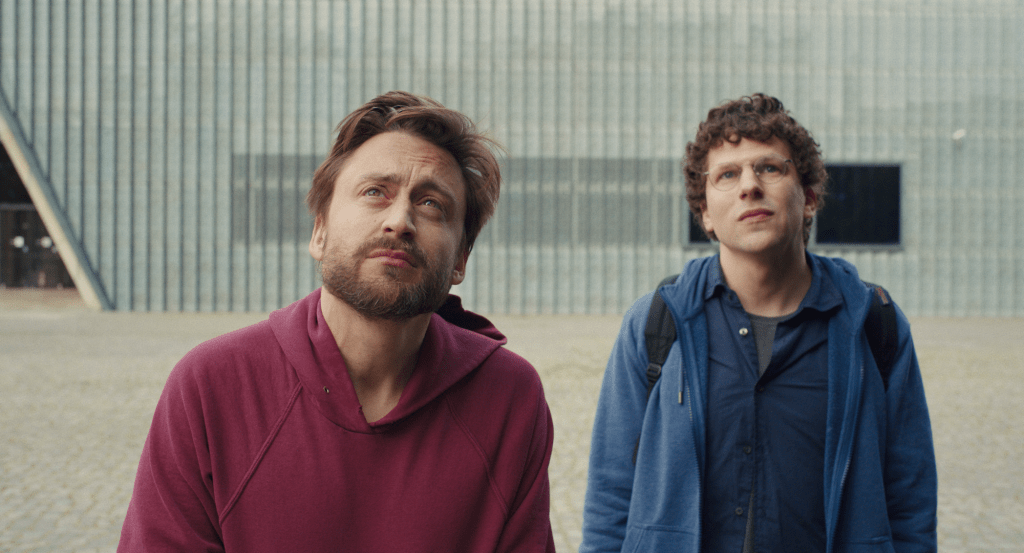
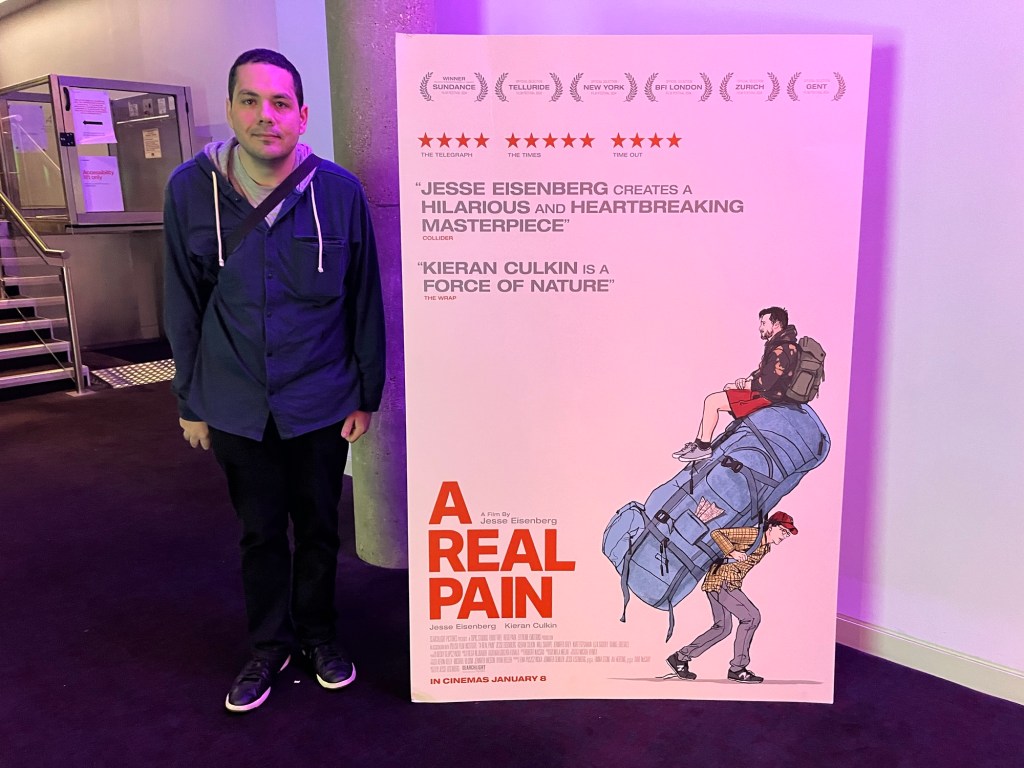
The first film is A Real Pain. This is a sensational feel-good movie filled with emotional challenges presented in a complex yet connected manner. Starring Jesse Eisenberg (who also directed the film) and Kieran Culkin, it is a mammoth achievement. The truth hurts and A Real Pain’s compelling subject matter and serious tone are powerful. Eisenberg’s writing creates a pattern in which his own character must learn to step out of his shell to deal with his cousin when they are both thousands of miles away from home. Culkin is the master of unpredictable behavior in his role as Benji. He knocks his performance out of the ballpark. The revolving door showcasing the family bond and personality clash between Eisenberg and Culkin sends a message to love, accept, and even help when it is possible. Family may be a pain, but life can be a real pain. Eisenberg’s directing dazzles in a way that sets the film apart.
The second film is The Brutalist. Writer and director Brady Corbet is the champion of his craft. This film gives ajolt to cinematic ambience that is mind-boggling and daring. The story is set up chronologically with an overture, separate acts and an epilogue to vividly compel its audiences to want more. At a running time of three hours and thirty-five minutes, there is a fifteen-minute intermission to allow audiences a chance to refuel their bodies and brains. Adrien Brody plays Lazlo Toth, a Holocaust survivor and immigrant. Post-War America is presented in an audacious fashion and as seen through the eyes of Brody’s character. The Brutalist handlescinematography and scoring perfectly to maintain the emotions of its audience through dark and light moments. Brody’s performance is a monster of grandeur, brutality, and brilliance.
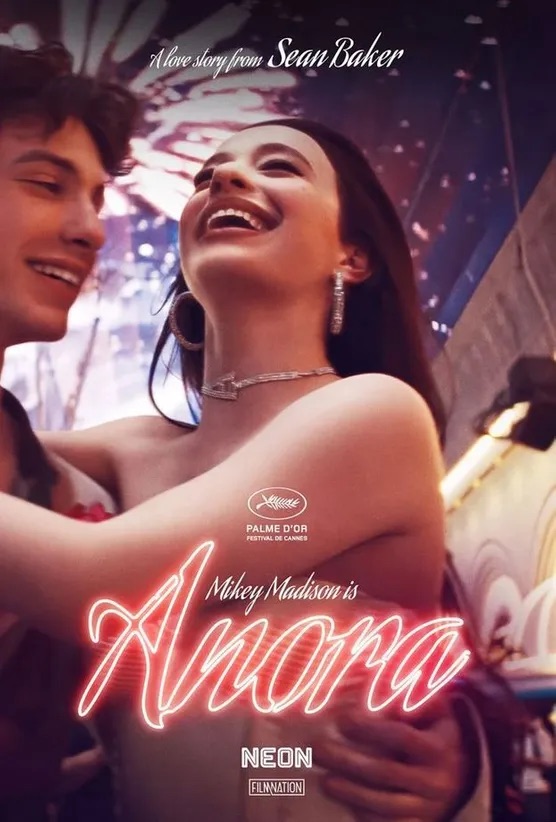
The third film is Anora. Written and directed by Sean Baker, Anora is his best film yet and is unconventional in the way it combines comedy, drama, and romantic genres. The writing is vivid, and the story leaves audiences breathless.Baker’s Anora brings audiences into a strip club setting where they are introduced to Ani (played by Mikey Madison), a young escort in Brooklyn working many shifts and doing extra deeds to make ends meet. She has a kind-hearted attitude and presents a playful face that draws the attention of men. Out of the blue, a young stud named Ivan comes into her club (played by Mark Eidelstein). Ivan falls in love with Ani at first sight. He has many sessions with her and pays her well. He brings her into his castle-like home. They have so much fun together and are inseparable. Love makes for a dazzling portrait, and it is painted with many layers in Anora. The life of two star-crossed lovers finding each other unconventionally creates an unforgettable landscape where happiness thrives audaciously in early parts of the film. When the dynamics of the family come into play, the emotions make the audience repeatedly jump out of their seats.
The fourth film is Conclave. When it comes to stories of the Vatican and popes, this movie was a profound, deep, and compelling thrill ride. Directed by Edward Berger, the dynamics of political theories combined with religion and faith collide poetically in this film. It is a powerful examination of the moving parts in the quest to find a new pope, with an ensemble cast that includes Ralph Fiennes (as Lawrence), Stanley Tucci (as Bellini), John Lithgow (as Tremblay), and Isabelle Rossellini (as Sister Agnes). The interactions of the cast are relentless and invigorating. Conclave creates a curiosity about where the lines are drawn when selecting one who can lead the Catholic Church. The story reaches a point where established hierarchy and degree of faith challenge this important process.
The fifth film is Nickel Boys. Directed by RaMell Ross, this is a spellbinding literary adaptation that will be remembered for ages. Nickel Boys is based on the Pulitzer winning novel written by Colson Whitehead and is an authentic revelation due to the way it weaves its audience into the journey of its main characters. Revolving around rough times in the 1960s, it is in an in-depth exploration that is remarkable. Ross wrote the screenplay with producer and writer Joslyn Barnes. Together, they incorporate cultural tides fighting to find light in a troubled world.
The sixth film is Nosferatu. This is a frightening and compelling film directed by Robert Eggers which has more terror than audiences might expect. Nosferatu is a dazzling sensation where horror meets its maker. The direction combining a story of both fantasy and horror delivers in Nosferatu. The tones of evil and respect centered around a plague remove typical boundaries. While political factors play a role, there is a layer of frustration where the volume of suspense increases. Eggers develop a characterization of loyalty that may have deadly consequences.
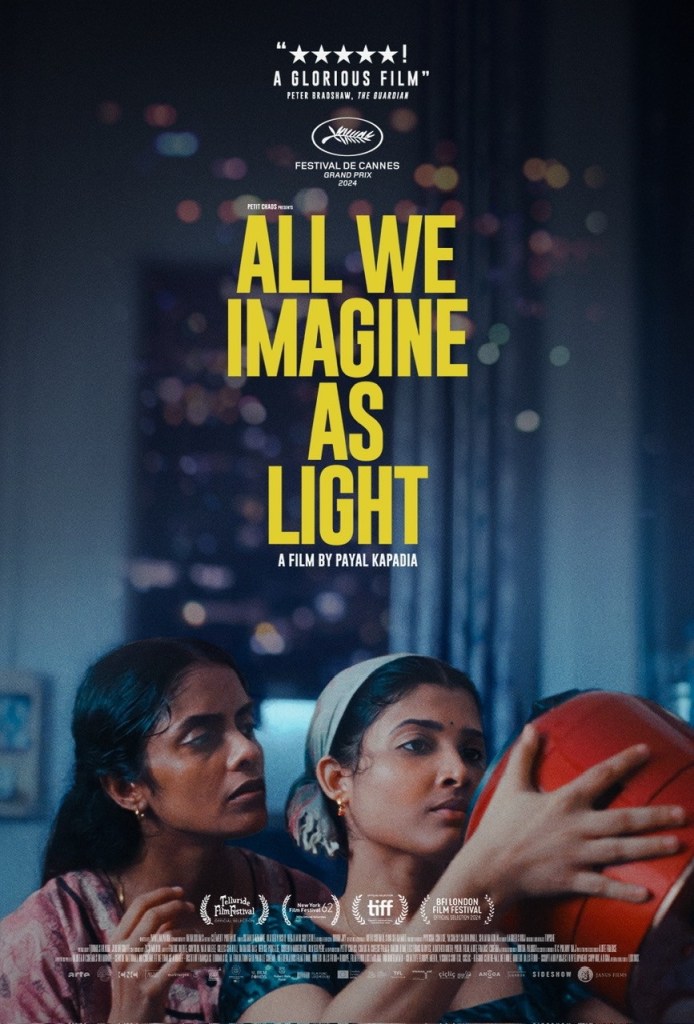
The seventh film is All We Imagine as Light. This is an international film in which love is hard to find, and morals are put to the test. Set in Mumbai, the many emotions caused by difficult choices spiral. All We Imagine as Light is centered on finding the moments in life that count. Written and directed by Payal Kapadia, the writing and continuity display a sense of realism that is unforgettable. The emotional and cultural backgrounds in this film are cohesive and prompt audiences to ponder the ultimate question, “What does the heart want?”
The eight film is My Old Ass. A group of teenagers curious about what life will be like when they grow up is featured in My Old Ass. Written and directed by Megan Park, this unique film begins with a scene in which the teens are doing drugs all night long. Their partying, however, results in revelations due to the side effects of the drugs which bring dramatic elements and unexpected meaning. My Old Ass is one of the quirkiest, yet joyful and artistic adventures of 2024.
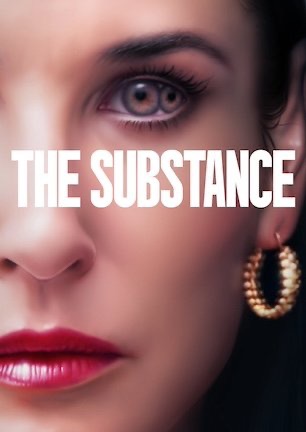
The ninth film is The Substance. After walking out of this screening, I thought to myself that the experience was like a volcanic eruption that does not stop erupting. The eagerness to pursue beauty and fame hit deep in The Substance. Written and directed by Coralie Fargeat, the reality of a dream finding its path to a nightmare is daring. With Demi Moore and Margaret Qualley as the two lead characters, their personalities dwell on the concept of addiction to popularity. Surrounding the film are messages about extreme efforts made to achieve and maintain a Hollywood lifestyle and not be forgotten. This is accomplished through a drug. When the procedure is done incorrectly, however, many unforgettable and treacherous results play out.
The tenth film is His Three Daughters. This film spotlights three sisters working to come together during a time of pain and grief. It is about their spiraling emotions of regret, shame, jealousy, and confusion which involve agreements, disagreements, and connections. His Three Daughters takes all these concepts and combines them into one life-changing and complex scenario. It does so with impressive writing that is faithful to human feelings. His Three Daughters’ narrative keeps its focus and keeps the three sisters authentically working together despite their differences.
Tarek Fayoumi representing his love for A Real Pain at British Film Institute Southbank
Fortunately, 2024 was a year where many films made me feel a sense of connection. The selection of these films was not easy, but I chose them because of the way they all leave audiences with the gift of cinematic art waiting to beunwrapped. Overall, 2024 was one of the most artistic years of cinema and I look forward to seeing what 2025 has to offer.
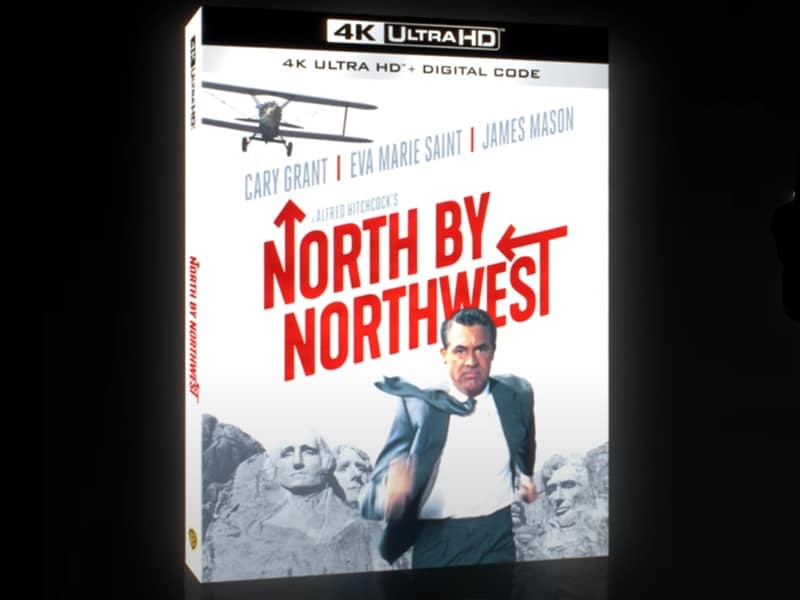
What’s better than reliving cinematic nostalgia? Continuing the collection of physical media! While we live in a time whenphysical media is limited, Warner Bros 4K Releases offer a combination of films that are surreal and unforgettable. From running from planes in North by Northwest, laughing with cowboys in Blazing Saddles, and seeing Arnold Schwarzenegger play the hero in The Terminator—there is an excitement and an adrenaline rush that lasts for ages. These are classic 4K releases that are worth the time, the money, and the energy to enjoy either for the first time or the tenth.
North by Northwest is a film I have watched four times in my life. The first experience was in a classroom, the second experience was in the cinema (in standard definition), the third was also in the cinema (in print projection), and the fourth was the 4K physical release. The layers of investigative purpose in this movie dive boldly, and still ignite my love for the film. Each cut or new restoration serves to brighten the suspense. The 4k experience makes the chase scenes more exciting as does wondering who is at fault in the film’s many suspenseful moments.
As a die-hard fan of Mel Brooks, Blazing Saddles is one movie that always makes me laugh out loud. It reminds me of a time when comedies were much more successful. Originality back in the day served a greater purpose and had a greater impact. The sound quality makes the laughter heighten the atmosphere which in turn causes the comedy to whirl around in circles leading to entertaining revelations. It is easier and more interesting to experience the humor in the audibles of Blazing Saddles in 4K.
Finally, there is James Cameron, a director who has always navigated his writing and craftsmanship with the skill of a champion. The Terminator is the beginning of a franchise that boils into many layers that demonstrate what filmmaking is all about. The 4K cut is one-of-a-kind. The many aspects of thecinematics and the characters fuel the fire of success in the 4K version. The quote, “I’LL BE BACK,” is the perfect message toremind viewers of the nostalgia in revisiting this classic.