Queer Review


This was on the road to feeling like a masterpiece, yet it fell short in its continuity. Luca Guadagnino is a director whose soul searches for meaning to wondrous extents in his previous successful projects, Call Me by Your Name (2017), Suspiria (2018), and Bones and All (2022). However, with Queer the artistic approaches are in disarray. Daniel Craig plays the lead and his performance is one that is revolutionary in its emotional depth, but the context of the film’s conflicts continues to grow in weird directions making Queer lack the component of brilliance.

The movie takes place in Mexico City in the 1950s. Craig plays William Lee, an introvert with a closeted sexual identity and an addiction to heroin. He spends a lot of his days in a café awaiting a connection, and many times he is caught-up with his buddy Joe Guidry (played by Jason Schwartzman). They spend their days being fascinated with booze and cigarettes. All of William’s priorities shift when he sets eyes on Eugene Allerton (played by Drew Starkey), a student that William begins to form a close relationship with. Once they begin to start up a friendship, Queer goes from feeling experimental to an over-the-top blur of a picture.

The film has three acts and an epilogue. This is a steady setup because it is one of those dark dramas where pacing will seem necessary. Guadagnino’s approach is to use the dynamic of their very separate personalities to create the tension of the story. William just desperately needs to feel connected and he cannot control his drug and alcohol abuse. Eugene is a student who is simply going with the flow, yet he knows how to set his boundaries. “Boundaries” is where Queer is lacking in the elements to create a phenomenon between the two.

In defining its poor quality, it is not one of a negative extent, it just tries too hard to the point where the moments feel out-of-focus. It goes from solitude to connection, and then to addictions in the picture. The resolution of the underlying conflicts from William’s issues leads the film into an odyssey. Much of the dramatizations are developed and expressed in a way that gives audiences the feeling that they too are tripping on some sort of drug. This quality is cinematic; however, it did not have me soldsince the title in and of itself is one where the expectation would be characters finding what their hearts want.

As I have said, Guadagnino knows how to form characterizations, and he desperately tries to with Queer, but the approach to be universal in nature (based on underlying conflicts) is where Queer displays a presentation of shame. The performances of Craig and Starkey are a knockout, but the setup of their paths and expectations of each other are in shambles. Its form of creating character components and comparisons that are supposed to bond these two keeps blindsiding its audience with lots of head-scratching. Queer is a portrait of a battle where sexuality, addiction, and finding the common ground lack thoroughness and understanding. It tries to seem universal and one-of-a-kind, however the measure in Queer does not get that high with accomplishing much astonishment. Two-out-out of four stars.

Nickel Boys Review


Directed by RaMell Ross, this is one of the most spellbinding literary adaptations that will be remembered for ages. Nickel Boys is based on the Pulitzer winning novel written by Colson Whitehead. Nickel Boys is a revelation in the eyes of an authenticity—it weaves its audience into the journey of its main characters. Revolving around rough times in the 1960s, it is in an in-depth exploration that is remarkable. Ross wrote the screenplay with producer and writer Joslyn Barnes—together, they loop in cultural tides fighting to find the light in a troubled world.

The view point of Nickel Boys has its camera set up in a one-point perspective. It is seen through the eyes of its main characters as if the audience is in the role of a first-person shooting video game. Instead of playing as the “first-person” they are watching them. The two main characters are Elwood (played by Ethan Herisse) and Turner (played by Brandon Wilson). They are two friends who are as close as brothers. Elwood is wrongly accused of a crime and he is sent to the Nickel Academy where the boys meet. The friendship of both Elwood and Turner grows in the reform school they are attending. As they correlate and connect, the film’s approach to taking a stand is real—two African American men fighting for their rights is the dynamic of the friendship in Nickel Boys. 

Through rules and barriers looking to be broken, I found Nickel Boys to be one that finds a strong voice for fairness and equality. The frustration of racism and segregation goes full throttle for Elwood and Turner to stand tall. The notion of unfair treatment due to false accusations thrives with an award-winning achievement from the mind of Ross—the presence of suffrage and friendship are the bond which makes Nickel Boys Oscar-worthy. Barriers are meant to be broken, and once they are, thedoor is open to a point of no return. This creates a humanistic form of filmmaking that I have never seen before—it is elegant, focused, and heroic.

The rebellious nature of the film keeps the evolvement of purpose flowing rapidly. My appreciation for Nickel Boys is the hope and resilience that it brings through its entirety. I was dazzled by the film’s compelling form of writing, directing, and acting, as all three of those elements work to keep the film’s purpose intact. Set in a time when opportunity for education waslittle to none, the pattern of persistence and hope pervades here. Nickel Boys spirals with despair that turns vigorously into ambition.

Not only is Nickel Boys one of the best films of 2024, but it may also be the project of Moss’s career. A cinematic phenomenon that reminds its audience to not lose faith and reminding them of this era that was one of consistent trial and error through which one had to keep fighting. The reform school may be presented as a halting place of terror for two friends, but it is also the placewhere they can make a difference for themselves. Four out of four stars for Nickel Boys.

The Seed of the Sacred Fig Review


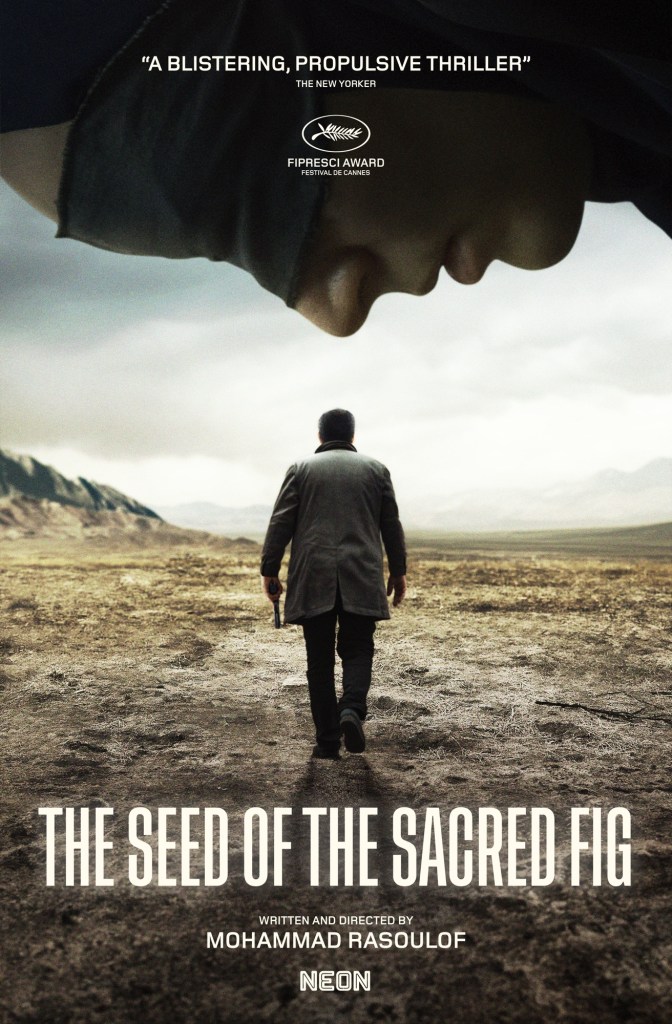
What is more detrimental than politics and culture? Is it expectations? Is it faith? Writer and director Mohammad Rasoulof painstakingly challenges these subjects. The Seed of the Sacred Fig is an anxiety-provoking journey of morals and sacrifices. Political unrest is deep below the surface while ethics are backwards. The Seed of the Sacred Fig diminishes the impact of its main character.

The story takes place in Tehran. The focus is on Iman (played by Missagh Zareh), a judge, husband, father, and liar. Iman hides political secrets for the safety of his job and his family. His wife is Najimeh (played by Soheila Golestani), and his daughters are Rezvan (played by Mahsa Rostami) and Sana (played by Setareh Maleki). The dynamic in the house is fueled by unrest thanks to the orders from Iman. His role involves bending the rules by creating propaganda in order to provide a home for his family.

The tension between politic and two worlds colliding is extraordinary. The conflicts in the authoritarian government are what fuel the frustration and lack of faith for Iman and his family. Their unsettling reality provides an intriguing structure. Iman knows they are in danger, but his career comes first, and his family knows it. His daughter’s rebelliousness causes The Seed of the Sacred Fig to go down a suspenseful rabbit hole. Once a gun goes missing, the clock of political corruption starts ticking.

With Iman’s gun missing, his job is on the line, and so is his family. The writing and continuity of the film made my head race with thoughts. Some people keep secrets to protect the ones they love, but other secrets open doors to darker alleys. The frustration of Iman’s daughters and his wife makes him question their respect and loyalty. They see the war in the media and know their dad is part of the chaos. The concepts of betrayal and sacrifice play off each other in The Seed of the Sacred Fig.

The film’s direction displays a portrait of tension and realism given the various events occurring which shift the characterizations. The Seed of the Sacred Fig does a stellar job of tying in the political factors to create suspense. With the many choices facing Iman, his world is rolled over as his expectations rotate. Who truly suffers?

The cultural components in the film form a connective and deceitful bond. The Seed of the Sacred Fig carries elementswhich reach their limits. With the family feeling brainwashed, the fight to find their voice delivers a breathtaking force. A powerful battle for change, honesty, and loyalty ensues. Iman’s fate is presented as non-negotiable, but his family may feel there is a way around that given their suffering. The Seed of the Sacred Fig is compelling, shocking, and politically empowering. It is one of the best thrillers of the year! Four out of four stars.

Treating cinema in many forms of art!