Tag Archives: Blumhouse

Black Phone 2 Review


Black Phone2 intensifies the suspense and horror. Directed by Scott Derrickson, the film meets the high expectations set by its predecessor. The first installment was only the beginning. This time, the phone calls target both Finn and Gwen. Mason Thames and Madeleine McGraw reprise their roles as brother and sister. Ethan Hawke returns as The Grabber. The new storyline adds more detail. I felt more scared than in the first film.

With the film moving forward, Finn’s nightmares carry a lot of weight into this sequel. Especially with the tones of a belittling attitude, and also the much horror he has experienced, he carries on with him. The visions of The Grabber have not left, but this time, Gwen is having her own nightmares. This brings them to realize that a place called Alpine Lake may have answers to the terrors of their dreams.

What electrifies Black Phone 2 is its spiraling momentum, pulling viewers deeper into a maze of recurring nightmares and lurking mysteries. The eerie phone booth at Alpine Lake becomes the epicenter of their fears. When it rings, reality and nightmare blur, unleashing supernatural horrors that thrive at the camp. Here, Finn and Gwen piece together the cryptic patterns from their visions, each nightmare a vital clue in their search for the truth.

The writing delves into the depths of evil lying in wait, layering the sequel with fresh, unexpected scares. The film is a labyrinth of campfire terrors and shadowy histories, each piece fitting into a larger, sinister puzzle. The Black Phone 2 masterfully maintains its surreal continuity, always hinting at new horrors to come. The Grabber’s chilling voice and twisted motives remain unforgettable, and Hawke’s wicked grin steals every scene.

Overall, The Black Phone 2 is vivid. One that still has a promising continuation. I adored all the extra evidence to maintain momentum. I will also say that I felt it had a heartfelt side with the brother and sister dynamic battling horror . Especially with one that is bound to continue. Three out of four stars for Black Phone 2.
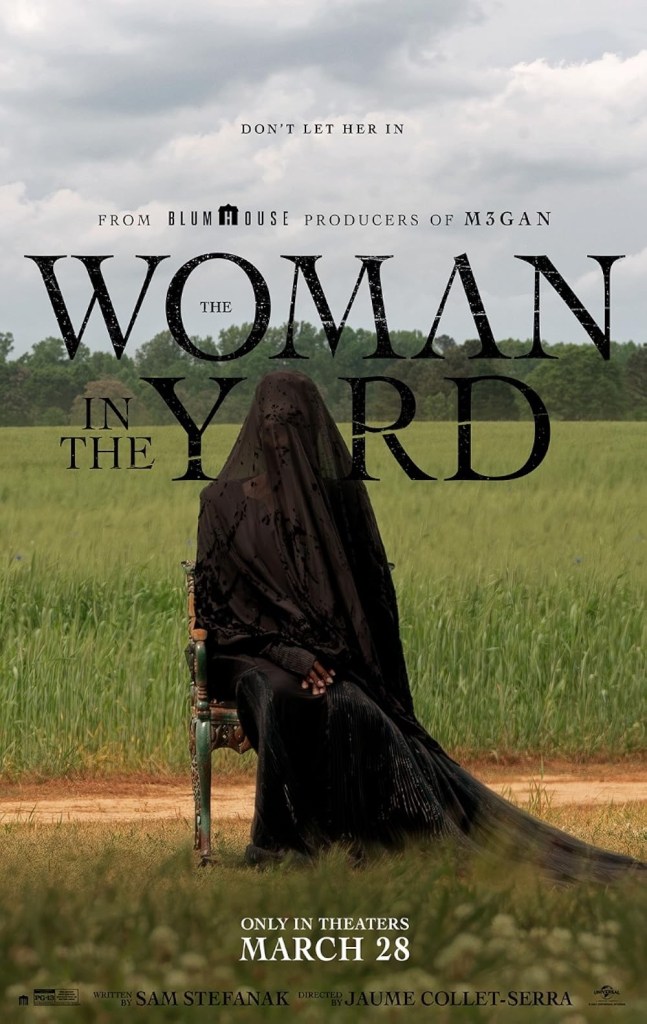
The Woman in The Yard Review


Director Jaume Collet-Serra’s The Woman in the Yard keeps struggling to improve. It is an unusual premise with a dynamic of a complicated situation. I will say that I was not scared or in thrills. I found myself more curious about what moments were trying to be satisfied. The secluded setting is top-notch. The reality and life after a detrimental event create an emphasis on turmoil. It is the aftermath setup where the flaws lie.

The film focuses on a single mother, and she is Ramona (played by Danielle Deadwyler). Ramona is widowed. Her husband David (played by Russell Hornsby) died in a car accident. Her two kids are Taylor (played by Peyton Jackson) and Annie (played by Estella Kahiha). The dynamic is clear, and there is confusion and tension. A majority of that is because of Taylor’s mixed feelings. With Ramona being partially disabled, the limitations of tools for a strong family are frequent.

The conflict and dramatics are presentable in a persistent matter. The plot and the title of the film are the elements of failure. An eerie lady is frequently sitting in the front yard of the family’s home. She does not move, and she remains at a halt. As Ramona, Taylor, and Annie are in a life of loss, weird moments begin to occur once this mysterious lady comes around. Much of the build-up is from Taylor. And Ramona tries to keep the peace. The Woman in the Yard grows tension with blurred messages to heighten its terror value.

The trail of boredom and confusion creates more nuisance for the foundation itself. The setup is like a setup of the Three Little Pigs and the Big Bad Wolf. But nothing comes quickly of getting blown down. The reliance on psychological terror is wrong in The Woman in the Yard. It is not mortifying.

What adds value would be the moments of the deceased. They have a presence. Before the appearance of the ghost, and in between, there are memories of David. Those are moments before the establishment of death. This is also where the signs of karma are established. Around all of this is where the writing and characterizations create a promising undertone, but the continuity continues to degrade.

The Woman in the Yard creates patterns of a family protecting each other in a poorly-written manner. The ghost is around because of an underlying past. The dynamic and characterizations are too dismissive for any form of meaning. The hero of the film keeps falling onto Taylor. This is because he is the only one who keeps trying to inquire to fight off what may be wrong. Overall, The Woman in the Yard flops repeatedly. One out of four stars.

Afraid Review


Today, there is a reality where AI is convenient. AI helps people stay organized with navigating tasks. Can AI be advanced on a personal level? Afraid loops in the context of questioning an AI innovation. Written and directed by Chris Weitz, his approach is on family dynamics (with AI). Screen time, technological addiction, and behavioral patterns are the discerning factors in Afraid. The approach is up-and-coming in the film. Its AI moving parts are resourceful. How real does AI grow to be in Afraid?

The film follows Curtis (played by John Chou). Curtis is a father working for a company that aims on AI technologies. At his home, his children rely on staring at their screens consistently. His oldest daughter, Iris (played by Lukita Maxwell), is obsessed with social media. His two sons, Preston (played by Wyatt Lindner) and Cal (played by Isaac Bae), play games on their tablets too much. Curtis and his wife Meredith (played by Katherine Waterston) feel changes need prioritization in their home. They got this new device called AIA. AIA is like Alexa. AIA is double the amount of intelligence over an Alexa. She thinks in advance. She makes sure there are no conflicts between Curtis and his family.

It begins to shift in the eerie path. Iris finds herself in a social media conflict. This situation links back to AIA. Preston makes wrong choices with friends. Finally, Cal listens to what AIA says more than his parents. It is only a matter of time before AIA’s words and mind games rain down with a terror of turmoil.

Where the film finds its haunting factor is its presence in its characterization. The personalities and facial expressions look blurred (because they look at screens so frequently). For improvements, Curtis is looking at new technology for his family. Is this a great idea? The personality of drained minds (due to overuse of devices) feeds the technology addiction in Afraid. It does before it gets more unpleasant.

When Afraid begins to see the red flags of AIA, the suspense is vast on a level of anxiety. That is because the advanced side of AIA is programmed to get ahead of moving parts more than its audiences anticipate. Some may think AIA is evil. Some may think AIA is convenient. Regardless, the influence of AIA is highly concerning. Weitz uses a direction that loops in mental stressors of the dangers of reliance. “Dangers of reliance” is among Curtis and Meredith for putting forth trust in AIA for their children. The high levels of stressors dig deep in Afraid. What will AIA do? What will Curtis do to protect his family? How enabled will his children be with their fascination with AIA?

Once the questioning factors of detrimental suspense come around, Afraid begins to feel the predictable vibes. It does well with keeping AIA as the focus of the potential threat. With the continued concern about how AI is bound to have red flags, Afraid is an average example of those “red flags.” The screen time takes a (minor and inviting) turn for the worst in Afraid. Two out of four stars for Afraid.