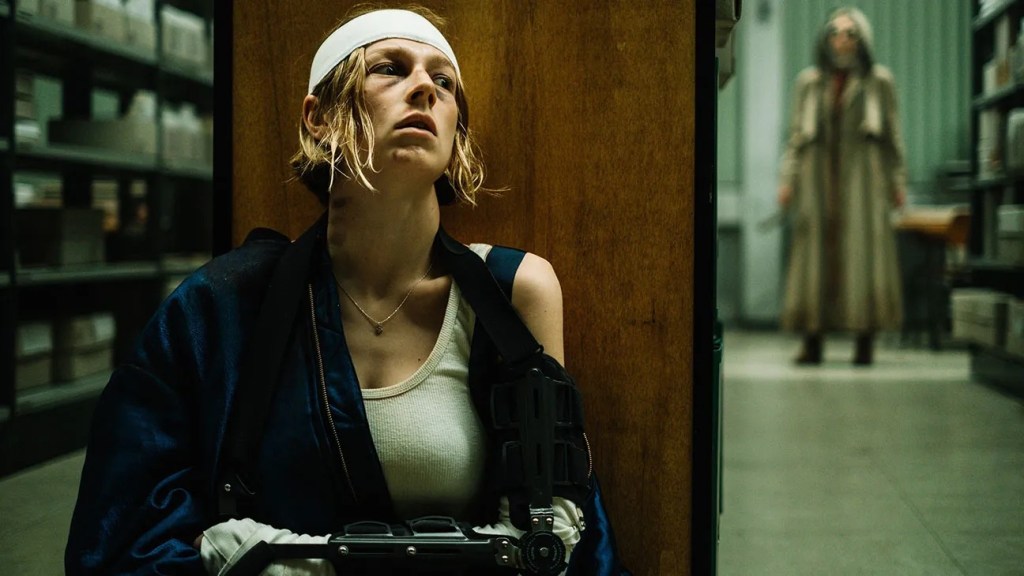
Cuckoo provides a change of scenery along with a nightmare that made my head spin. The film is written and directed by Tilman Singer, a German filmmaker who takes his audience on a journey in Germany. This is a diverse thriller that is experimental when it comes to fear and how awry a situation can go. With Hunter Schafer as the lead, her performance is as vocal as her character from HBO’s Euphoria. In Cuckoo, she plays a teenager with attitude who wants answers so she can put puzzle pieces together. This may be her most memorable project yet.
Schafer’s character, Gretchen, moves from the United States to Europe to live with her father, Luis (played by Marton Csokas). Luis lives in a resort in the German Alps with his new family. Luis’s boss, Mr. Konig (played by Dan Stevens), is odd and makes observations about Gretchen’s half-sister Alma (played by Mila Lieu), who is mute. The dynamics are obscure in Gretchen’s new home life are. In this new element, her mind is consumed with sound effects and shocking visions, and there are more concerns that are life-threatening. Gretchen is known to be rebellious; no one listens to her.
Cuckoo is a mind-boggling ride that generates terror. The film’s writing has effective shock value. The movie is about a rebellious teen fighting for her life in a bizarre setting with no straight answers. Cuckoo is spellbinding and creatively classy. Three out of four stars.
June Squibb is audacious. She is over nine decades old and still has stamina playing the cranky and determined grandma in Thelma. Squibb keeps the giggles coming through layers of comedy and action. Thelma was written and directed by Josh Margolin. The film is cleverly funny due to Squibb’s unique silliness.
The film is titled Thelma, the name of Squibb’s character. She is a grandmother in her nineties. Her grandson Daniel (played by Fred Hechinger) takes care of her. Daniel finds himself helping his grandma with her lack of technology and daily life skills. Thelma has the personality that many grandmothers tend to have. She asks many questions, is set in her ways, and does not let subjects go. One day this all changes when she gets scammed over the phone and loses thousands of dollars. Thelma is frustrated, but on a rapid mission to get her money back.
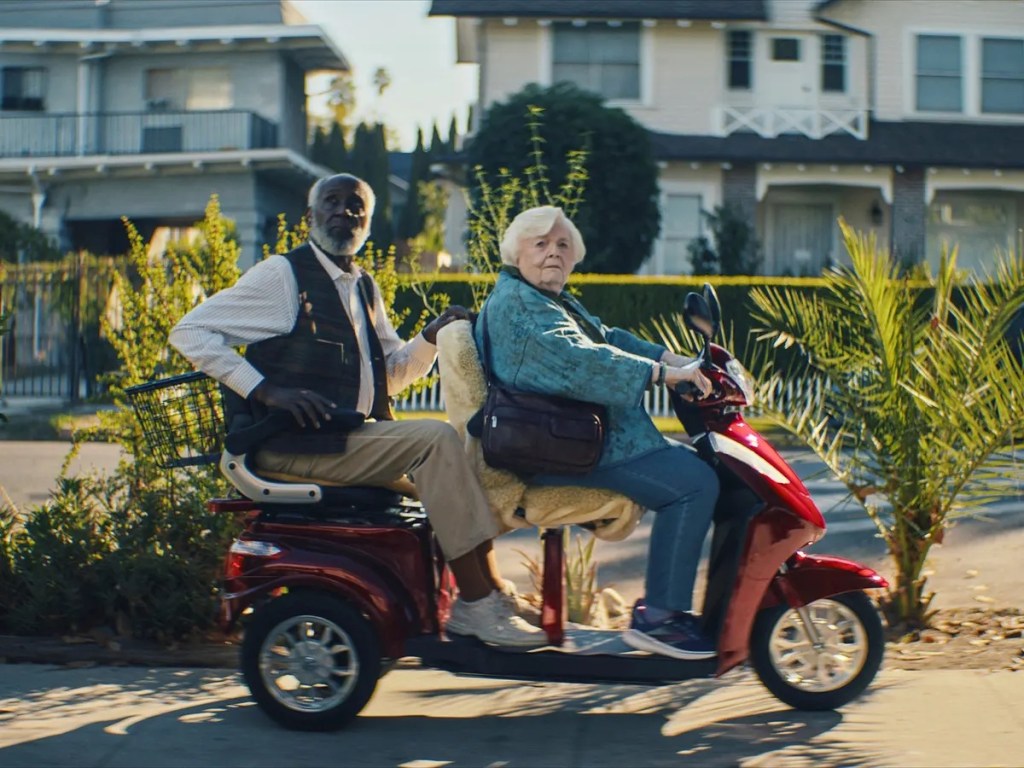
With the help of an elderly man, Ben (played by Richard Roundtree), Thelma benefits from this comedic duo.
With Roundtree’s recent passing, this film showcases his signature Shaft attitude, especially when a titanium hip is used as a weapon. The quirks of Squibb and Roundtree are endless. The writing highlights how their age adds some challenges to their mission. It also heightens their anger and vindictiveness which makes the movie killer funny.
Thelma is wonderful and quirky. She will not stop until she gets her money back. Thelma will make audiences laugh until their chests hurt. Four stars for Thelma.
Directed by and starring Jerry Seinfeld, Unfrosted is one of those clever and sarcastic comedies that dives into ambitious aspirations in a quirky way. A film where the revolutionary days of sweets and profits meant a lot more competition. It’s approached from a storytelling angle. The film jumps right to the events within the title itself. As one who has been fascinated by cereal products from a young age, Unfrosted felt like a comic book experience of heroes and villains fighting for first place in a creative race to the top. It is a wonderful delight and a bizarre adventure. The quirkiness works well with the pairing of two comics of lighthearted humor in Seinfeld and Gaffigan.
The invention of the Pop Tart brings a universe of comical corruption. The film reaches back to a time where marketing and logos were all that mattered. Think about the series Mad Mendiving deep and blending with bits of Seinfeld and a whole lot of fancy commercialism. This is a colorful trend of comedic motions that keeps landing its punchlines and delivering witty outcomes, and there are plenty of them in Unfrosted. Finding the frosting is the essence of the film’s mission in Unfrosted. POP-TART in all caps is what finally sells Unfrosted. The minds of Gaffigan and Seinfeld coming together use their talents as successful comedians to create a pure adrenaline experience of solid fun.
The two focuses of the film are Bob Cabana and Edsel Kellogg III. Seinfeld is Bob, and he has a fascination with creating a breakfast recipe that sells and hits the spot. Jim Gaffigan is Edsel, the head of the cereal empire. Both Bob and Jim are business partners at Kellogg. Their competitor is Post. A film that is purely in the comical mind of Seinfeld, Unfrosted works to find the sweetness with having the layer of being quirky. Its context of silliness dives deeply, especially when Bob and Edsel team up with Donna Stankowski, played by Melissa McCarthy. Donna works with NASA. The search for success and creating a brand of celebratory food is all about diversity in ingredients and delivering a new and appealing product in Unfrosted.
The rival between Bob and Edsel is Marjorie Post, played by Amy Schumer. The comedians dive into the competitive mode in a universe where food commercialism matters. The writing inthe film is pure in the sense that it wants its audience to keep humor in the back of their mind throughout. Gaffigan and Seinfeld deliver their lines much like they are performing, like there should be an outbreak of laughter after each punchline. It may seem silly and overrated, however, deep-down it is acreation of a comedy that is different and unique—it is truly heartfelt. Hugh Grant is truly endearing playing a mascot for a cereal. Grant plays Thurl Ravenscroft, and his performance is like seeing someone who would normally do Shakespeare looking like they needed a break or some extra money The joy of the dynamic of the film is how the audience does not have to take any of the characters seriously and still have a wonderful time.
For Seinfeld as a director, this is the type of film he would direct. Even though it went back and forth for me, it serves as a film that I find to be a nice change-of-pace for many audiences. A film that makes its viewers think back to the days when having breakfast foods with sponsors served a bigger purpose. The competition side though, is a bit over-the-top. Overall, I found the film to be pleasant, despite how mediocre it could be at times. Still, it is a joy in the positive mood and humor it brings to the screen. The fight between Kellogg and The Post is challenged with humor, egos, and quirky adventures. Two-and-a-half out of four stars for Unfrosted.