Tag Archives: Kino Lorber

Sebastian Review


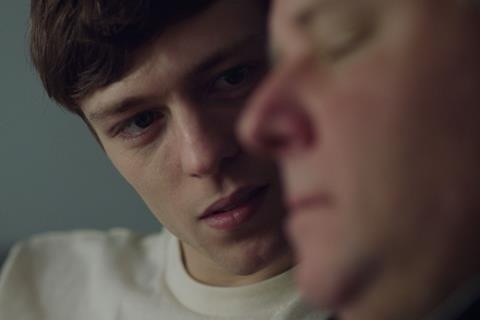
This film involves a thorough examination of feelings. It is very psychological and there are moments that are hard to handle. Sebastian is an odyssey of a young writer who is trying to go deeper with his creativity. As he is trying to navigate his journey, there are dark secrets in his personal life. Written and directed by Mikko Makela, Sebastian is deep and realistic when it comes to mental consequences. From the performance of Ruaridh Mollica (as the main character Max), Sebastian portrays how sensitive humans can be based on judgment, choices, and morals. Sebastian leaves its audience asking, why take all the risks to lead a more authentic life?

Sebastian focuses on a young writer named Max who is in histwenties and lives in London. He is an aspiring writer with a gift for words as well as examining human thoughts in everyday society. He gets lots of recognition, and even a book contract due to his talent and connection. How does Max find the words to create such real moments in his stories?

After hours, Max finds himself working as a gay escort. His exploration of dangerous voyeurism helps him detail his characters’ stories. Sebastian is the name of Max’s character in his story. Max is this individual in the real-world, and Sebastian is his fictionalized character.

Max’s life finds him repeatedly in detrimental situations. The writing of the film gets more questionable as Max keeps having sexual encounters with other guys. He does this so he can keep growing and detailing his story. On the other hand, these activities are messing with his thought process. It’s a powerhouse of struggles where sexuality keeps leading to more obsessive and disconnect. Max’s colleague Amna (played by Hiftu Quasem) senses Max is not in a good mental head space because his performance and aptitude with his writing schedule gradually deteriorate. Are frequent sexual encounters becoming a higher priority than Max’s day job?

There is a point where Max feels a sense of warmth from one of his encounters. This involves an individual named Nicholas (played by Jonathan Hyde). He begins to realize that Max is much better on the inside than what he is doing to dig deeper into his research. Because Nicholas shares the same interests and aspirations as Max, he sees a better way for Max. The roller coaster ride of behaviors creates a life where fulfillment comes with many risks—the more risqué the choices, the deeper the story. Max’s emotions are inevitable—his sadness, anger, rage, confusion, and eagerness all lead to turmoil and have an impact. Sebastian sends a heavy reminder that life’s challenges require tolerance and reflection.

Max’s does not consider the irreparable consequences. While creating a reputation for himself, his sexuality and research tactics may be beneficial. However, his encounters are messing with his head and get to the point where he finds himself losing valuables. For those who work in jobs that require research and persistence, the direction of Sebastian reminds us how to think more realistically about the lengths we should go to create a story. Sebastian leaves painful feelings that are engrossing. The slippery slope only gets steeper as Max’s writing assignments keep falling short which leads to more disconnect and additional shady behaviors to detail in his novel. Can Max find a new approach?

Sebastian is daring and will haunt audiences. Artistry and truth meld and boggle in this film. The story results in a boiling pot of destruction that makes us ask why we are human. There is a narrative path that evokes real empathy yet requires mental tolerance. Three-and-a-half out of four stars.
Remembering Gene Wilder Review


“It is everything that family movies usually claim to be, but aren’t: Delightful, funny, scary exciting, and most of all, a genuine work of imagination.”

-Roger Ebert on Willy Wonka and the Chocolate Factory

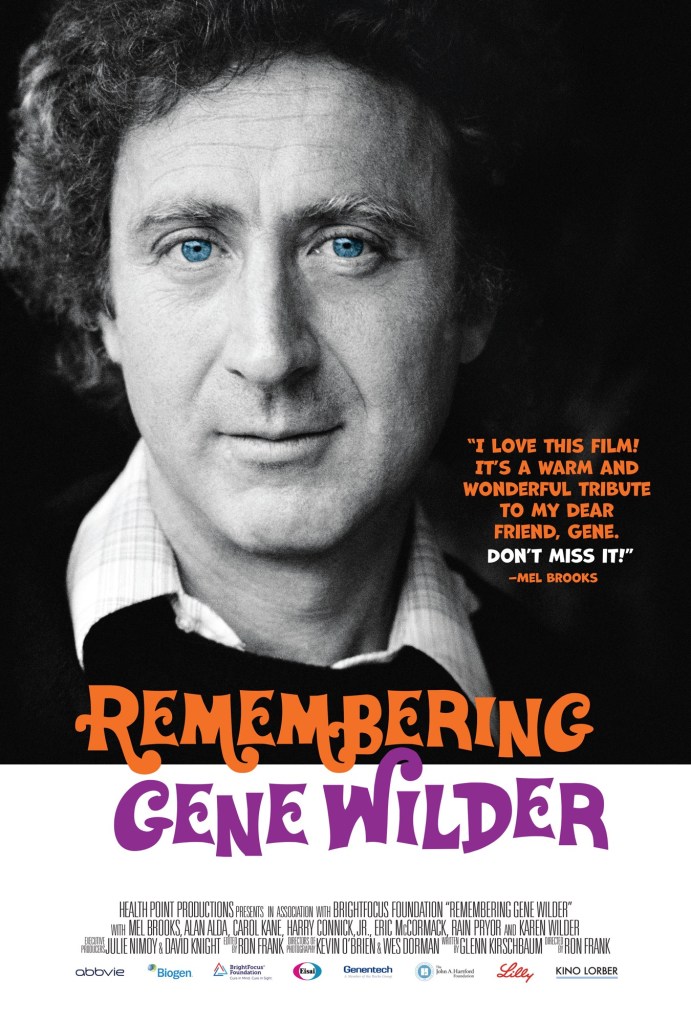
Remembering Gene Wilder is a wonderful documentary where I felt I was, “In a world of pure imagination,” exploring the life of an astonishing actor who was one-of-a-kind. The documentary begins with Gene’s voice and reminds viewers of the many doors that were opened in Gene’s world. Directed by Ron Frank, this documentary covers various projects Gene was involved in  and highlights entertaining twists and hidden pleasures on movie sets with Gene.

The film begins during the days when Gene worked with Mel Brooks, and his early days on Broadway in New York where he worked with Anne Bancroft. Remembering Gene Wilder caused me to remember fondly how curious I used to be about Gene’s acting style. He had a way of being unpredictable which was part of his genius and incredible ability to spread happiness through his comedic ways. Gene once said, “Being on stage was a thing that saved me from myself.” While practicing his craft may have saved him, it was a also a true gift to his audiences. 

The mesmerizing exploration in the documentary provide a chronological order of events which include interviews with celebrities and filmmakers. Gene had a keen vision of excitement that was like no other, and Brooks elaborated on this when he stated, “When he got excited, he was a volcano.”  I have always been particularly fond of the many movie memories of Gene where he was a “volcano.” He was able to portray empathy, pride, courage, misdirection, and craftmanship in a meaningful way. From my perspective, Remembering Gene Wilder is a mosaic of the unique authenticity in his acting style. 

When reminiscing about Gene’s personality and traits as an actor, his 1971 classic Willy Wonka and the Chocolate Factorystill delights whenever the film is revisited. Peter Ostrum played Charlie Bucket in the film, and he discusses he landed the role of Charlie at the last minute, and how working with Gene is a memory he will forever cherish. He elaborates on Gene by saying, “He was always doing something unexpected. Even if it was going down, three steps coming back two.” Gene’s colleagues learned to love his creativity and artistry. Remembering Gene Wilder details Gene’s role as Willy Wonka with a great deal of specificity.

Ben Mankiewicz, Alan Alda, Michael Gruskoff, and others contributed commentary about what made Gene and his films unforgettable. The fact that there was always laughter in his many personalities in all his projects is truly memorable. The discussions make this experience feel like a walk down memory lane of Gene’s life. The documentary highlights his projects through various cinematic eras including his projects withRichard Pryor. Their comedic chemistry in films like Silver Streak (1976) and Stir Crazy (1976) was amazingly successful because of how well their senses of humor blended.

Despite Gene slowly losing his memory, his loving heart was always there. The entire film is simply wonderful and upliftingdue to the many reminders of Gene’s talent and nature. The final few minutes of the documentary are one of the saddest endings I have ever experienced. In the end, there is a light and Gene always found the good…no matter how difficult, challenging, or detrimental an event was for him. He loved his wife Gilda Radner (who died in 1989) and he also loved his second wife Karen Boyer (his widower). Gene loved life for what it was. Remembering Gene Wilder shows audiences how much Gene put himself into the stage, into his movies, his friends, and hiscolleagues, and how he always had a touch of nostalgia that inspired many. Four out of four stars for Remembering Gene Wilder.