
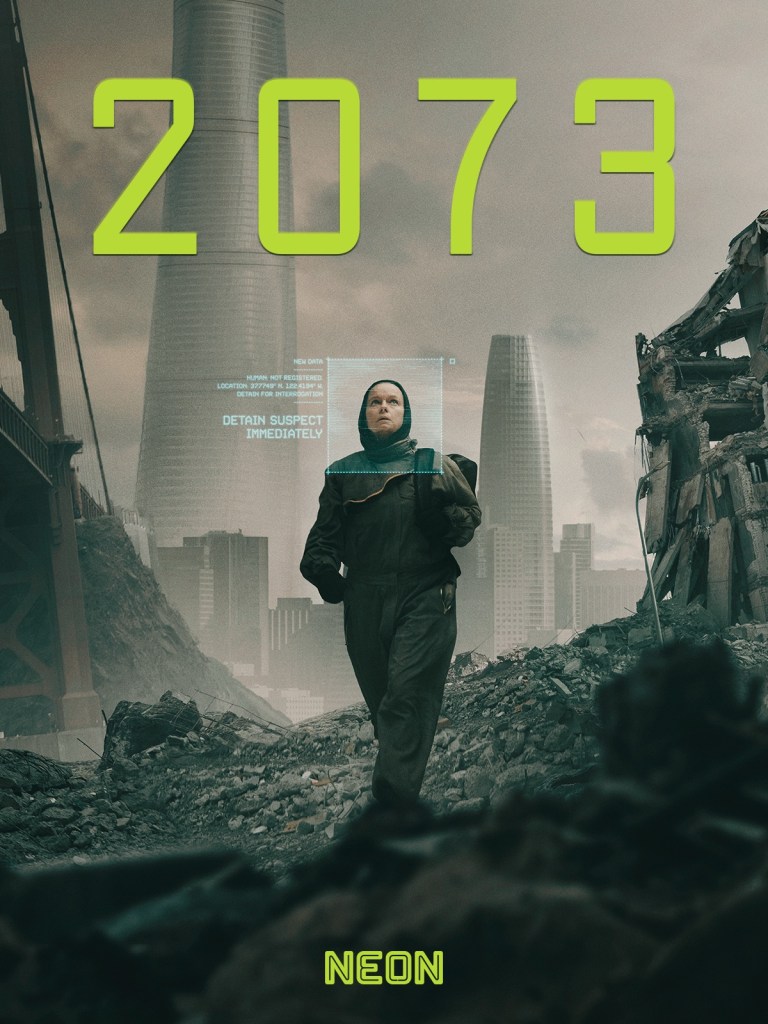
A future of chaos and technology blend in an uncontrollable pattern in 2073, a film that compiles itself as a documentary and a sci-fi thriller. The “documentary” component is the one with most sophistication in the film in and of itself. Written and directed by Asif Kapadia, the many global events which have happened in real-life play a key role in 2073. Society is the in-depth track of the film’s pandemic setting in its “sci-fi” direction. Even though it seems rushed and all over the place, the vast amount of knowledge, concern, theory, and true politics rise above and swiftly pull things together in 2073.
The film opens with a survivor, played by Samantha Morton. She is an individual living a life of peril after a global event has wiped out the many resources in the year 2073. She also narrates how her life once was before the world went awry due to many moving parts trying to make change, and most of the population not being on the same page. Issues such as AI, politics, and corruption are the pieces to the puzzle in 2073. The vastness of living on a thread digs deep, and then it transitions back to real-life events that have happened throughout the world today.
The archive footage side of 2073 makes its audience think back a lot to how the world is evolving. Despite the negative portrait painted, it is a film that speaks truth to how out-of-hand problems can be. This can be seen especially with robots taking over humans, technology outsourcing jobs, and the politics having the abuse of power to control what they see beneficial. Even though it is a context of harshness, 2073 feels like a fictional reality that can more than likely happen. It is just a matter of when.
The film links to names like Mark Zuckerberg, Boris Johnson, Steve Bannon, Donald Trump and more. It looks at many events the world has faced in the past and the ones it faces today. It focuses a lot on the markets, the evolving technologies, and economic inclines and declines. 2073 loops in the objective of the thought of a better future to sadly imply that the reality of what is truly ahead is not so great. The presence of facts and reality do make 2073 feel immensely engrossing. It is only a matter of time in 2073.
The storyline and writing of previous events happening and then jumping to the aftermath portion is a direction of interconnectedness. This is especially impactful when it showsthe events of the 1990s and the early and late 2000s. However, the timeline of detrimental consideration is the flaw of 2073. There is a point of creating a timeline and calculations for curiosity with the only conclusion being that each innovationcreates a form of depreciation around the world. Morton’s performance is the very last of that.
When it links back to Morton’s performance, the writing of the film creates the thought that the evolving technology of today is only depreciating resources going forward, since Morton’s role is one of a woman living in despair. “Despair” is a term of thorough meaning in 2073. I will say its presentation is engrossing, but in terms of thought process it continues into the tracks of the dark side of reality.
With the film transitioning between news footage from real-life events to a plot of survival simultaneously, it always has the thought for its audience about where their jobs may stand in the future. The film touches on operations of data, and then loops in how scanners in warehouses create people to be a label—the people’s performance are the data of success for a thrivingbusiness. The truth of technological factors having both a positive and negative impact loops in the truth of where the real world may be heading in 2073.
The film is vast in its tracks of evidence over its plot. Where does the story go for Morton’s performance? Why the suspensearound her life in particular? Is the archived footage the bigger problem to oversee? 2073 tends to have cliffhangers sporadically, yet it still remains on a track of enticement. Three out of four stars for 2073.
 Movies with Tarek