Tag Archives: Neon

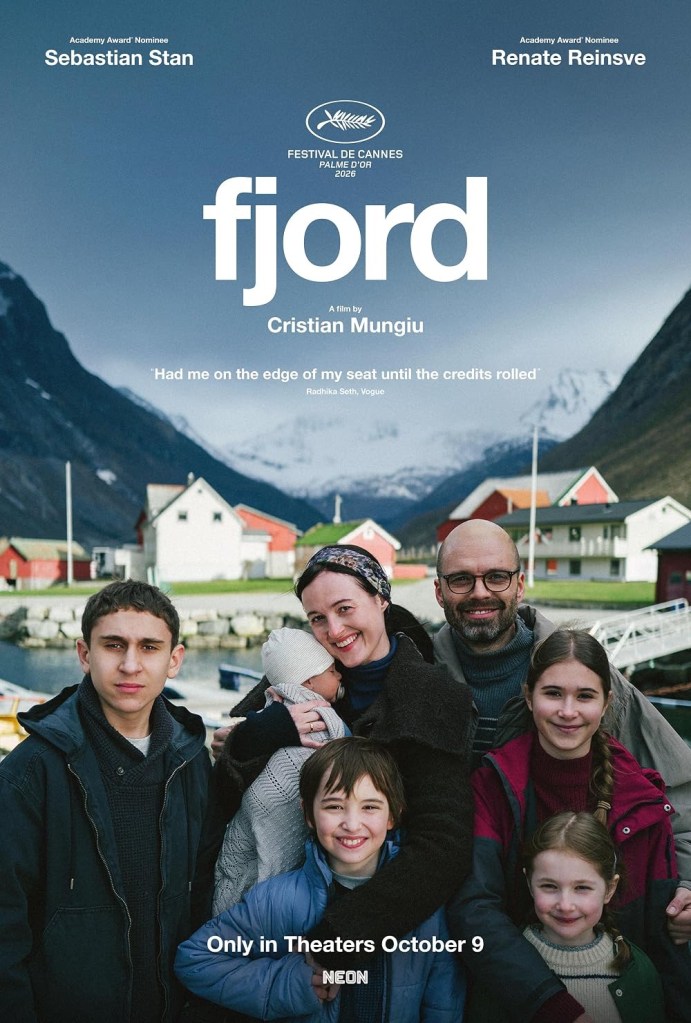
Fjord Review


Legalities are spotlighted in Fjord. Written and directed by Cristian Mungiu, the film has received tons of positive press at many festivals. It won the Palm d’Or at the Cannes Film Festival, It screened in competition at the Sydney Film Festival, the Karlovy Vary International Film Festival, the Hurtigruten Nordic Film Festival, the Sarajevo Film Festival, the San Sebastian International Film Festival, and the Atlantic International Film Festival. The film also had its premiere at the Toronto International Film Festival and was selected for the Spotlight Gala section of the New York Film Festival. The film is set to screen at the Morelia International Film Festival and the Tokyo International Film Festival as well. All of this exposure at international film festivals will cause Fjord to be remembered for ages.The serious subject matter and realistic writing will matter to cinema-goers around the world.

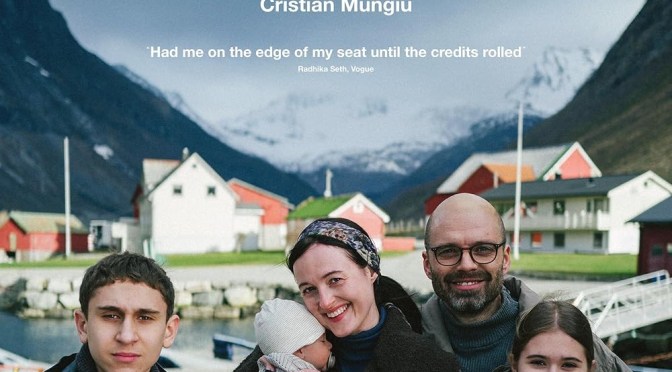
The film focuses on a child abuse scenario. There is an investigation, and multiple moving parts involving a religious family. The father is Mihai Gheorghiu, played by Sebastian Stan. He is a Romanian father laying out the code of conduct with religious practices. His wife is Lisbet Gheorghiu, played by Renate Reinsve. Lisbet is Norwegian. Their daughter is Elia Gheorghiu, played by Vanessa Ceban. Their son is Emmaneul, played by Jonathan Ciprian Breazu. It is a big family that moves to a progressive yet remote Norwegian village. The strict rules and punishments impact the family when Elia shows up to school with bruises. From that point on there is a child custody battle. The story is a vivid ride that is emotional, breathtaking, and causes viewers to think. The religious practices and family-related activities are  part of a  pattern of devotion but also controversial. The audience realizes that not everyone can handle the strictness of the Gheorghiu family.

Clashes regarding norms of behavior are pushed to the limit in Fjord as religious practices take a turn for the worse. Breathtaking undertones are played out as the path to finding what is right for Elia is pursued. The writing and characterizations boil with family emotions particularly when it comes to traditional rituals and what is considered abusive. The complex parts of the legal system are polarizing and then things really go awry when the children are taken away by child protective services. They hired their friend, Mia, to be their attorney. She is played by Lisa Carlehed.  Mihai and Lisbet must deal with the consequences. Their religious norms may not be tolerated by the country they now are living in. 

What I found spellbinding was how family values get handled in this story. Mihai upholds time for prayers and limits technology usage. He is also physically violent, but not to the extreme. The children tell their story to the authorities through their own eyes,  and they believe they’ve been badly harmed. This is where reality clashes as their parents must now think about how their behaviors impacted them. They also must think about how the situation impacts their own lives. It is not a simple situation or an easy trial, but faith and resilience shine in sensitive and exhilarating ways.

There is a moment when Mihai says, “Beating is coming from heaven!” He says this to demonstrate his disciplinary beliefs to the authorities. He later says, “It’s a cultural thing!” His words may be controversial, but deep down he means them. The family dynamic is strong, yet issues are blown out of proportion. The reality of dealing with the case in Fjord causes sadness to linger due to the unsettling situation. I found the film breathtaking. Legal issues, emotional challenges, and the will to never give up by a family working together as a team creates cinematic power in Fjord. Four out of four stars.
 

Her Private Hell Review


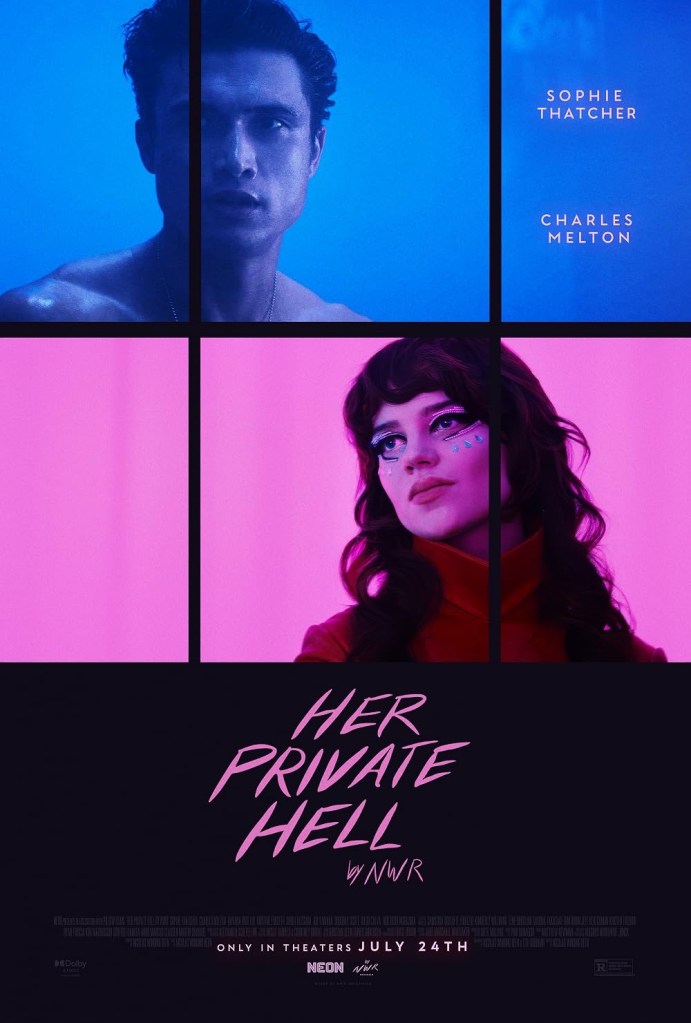
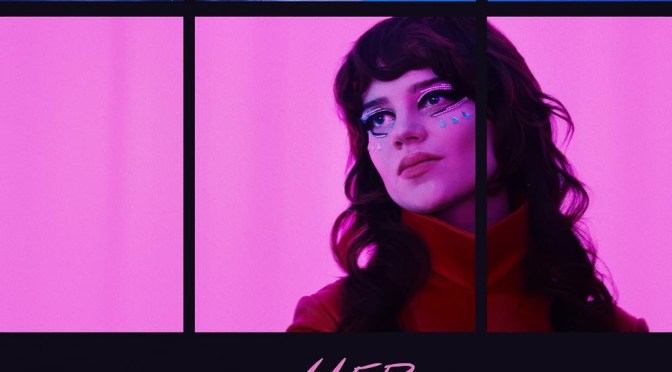
The title here is one of meaning, especially in a setting where evil slumbers. It is an enticing world of neon lights with many ominous moments–futuristic like a Matrix setting.  The title, Her Private Hell, however, spoke to me on a lower level. I felt I was on a journey through hell with this experience. The tangents of futures and space kept on being so clingy. I found myself awed, but then later shaking my head in frustrations. There arecool visuals as in sparkling and dazzling, yet the continuity throughout shifts with pointless patterns. This is a world where cinematics deserved better writing.


The film is directed by Nicholas Winding Refn, set in a metropolis setting. It is all about rivals, violence, sex, and fashion—all of which do not combine or vibe well in Her Private Hell. The film is about three women. They are Domonique (Havana Rose Liu), Elle (Sophie Thatcher), and Hunter (Kristine Froseth). It is set in the world of a movie, and surprisingly Domonique plays the guardian of both Elle and Hunter. There is a young demographic that does not make sense, and they are in the space setting where power, greed, and fame are the central focus. The three lead men in the film are Private K (Charles Melton), Johnny Thunders (Douglas Scott), and Nico (Diego Calva). 


A world of fame and jealousy keeps surrounding itself with sex, desire, and violence. It becomes almost too much to handle. The continuity felt cool and surreal. The focus though, is completelyoff topic. The central purpose kept relying a lot on CGI usage and technology. That kept me focusing on the fact that they were trying and creating disturbing elements rather than selling the film. For Refn, he is good at creating many dark or competitive moments. However, in Her Private Hell, he keeps on misleading it in a context that is not great. There are no positives with Her Private Hell.


The dynamics between Domonique, Elle, and Hunter all surround being famous in a movie—one in a futuristic setting where the lights and skies were given more attention than the plot of the film itself. Then the men– Private K, Johnny, and Nico are involved. There are forms of romanticism leading to forms of violence and jealousy. Somehow, they all loop into the film. The execution of direction though is horrid. Her Private Hell is such a downgrade of an experience. Quite disappointing for me to say the least. One out of four stars.


Leviticus Review


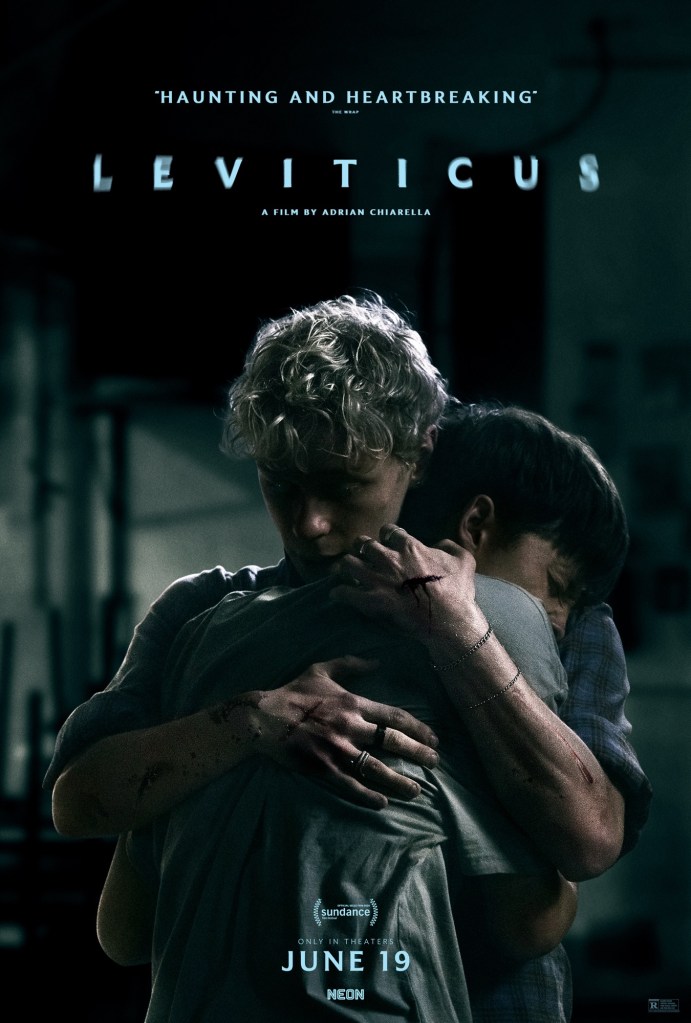
This is a terror film that shocked my mind. I could not turn away due to the deep bond just under the surface. Leviticus is haunting, daring, and mentally mind-boggling. When it comes to friends and deep connections, the force takes a toll. The fight for love and friendship is one-of-a-kind. The film starts with someone finding a form of joy that is dismissed later, karma plays a role. Written and directed by Adrian Chiarella, his approach has violence written all over Leviticus. 

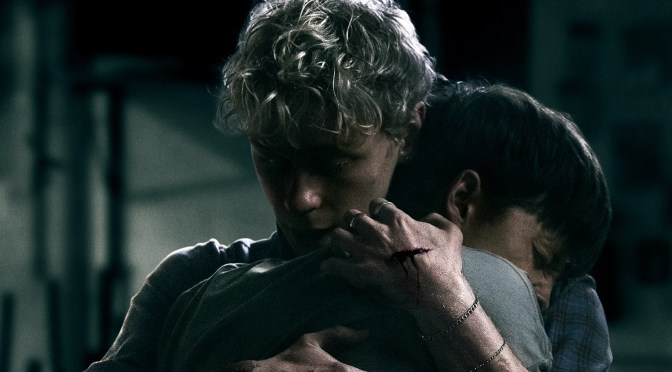
Filmed in towns in Australia, the subject of conversion therapy is deeply rooted in Leviticus. The film centers on two teen boys, Naim (Joe Bird) and Ryan (Stacy Clausen). Both of them have a love interest in each other, but believe it must be kept secret since they come from family backgrounds where their sexuality may be viewed as inappropriate. Naim’s mom is played by Mia Waskikowska. She wants Naim to find connection in his life, but at the same time her religious beliefs are top of mind. Therefore, Naim feels he is in a place where he cannot love Ryan. This film is a tear-jerker especially when the terror comes around in such haunting yet intriguing ways.

The film finds its wonders when it focuses on the feeling of someone wanting to be the center of attention. Naim finds Ryan in a scenario where he believes he is not interested in him, and he betrays him in a childish way. This leads Ryan’s family to have a man known as “The Deliverance Healer” to try to spiritually kick the same attraction thoughts out of Ryan. Is this approach beneficial? To an extent, it is not, but it is meant to keep the compelling storyline going. When this happens the fight for love in Leviticus feels bold. At the same time, it cannot be dismissed. The feelings between Naim and Ryan cannot be diminished.

After the healing approach is attempted, the spirits continue to come back and haunt Naim. The possessive issues involving Ryan look detrimental. Naim always finds himself feeling that an evil source of Ryan is after him. With no one to look out for him, there are times when audiences will assume the worst. In reality, Naim still loves Ryan, but he wants the spirits to go away. Ryan does too. Can their love survive with the lurking terrors following them?

I appreciated how the karma theme in Leviticus uses bipolar writing to create resilience. The writing technique of Chiarella is two-sided—one to think about love and the other to think about survival. Both must be achieved before happiness can prevail. It takes a bloody fight and circles of death matches before that can happen. Leviticus is a ride I urge viewers to take to see how far the main characters go to get what they want.  How bad do Naim and Ryan want each other? Find out in Leviticus. Three-and-a-half out of four stars.