All posts by Tarek Fayoumi…The Paterson of his Craft!

I am someone who strives to become a professional critic. I watch and review many movies. I view the eyes of movies as something as an art form. I have followed many critics over the years, but once I was thirteen I knew writing film reviews was going to be my passion. I learned from watching multiple episodes of Ebert And Roeper in my teen years, and then in middle school I began writing film reviews for a newspaper club. I am also an avid fan of the arts of Chicago including Theatre, Comedy, and music. Films, however, are my primary focus.

Close to You Review


Elliott Page delivers a grandeur performance in a role that speaks for itself. In his days as Ellen Page, he portrayed an emotional teen facing a pregnancy crisis in Juno. In Close to You, Page brings the same energy with realistic feelings experienced identifying as a man. Close to You creates anatmosphere with a sense of disconnect exploring feelings that are hard to tolerate. The desire for acceptance and wanting to feel loved spirals in a spellbinding way. Page portrays someone who is depressed, confused, angry, and questioning. Accepting life for what it is comes with many obstacles in Close to You.

Page plays Sam. Sam is going home to visit his family to celebrate his father’s birthday. He has not returned home in years, and the thought of it causes mentally anguish. The silence of his train ride paints a portrait of what he is feeling because heknows many of his family members question the fact that he transitioned to being a male. On the train, he meets an old friend named Katherine (played by Hillary Baack), who is hearing impaired. Sam senses a chance of feeling loved for who he is. Once he makes it home for his dad’s birthday, the atmosphere begins to be uncertain. His mother, Miriam (played by Wendy Crewson), tries to help him remember he is loved. The rest of the family sends odd vibes to Sam.

The film is all about the patterns of family dynamics. It is crystal clear why Sam keeps encountering annoyances when he comes home. His family including Megan (played by Alex Patton-Beesley), and Kate (played by Janet Porter), tries to talk sense into him and not be hateful or resentful. However, her brother-in-law Paul (played by David Reale), is a narcissist and very unaccepting. The different thought patterns of people in Sam’s home cause him to spiral as he struggles to mentally handle what is going on around him. All he wants is to feel loved for how he chooses to be.

The film stays focused on the many obstacles Sam faces and how they make him feel. When his head is spinning and his family is causing him confusion, does he take a stand? The narrative of Sam being the bigger person is an aspect that weighs heavily in Close to You. We see this as Sam puts people in his family on the spot when they take a confrontational tone with him. When Sam stands up for himself, I felt the film displayed honesty in showcasing the timing of when thingsshould be said and how words can hurt.

Is Close to You realistic? Very much so. Is it a happy film? In parts. Does it matter how Sam identifies? No, it does not. What matters is what Sam’s heart wants.

Choices are not always easy. For Sam, his choice created mixed signals for his family. The film includes conversations from a history of past problems involving Sam and highlights personal conflicts with one another. The past still hurts in Close to Youand the story focuses on a complex reunion where trust amongst family members means everything.

This film is incredibly real. It shows Sam facing a reality thatmany deal with every day. Close to You portrays how people can make tough decisions based on what their gut is telling them. The truth may be hard to accept, but it does not mean there is hatred. Life is about navigating how to help those we love most. There is love in Close to You. It is displayed in the layers of Sam’s personal journey and relationships with both his family and Katherine. Three-and-a-half out of four stars.

Skincare Review


Elizabeth Banks in Skincare

There is a beauty line that is in strange territory. It is reputation-wrecking. Skincare has the audacity of a threatening situation. Written and directed by Austin Peters, it is a thriller of uniqueness. It brings in the place where connections are bound to happen. Its location is California, and the opening brings in an array of gems and success. Style and make-up are the high tier. When the chance of competition arises, there is also the startling momentum of one’s career to face sabotaging elements.

The big star is Hope (played by Elizabeth Banks). Hope is a famous aesthetician with her studio. Her assistant is Marine (played by Michael Jae Rodriguez). Hope has the looks and the personality to sell in her world of success. Changes occur when an owner named Angel opens his boutique across from her studio. Hope receives notifications that her email account has sent many lewd messages. Hope also finds ads for being an escort. The deficits continue to climb. Hope’s life falls into a downward spiral on the brink of losing her studio. Her manic mode goes bonkers. She has the help of a friend named Jordan (played by Lewis Pullman), and she is willing to do whatever it takes to Stop Angel from wrecking her business or find out who is framing her.

It is a silly premise. Skincare does know how to make the detrimental situation clever and enticing. It is a thriller that throws many obstacles into the mixture of the conflict. It is a competition of ego and personality. Where does the line get drawn? The product line is Hope’s weakness because it is not her strong suit. Hope is cute and attractive. She can use that to her advantage. Unfortunately, it leads her to an awkward quid pro quo scenario. Hope has options to save her career, but the conflict is coming to the right decision. The more time passes (with lewd messages and hacked accounts), the continuance of reputation and fame burst into flames.

The stressfulness of the quirky setup is the scandal going to the extreme. The writing is straightforward. It has layers of graphic consequences. The focus of an aesthetician, the film is a murky satire with crinkles of make-up waiting to be purified. Publicity hits all kinds of angles and stresses. Hopes’ rent falls behind. Angel continues to make profits. While Angel is bringing in the revenue, Hope continues in her downfall.

The characterization of Banks is one of many manic and bipolar episodes. It does give its audience the chance to think about personality and professionalism. Is Angel truly her enemy? Does her level of fame mean she already has enemies? Are there people who have tried to take advantage of her before? The background of success is authentic. Skincare creates a reminder for its audience that a following has potential risks. Hope is bound to have her life threatened forever. Can she handle the moving parts properly?

It is wacky, present, and realistic. Skincare gets serious in moderation. It begins with joyfulness, and the hammer comes down in increments. The slapstick aspects are giddy sporadically. Regardless, it knows how to be a thriller, and it knows how to be amusing (while its audience is on the edge of their seats). Three out of four stars for Skincare.

Strange Darling Review


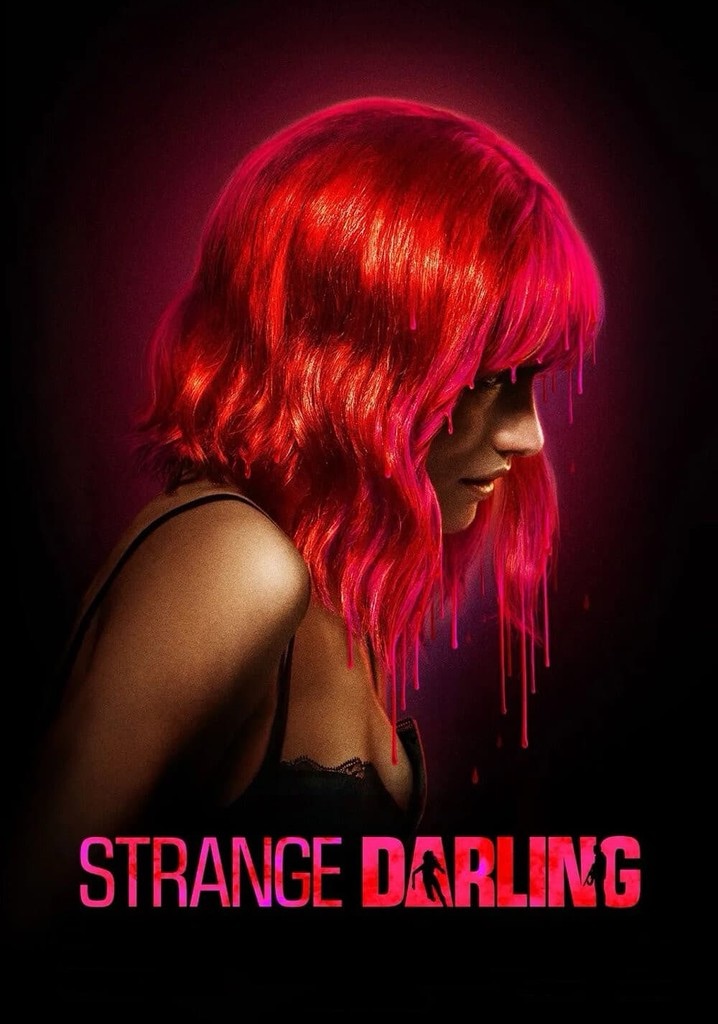
The film was shot in 35 MM projection. It follows a trail of terror based on moving parts of questioning. It has that subtle approach that makes its audience feel eerie. To the levels of creepy that like The Texas Chainsaw Massacre, Strange Darling is a dynamic of creepy that even left me in chills. Strange Darling is written and directed by JT Mollner. Mollner has an experimental approach with his dynamics of character in Strange Darling. That is probably why it is unsettling…on the levels of genius.

The film begins with chapters (they are in odd numbers). It creates a perspective of how conflicts began and what may have led up too many of the circumstances surrounding how the terror in the film has worsened. The level of perplexity in Strange Darling carries a vivid aspect of characterizations. The main characters are The Lady (played by Willa Fitzgerald) and The Demon (played by Kyle Gallner). A one-night stand of weird moving parts quickly goes awry. There is a trail of questions. Why does it get so out of hand? Who is more dangerous? Why are the films chapters jumping ahead and then reversing? The dynamics of characterizations and events flow the aspirational moments to keep its audience thinking.

It begins with a one-night stand scenario between The Lady and The Demon. There are already boiling factors of weird characterizations—both characters possess a form of disturbance in their dialogue. Their encounter is one that steadily grows to have questioning moments. This is by the usage of agreeing and then disagreeing, arguing, and then getting more aggressive and violent. Suddenly, it is a landscape of a horrifying ride. The Lady is on the run from The Demon.

My thoughts on the film began to linger with curiosity. Most of the film is a cat-and-mouse game. A scenario of good terms finding its red flags and then leading to a bigger and life-threatening mess to be cleaned up. Who will survive the outcome of this horrific event? They are both clearly bad people. Strange Darling is inevitable along the lines of keeping its audience intact with thinking back to the reasoning of the meet-up.

The interactive momentum of elements of surprise is the depths of surrealness. Strange Darling makes its landscape vast of deeper elements—the moving parts to what leads to treachery. Its pacing also goes smoothly. The vividness of Strange Darling comes across as blindsiding. Its “blindsiding” is done properly. The Lady has a creepy personality, The Demon has traits of confusion and bizarre expectations, both take the situation for granted—that is the realms of a vast array of suspense in Strange Darling.

It feels like a David Lynch world. With Lynch being one who is all about lighting to bring in elements of terror for effect, Mollner does this in his approach with Strange Darling. He brings in fades, frequent rotation of chapters, scenes, and transitions infrequently. Regardless of the technological aspects, his mix of patterns keeps its audience feeling a stunning world of unnoticed evidence. There is a secret to disturbing factors that continues to boil the thought-process for the film’s audience.

The brilliance of this one-of-a-kind adventure is that it keeps painting the picture of moving parts—it gives its audience perspective on what went wrong. With evidence ranging from cocaine, ketamine, knives, guns, and tasers—it is clear there is no happy ending, but there is going to be a luring effect. It is all about putting the pieces together.

With the background of both characters having weird vibes, Strange Darling is one that feels experimental. “Experimental” along the lines of how the characters truly are as humans. How insane are they? Who is more to be concerned about? The Lady is running for her life, and The Demon is going through all tides to try and end her (after the one-night stand). The chance of survival hits a minimum level in Strange Darling.

It is gorgeous, exhilarating, and dominating. Strange Darling is terror combined with psychological and slasher, with a lighting track of realism of an old school feeling. The cinematography feels like a new age of horror. That is because of how the heightening level is in its tone of direction. “Tone of direction” which matches the level of darkness that thrives Strange Darling. Three-and-a-half out of four stars.