Category Archives: Film reviews

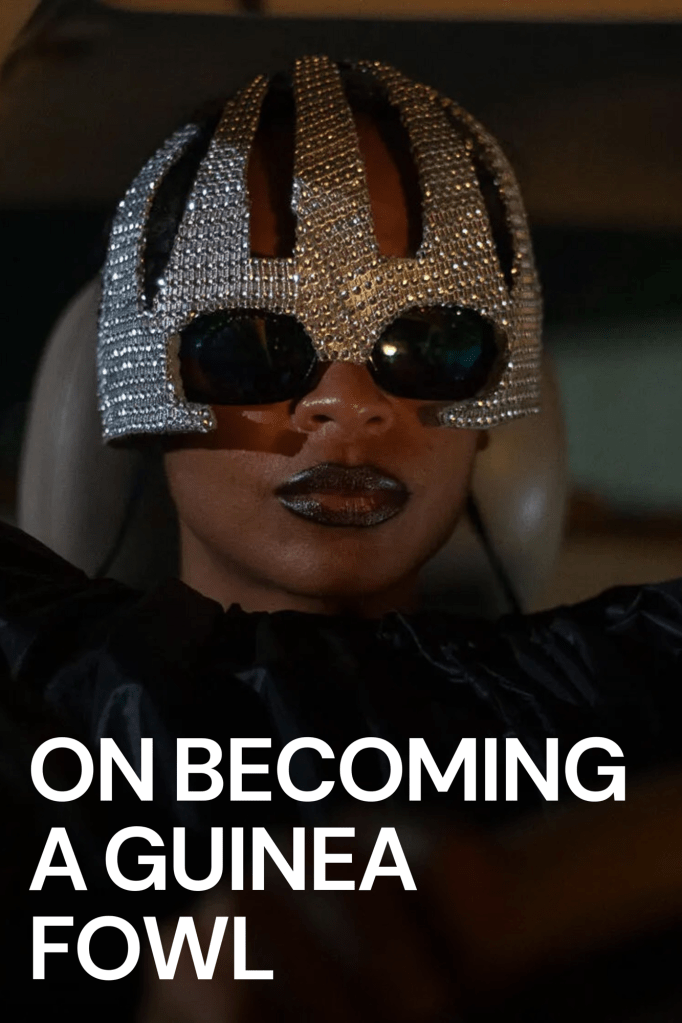
On Becoming A Guinea Fowl Review


There is that notion of curiosity that lingers in a subtle matter. On Becoming a Guinea Fowl is a portrait of life and reality coming together to hear the harsh truths. Those “harsh truths” are in terms of one who is deceased. The devastating matter goes forward to creating an understanding of what to believe and what not to believe. Adjustments of honesty and facts are in forms of personalities—they are through those dealing with the complicated situation. Written and directed by Rungano Nyoni, On Becoming a Guinea Fowl is a landscape piecing together parts that are hard for a family to bare. It is cinematically enticing and deeply emotional. It will leave audiences to wonder what notions to buy.

The film surrounds Zimbabwe and a middle-class family. The character of the show is Shula (played by Susan Chardy). Shula is driving on an empty road and comes across her uncle lying dead on the street. Once this happens, word-of-mouth happens instantly, and funeral arrangements begin to come together. Her cousin Nsansa (played by Elizabeth Chisela) comes into the picture. Nsansa displays an obnoxious personality, and Shula is introverted (her characterization and facial expression have traits which prove she has a lot on her mind). With the family trying to cope and deal with the funeral arrangements, deeper and horrid revelations come around. Her uncle has done some things that are unforgivable, and with the family all together, the weaving emotions struggle to remain unseen.

The painted picture is suffrage at its finest in On Becoming a Guinea Fowl. There is no light on what is mentioned, but Shula is the one that keeps thriving for her family to find what is good in the dark after one is deceased. It is enticing with the family clashing, disagreeing, and not seeing eye-to-eye. A mesmerizing path of putting behind the bad does not come easy in On Becoming a Guinea Fowl. The apple does not fall from the tree in terms of the hatred that spirals like crazy.

The film loops in expressions of complications—no one knows how to view the scenario. The more family that arrives, the more suspicion. Nsansa is always looking at the offensive context of their uncle. “Offensive context” is painted fresh throughout all the vivacious negativity of the funeral process. It is one of those films where my mind kept making me wonder how the funeral can play out. Does one plan to make a scene? Does one plan to make a confession? Are there more unfortunate awakenings abounding? In the film there is the saying, “The good die to soon.” That saying means that clearly there is a major percentage of relief after the death of Shula and Nsansa’s uncle.

The writing of coping is cinematic. More hidden truths become increasingly disturbing—enough to make there be grievances and hostilities. However, “grievances” and “hostilities” are the building blocks that Shula continually works to downplay. On Becoming a Guinea Fowl is a masterpiece that measures how family absorbs a loss—in a precise approach—the thoughts of the individual family members create a pattern of distress that will hit it audiences emotionally and vividly. The drastic sense of trust is about the norms of those in attendance at the funeral. Three-and-a-half out of four stars.

The Fugitive—FACETS 50 Capsule Coverage


FACETS has a season of diverse and cinematic media that spans a lot of nostalgia. With programs ranging from new to restorations, FACETS knows how to keep classic movie-going experiences alive and thriving. I had the pleasure of experiencing The Fugitive in the FACETS 50 series. This series contains variety of films that are back for revisited moments. The Fugitive is a Chicago thriller that brought me back to the first time I saw it. I have never seen The Fugitive on TV butinitially saw it at the Music Box Cinema in the fall of 2019. This was only the second time experiencing this movie. The suspense of the Chicagoland setting and many runaway scenes reminded me how diverse Chicago’s landscape is. The Fugitive is one of the most mesmerizing portraits of what makes a masterpiece.

Director Andrew Davis took viewers to a new world of suspense with The Fugitive in 1993, the year I was born. Revisiting the 1990s made me realize how The Fugitive is best viewed on the big screen. The chases and discreet moments in many Chicago venues are unique and intriguing.

The event continued with a post-screening discussion with Davis and other filmmakers on Zoom. The night of Chicago cinema continued to dazzle as more details were shared about The Fugitive. There were gems discovered related to the writing of the script and the sets in the film. Davis said that he stated in the early in the process, “The script doesn’t make sense!” But as production went on, more was added. The biggest revelation was the St. Patrick’s Day parade, an idea that added to the suspense of the film.  In addition, attendees learned about the dynamics between Harrison Ford and Tommy Lee Jones during the production process. The conversation about the behind-the-scenes elements made this FACETS event special for cinema aficionados of all ages.

Overall, FACETS is a wonderful home for movie moments of both films being viewed for the first time or ones being revisited. Director Davis brought to light an understanding of how our world has evolved over time and the impact on movies. Despite all the changes we see today, his words resonated with me when he said, “The Fugitive opened the door for many movies to be shot in Chicago.” It sure did! For more upcoming events and diverse programming visit facets.org for listings of the many wonderful programs they have coming up. There are also memberships, souvenirs, and all sorts of other ways to participate in the appreciation of film at FACETS. It is definitely worth the time and energy to visit in honor of its 50th Anniversary .

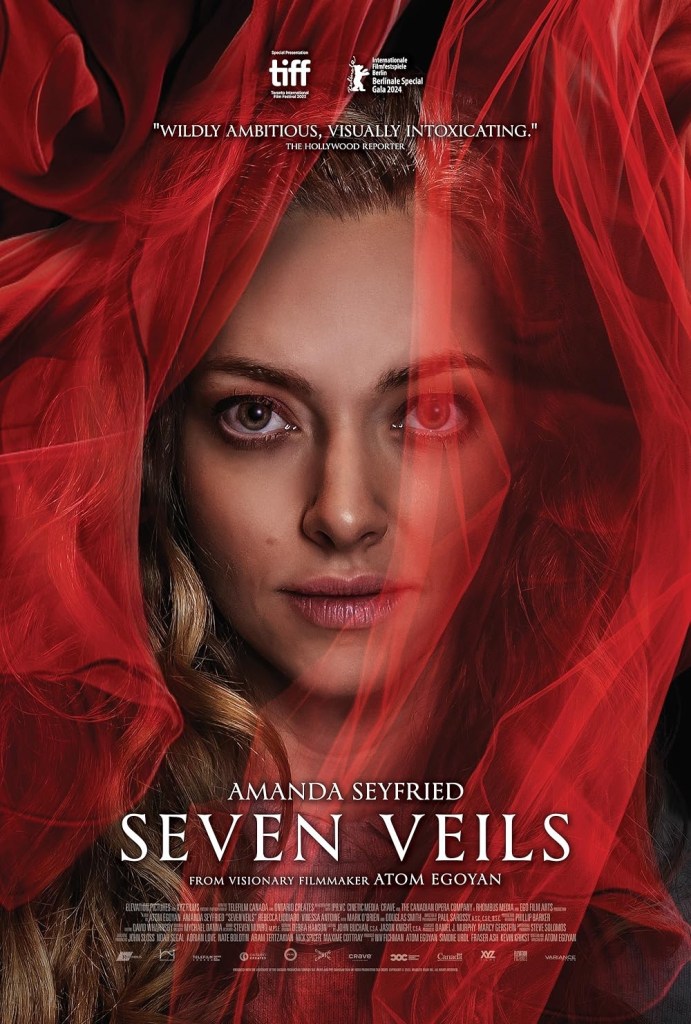
Seven Veils Review


This is one of those rare experiences that feels like a project is the height of the masses. Seven Veils exercises anxiety and pressure to the point of disgust and the chances of having a meltdown. It also leads to a cinematic storyline of what thrives to make a portrait personal. “Personal” as to incorporate past moments to make a show breathtaking. Written and directed by Atom Egoyan—he has a background with parents that were artists. His inspiration for visual audaciousness is one of a natural element—it is present in Seven Veils.

The film’s main character is Jeanine, and she is played by Amanda Seyfried. Seyfried worked with Egoyan in the 2009 thriller Chloe, and she played the role of an escort. Her attitude shifts to the more serious and mind-boggling approach as she plays an opera director in Seven Veils. Her task is to put on an opera that was under the direction of a previous director. This task of hers is one that is mentally and visually overwhelming—both those elements grasp with a form of continuity that boils the film’s tension. Going forward, the film also introduces us to Clea, and she is played by Rebecca Liddiard. Clea is the props assistant, who creates crafts for many theatricals. The film has slews of narrations from both the performances of Seyfried and Liddiard—this paints the portrait that putting on a production and the stage has its own tensions off the stage.

The film had my mind wondering consistently about the artistic value in the sense of impact. Jeanine is written to be a person who is passionate about her work but also has problems at home. A lot to do with on and off relationships with her husband Paul (played by Mark O’Brien). Both their priorities are shifted, and that is the additional stressor for Jeanine (on top of directing an opera). The sense of exploration to tie in “personal” begins to become fiercer on and off the stage in Seven Veils. It is irresistible. Then there is a point where support comes from a fellow friend named Luke (played by Douglas Smith). He is one that is inspired by Jeanine. Overall, though, the ethics of what creates a performance to feel immersive thrives in an immense mode of prestige.

I found the film to be a study of a pattern. One that is faithful but also tries to focus more on the negative over what is positive. To an extent though, I respect this pattern, since it is one focusing on taking on a challenge (not anticipated). The ultimate question is do the outside moving parts truly fuel the narrative? Is there a reason for what is creating weird conflicts before the opera? Are their personal and competitive politics coinciding with Jeanine or Clea? The arts are a place of deception (in some circumstances). Ultimately, it is about if there is a light that sparks in the minds of those putting forth production. Almost, executed with a well-written craft, but still maintains its subtle speed in tone. Two-and-a-half out of four stars.