
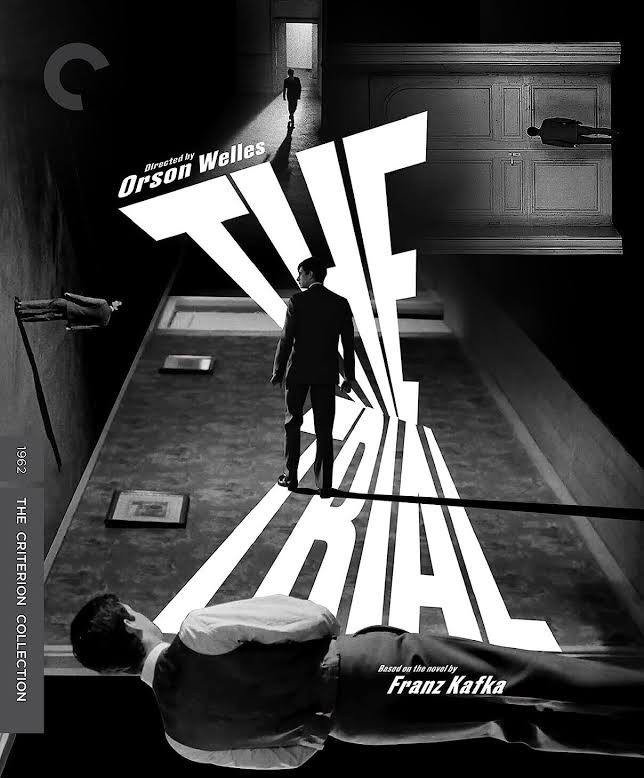
The 1962 classic The Trial is one of the most classic thrillers by Orson Welles. It is coming to the Criterion Collection September 19th. STUDIO CANAL and the Cinematheque Francaise took the steps to restore The Trial. Before this movie made it to the Criterion Collection, it had a 2015 2K restoration. There was also a restored DVD edition released in 2000. The restoration of The Trial is vivid with historic and cinematic grandeur. The essay (which comes with the Criterion version) goes in-depth about Welles’s fascination with the film and explains how The Trial was his special project filled with realism and faithfulness.The film is based on the novel by Franz Kafka, but Welles madeThe Trial a masterpiece. Welles sacrificed for The Trial, and it is seen through the Criterion Collection’s restoration of this invigorating story of suspense and deceit.
The reason that Welles is the hero of The Trial is because Kafka would not finish the writing of his projects. Both were visionaries but had different approaches. Welles was the artist of visuals, and Kafka was the creator of words. Kafka had an issue with committing to his craft. Welles committed to his craft but also had unfinished projects but fortunately he was able to reach completion with The Trial. To this day, the film has symbolic value due to its surreal characteristics.
The Trial focuses on Josef K. (played by Anthony Perkins) andbegins in the setting of his apartment. His morning begins with police inspectors informing him that he has been arrested. The police do not tell him why and therefore Josef assumes that maybe the conflict relates to his landlord, Mrs. Grubach (played by Madeleine Robinson) or his neighbor Marika Burstner (played by Jeanne Moreau). Josef keeps trying to explain his point of view to the authorities, but they continue to insist that Joe is the one in trouble. The black and white cinematography is effective in creating a pensive atmosphere as the life of Josef sees more darkness during the days his legal issues continue to follow him.
There are hidden underlying stressors in The Trial because Josef realizes those who try to help him may not be as honest either. With Josef’s career as a departmental assistant at a well-known company, his stress only gets worse. Perkins’ performance is where The Trial stands out as an essential classic in terms of dramatic character development in a very poetic film.
The film’s definition of trust is seen played out through the actions of Josef. His personal puzzle which involves the people around him paint a picture of how viewers think as they watch The Trial. Josef’s Uncle Max (played by Max Haufler) comes in to help. He helps Josef find his advocate, Albert Hastler (played by the legendary Orson Welles). Then there is the advocate’s mistress, Leni (played by Romy Schneider). There is also Hilda (played by Elsa Martinelli), the wife of one of the commission guards. Finally, there is Irmie (played by Naydra Shore), Josef’s cousin. Each person is someone that Josef must choose whether to trust. Some can help him put the puzzle together to find peace. Some betray him. Josef is still not told why he is under arrest. In the end, he must choose for himself how to put the strange and shady puzzle together to prove he is innocent.
The Criterion Collection’s restoration had amazing authenticity. My head was spinning with questions as I became hooked on the grandeur of this cinematic adventure. Is Josef’s help really of help? Is Josef’s case a growing conspiracy of unknowns? Is there more than meets the eye in the revelations of The Trial? This restoration offers a clearer and more faithful portrait of Josef’s Kafkaesque nightmare that is never-ending and triumphant. The Trial from the Criterion Collection is historic Welles at its finest. Four out of four stars.
 Movies with Tarek