Lynch/Oz on The Criterion Collection: A Deep Portrait of David Lynch’s fascination by the Wizard of Oz


“There is not a day that goes by where I don’t think of Wizard of Oz.”

-David Lynch

Written and directed by Alexandre O’Philippe, Lynch/Oz is now available on The Criterion Collection. I am a huge fan of the many films of David Lynch, as is Philippe. This surreal documentary opens with a vast introduction that opens with a fancy chandelier, a green curtain, a retro-microphone, and a stage. Philippe himself opens the film presenting himself as a Lynch-type character. With Philippe having tons of invigorations from Lynch, he has stated that he had watched Lynch’s Lost Highway so many times in a cinema. Philippe’s love for Lynch is portrayed truly by going deep into the cinema world of what makes the films of Lynch so enticing…it is Lynch’s love for the 1939 sensation The Wizard of Oz. A vast and in-depth rollercoaster ride of ambience that made me love and appreciate the films of Lynch so much more.

The film goes into chapters. In the chapters many in the industry are interviewed on their takes and their cinematic vibes from the perspective of Lynch. They all link back to The Wizard of Oz. The film dives deep into talking about how The Wizard of Ozwas a film of patterns—a film that only played on special opportunities before the era of advanced technologies that are around today. The correlation of The Wizard of Oz plays deeply into the films of Lynch…more than audiences think they know.

The masterpiece of art being defined in Lynch/Oz links back to the films of Lynch and The Wizard of Oz. The element and spoken word “transcendence” is one that is to have in mind throughout the entirety of the documentary. That is the key to the factors of the atmospheric dimensions with Lynch and his love for The Wizard of Oz. With the interview of Amy Nicholson, she goes deeply into elaborating of how wind is one of the elements where Lynch’s talent is heroic. I have seen this in the works of Lynch. Especially in Blue Velvet and Twin Peaks:Fire walk with Me—the levels of depths and foreshadowing in the aspects of cinematics feel the senses of art movement connected to The Wizard of Oz. Nicholson says, “Never be content to just take things at surface level,” and from my experience with Lynch/Oz, I realized the works of mind of Lynch are a much more thorough and an artistic language that is one of much more enriching value. When there is a curtain in a film by Lynch, it is an indicator for an entrance to a new world.

With the talks and all, the heights of surrealism and inspiring value only find more appreciation in Lynch/Oz. The different worlds of good and evil are what speaks to Lynch. When it comes to the evil witch in The Wizard of Oz, the real-world and nightmare world discussion is the vastest analysis of the film. The film has a chapter called Membranes and with Lynch that clearly means thinking or shifting of minds is one essential element of getting use to. From the perspective of Rodney Ascher, the good time of Blue Velvet is in tune with the happy times of The Wizard of Oz, and so does the bad times—the echoes of harsh occurrences prove accuracy of making dreams a reality in Lynch/Oz. What I love about the value of Lynch/Oz is its persistence. It does not only have its audience think of Lynch’s art…it also makes us think of the many films that expand horizons among reality. The two terms of importance of movie elements are “stimulation theory” and “layers of reality.” First, this is a theory where its audience is curious about which world is real. Second are influences shifting between worlds. Lynch is one who uses multiple realities—through having The Wizard of Oz in his head all the time.

The concept of dinging another world is where Lynch/Oz dives of faithful honesty in the films of Lynch. Brains of reality and fantasy prove a point of empathy in Lynch/Oz. The film also links back to many classics as connections. Films ranging from E.T., Where the Wild Things Are, and After Hours are connected to the discussions in Lynch/Oz. Lynch remains the central focus, but the inspiration also reminds society that fairytales and happy endings in movies transport audiences to moments to cherish within their hearts. Just like how Lynch admires The Wizard of Oz. Lynch/Oz leaves a dynamic of appreciation that is moving and alive. Four out of four stars for Lynch/Oz.
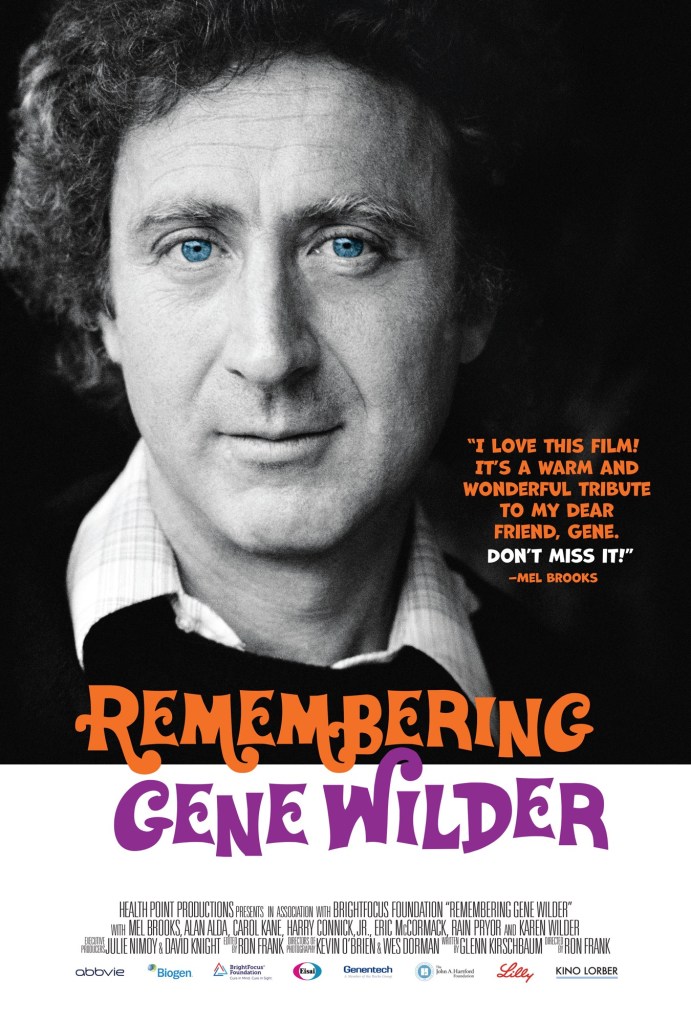
Remembering Gene Wilder Review


“It is everything that family movies usually claim to be, but aren’t: Delightful, funny, scary exciting, and most of all, a genuine work of imagination.”

-Roger Ebert on Willy Wonka and the Chocolate Factory

Remembering Gene Wilder is a wonderful documentary where I felt I was, “In a world of pure imagination,” exploring the life of an astonishing actor who was one-of-a-kind. The documentary begins with Gene’s voice and reminds viewers of the many doors that were opened in Gene’s world. Directed by Ron Frank, this documentary covers various projects Gene was involved in  and highlights entertaining twists and hidden pleasures on movie sets with Gene.

The film begins during the days when Gene worked with Mel Brooks, and his early days on Broadway in New York where he worked with Anne Bancroft. Remembering Gene Wilder caused me to remember fondly how curious I used to be about Gene’s acting style. He had a way of being unpredictable which was part of his genius and incredible ability to spread happiness through his comedic ways. Gene once said, “Being on stage was a thing that saved me from myself.” While practicing his craft may have saved him, it was a also a true gift to his audiences. 

The mesmerizing exploration in the documentary provide a chronological order of events which include interviews with celebrities and filmmakers. Gene had a keen vision of excitement that was like no other, and Brooks elaborated on this when he stated, “When he got excited, he was a volcano.”  I have always been particularly fond of the many movie memories of Gene where he was a “volcano.” He was able to portray empathy, pride, courage, misdirection, and craftmanship in a meaningful way. From my perspective, Remembering Gene Wilder is a mosaic of the unique authenticity in his acting style. 

When reminiscing about Gene’s personality and traits as an actor, his 1971 classic Willy Wonka and the Chocolate Factorystill delights whenever the film is revisited. Peter Ostrum played Charlie Bucket in the film, and he discusses he landed the role of Charlie at the last minute, and how working with Gene is a memory he will forever cherish. He elaborates on Gene by saying, “He was always doing something unexpected. Even if it was going down, three steps coming back two.” Gene’s colleagues learned to love his creativity and artistry. Remembering Gene Wilder details Gene’s role as Willy Wonka with a great deal of specificity.

Ben Mankiewicz, Alan Alda, Michael Gruskoff, and others contributed commentary about what made Gene and his films unforgettable. The fact that there was always laughter in his many personalities in all his projects is truly memorable. The discussions make this experience feel like a walk down memory lane of Gene’s life. The documentary highlights his projects through various cinematic eras including his projects withRichard Pryor. Their comedic chemistry in films like Silver Streak (1976) and Stir Crazy (1976) was amazingly successful because of how well their senses of humor blended.

Despite Gene slowly losing his memory, his loving heart was always there. The entire film is simply wonderful and upliftingdue to the many reminders of Gene’s talent and nature. The final few minutes of the documentary are one of the saddest endings I have ever experienced. In the end, there is a light and Gene always found the good…no matter how difficult, challenging, or detrimental an event was for him. He loved his wife Gilda Radner (who died in 1989) and he also loved his second wife Karen Boyer (his widower). Gene loved life for what it was. Remembering Gene Wilder shows audiences how much Gene put himself into the stage, into his movies, his friends, and hiscolleagues, and how he always had a touch of nostalgia that inspired many. Four out of four stars for Remembering Gene Wilder.

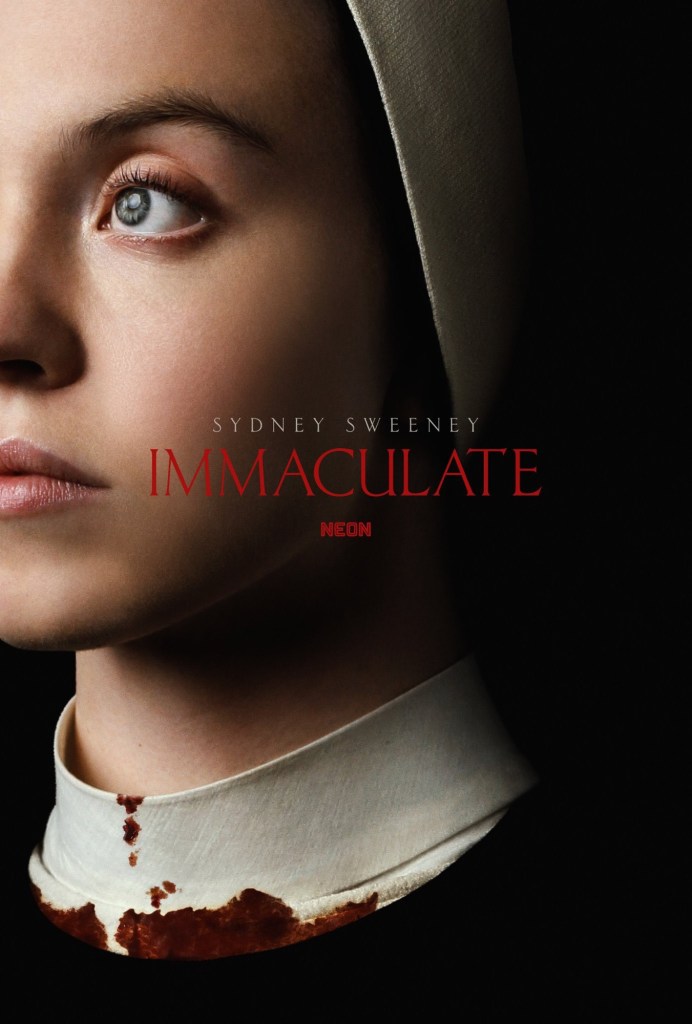
Immaculate Review


Immaculate is about faith being tested. The story is not so much about making religious or culturally-influence choices, but more about dealing with choices involving betrayal. The movie is directed by Michael Mohan and written by Andrew Lobel. Immaculate is audacious in portraying how difficult it is to maintain the faith especially when things begin to go south. The trailers caused me to anticipate that this film was going to be a bumpy ride of surreal terror which it was. The psychological tracks in Immaculate are destined to break norms and barriers.

The film introduces its audience to Cecilia who is played by Sydney Sweeney. Cecilia is a young American who is devoted to religion and takes a position at a convent in Italy. She has faith that this is her new Safe Haven until the attitudes of the other nuns and the staff start to create a pattern of disturbing questions. The Father at the convent is played by Alvaro Morte. He tries to convey that Cecilia is now in a place that is extremely safe. However, as Cecilia gathers facts and information from other nuns, she increasingly feels that the convent has some very unsettling vibes which are both devilish and life-threatening.

With Sweeney in the lead role, she has a very cute and innocent personality as a young practicing nun. Due to her youthful and pleasing style, the audience hopes she finds a way out of the convent before it is too late. The film periodically traces back to the practices of the convent and shows various times when many of the nuns are held back from going elsewhere. Whateverdetrimental actions and behaviors are happening at the convent,it appears that the more likely of the same is likely to occur. Immaculate is a movie about religion and faith where a trail of lies highlight the journey with their shock value.

With the setting in Italy, the language barrier also contributes to the tension in Immaculate. Cecilia cannot understand what is being said through most of the movie. What she sees and feels cause  her stress and uneasiness. Immaculate is an experience that is quite unsettling. Can Cecilia save herself from the terrorswaiting for her? Will her faith sustain her? What is the evil that lurks in the convent? Immaculate made me feel like I was in a historic church being subjected to extreme darkness which wasquite unsettling. The film is not an easy psychological thriller to absorb. It takes some mental preparation and toughness especially due to the violence and realizations that further put Ceclia’s safety in jeopardy.

Immaculate is a daring movie for a daring actress. Sweeney’s role is filled with pure adrenaline. However, the film overall was not amazing. It is one of those terror flicks that keeps trying to throw violence in to heighten the effect. In the end, I did not feel as satisfied as I had anticipated I would when I left the movie was over. Two out of four stars for Immaculate.

Treating cinema in many forms of art!