
Film-Girl-Film Festival…The Mother of All Lies Review


It premiered at the 76th Cannes Film Festival, the 2023 Vancouver International Film Festival, the 28th Busan International Film Festival, and is now premiering at the Film Girl Film Festival in Chicago at the Music Box Theatre. It is a complex narration of an honest reality through the eyes of writer, director, and narrator Asmae El Moudir. The filmportrays the truth of Asmae’s life growing up in Morocco. The way this filmmaker deeply explores issues and delves into uncharted territory makes The Mother of All Lies simply unforgettable.

The plot of the film lies in the depths of Asmae’s family where they are trying to find light. Asmae’s grandmother is Zahra, and her father is Mohamed. Her family is coping with much mental turmoil due to the massacres during the 1981 Bread Riots. The films realism is portrayed through both lightness and darkness.  There are haunting truths which encourage empathy because of the dynamics the family is facing. The poetics of Asmae’s exploration of her family history is full of surrealistic grandeur. Asmae’s grandmother is against photographs, because she feels it captures moments that are too painful for her tolerate. Because Asmae  is the film’s director, she controls the setup from anartist’s perspective. As a result, she is able to get to the root of where the pain lies within her family and herself.

The foundational story comes through the fascination of Asmae’s father. He builds an atelier with clay figurines which serves the purpose of representing moments in from the family’s past. The setting of the clay figurines is the Sebata District of Casablanca during the 1981 Bread Riots. This perspective featured in the film enthralled me.  Asmae’s father puts a great deal of effort into his models and clay figurines. They all serve a purpose in the present by representing some of the hardest moments from the past. I found it spellbinding.

This film set in Morocco is based upon a story which is beautifully written and thoughtfully examined. Asmae’s voice tells the story of many events in her turmoil-filled life that stir up her family dynamics. The story may portray a celebration for some, but for Asmae, it is about portraying the truth about her life growing up in Morocco. I felt empathy for Asmae while also being enchanted by the film’s visually grand odyssey. The street models and clay figurines representing a specific era serve to create a form of acceptance and appreciation in The Mother of All Lies.

All the explorations through Asmae’s family history make thismovie experience special. It is a unique documentary which is on point because of the value created by this landscape of faithful curiosity. It is extremely intriguing to explore the various aspects of the events which Asmae examines with her family. The voyage into uncharted territory of the past hits anemotional chord where art comes to life in The Mother of All Lies. Four out of four stars.
Knox Goes Away


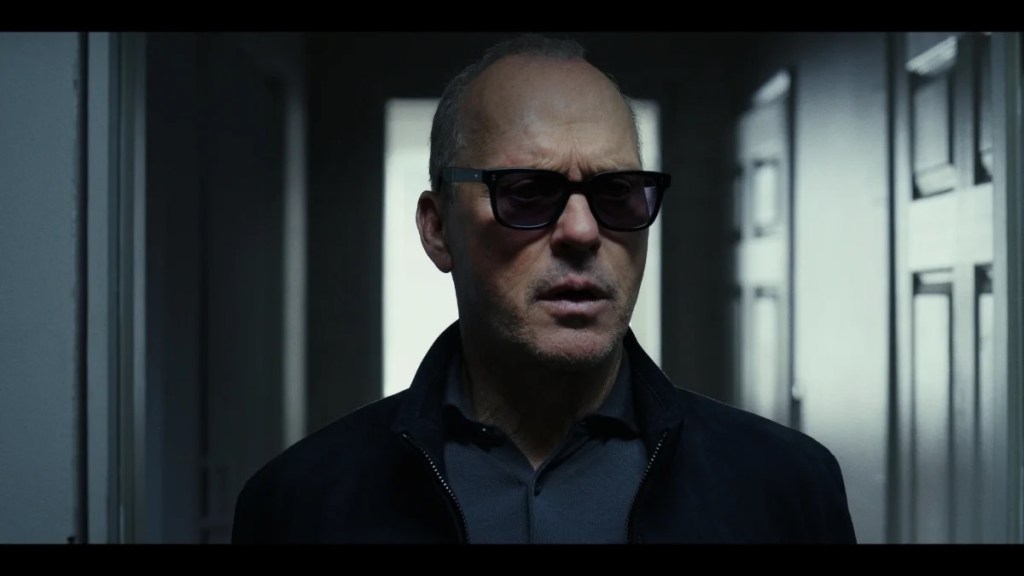
A film written by Gregory Poirier is likely to be thorough and in-depth. A film directed by and starring Michael Keaton is likely to be subtly serious and realistic. Knox Goes Away begins with the sound of a ticking clock which indicates that time is of the essence. In the story, a man’s success with criminal activities is about to hit a breaking point. This provides the motive to figure out a solution quickly.

Keaton plays John Knox, a man who has made a career as a contract killer. He has always remained under the radar and accomplished many detrimental missions. This all changes when he visits a doctor who informs him that he has a form of dementia and “There is no treatment.”  His dementia causes him to have various thought patterns and mood shifts. He continues his dirty work with the intent of stopping. This all hits a plateauwhen John fails at a crime job where there are many accidental deaths. On top of that, his son Miles (played by James Marsden) comes into his life and begs for his help. Miles finds himself in a difficult situation after accidentally killing a man to protect his daughter.

John was ready to stop making messes, but then his son createsthe most mind-boggling and life- threatening mess which needs to be cleaned up. John tries to retrace any aspect of the crime that could put his son in jail. He visits the crime scene, does a clean sweep, and deletes data from the security hard drives. Is John able to dispose of the evidence? With a detective named Emily (played by Suzy Nakamura) putting the pieces together, time is limited. John finds himself reaching out to his friend Xavier (played by Al Pacino) for assistance.

There are many stressors caused by the persistent dangers in this thriller. Most criminals have a strict discipline of keeping materials organized, but discipline becomes a blur in Knox Goes Away. The dementia echoes in John’s mind which is an indicator that the disease is progressing. John’s inevitable decline makes for a daring race to find answers and make things right.

Poirier’s writing is high caliber in Knox Goes Away. John’s thinking hits plateaus as he tries to navigate his evolving dementia. The crime scenes are staged by John, but his memory is weakening. The plot is an inventive puzzle. The messes and the fatalities caused by the botched crimes add to the suspense. 

There is also a calm feeling in the film which is enhanced by the playing of smooth jazz. The audience is left wondering…Can Miles keep his behavior straight? How serious is John’s dementia? The trail involves things getting worse before they get better.

The scenes featuring the detective stir the pot. Emily is bothsurreal and yet realistic. She goes deep with the evidence, the facts, the dynamics, and anything crucial to the case. She traces the events in order which proves the chaos will not go away in Knox Goes Away. The film has thrilling components that lead to a slippery slope that is as treacherous as a black-diamond run. Knox Goes Away’s writing reveals answers to a risky puzzle caused by someone with dementia who also a killer.  The perseverance in this movie is riveting and spellbinding due to the performances of Keaton, Marsden, and Pacino. Knox Goes Away also contains a backstory that is relentless and clever. Four stars.

They Shot the Piano Player Review


The focus of music flows with a jazz melody in the introduction of They Shot the Piano Player. The film lays out its investigative foundation in the form of an animation docu-drama. Directed by Javier Mariscal and Fernando Trueba, the latter is the main writer of They Shot the Piano Player. The film has a direction of narration where one’s attention about jazz music is captured by abackground of interest and diversity. It is set during the Latino musical movement around the Bossa Nova style. A true period piece where the pieces flow smoothly for an articulate purpose.

This animation is one-of-a-kind as it introduces its audience to Jeff Harris (voiced by Jeff Goldblum). Jeff is a music journalist. He dives deep into the evolution of music and cultures and others that inspired how diversity in the genre began grew over the years. His writing and research shifts when he come across the story of Francisco Tenorio Junior, a Brazilian samba-jazz pianist. An artist with a lot going for him who vanished in Buenos Aires in the spring of 1976. The story is one that Jeff gets hooked on.

The film evolves into the creation of fascination when Jeff does interviews for the story. Many of the characters are the real people doing their own voices. The reality of the individuals taking part in the film adds value to the film—it heightens the lavish feel and surrealness of the many moving parts that Jeff comes across. Jeff interviews Malena Barretto (who was close with Francisco), Gilberto Gill (a musician who Franciso knew well) and many others who use their real name. The facts, the research, and the deep digging direction of the film are inspiring. Is there a form of lightness or darkness in the story of why Franciso disappeared though?

They Shot the Piano Player is animation with high quality artwork. Francisco is dead, and Jeff dives deep trying to figureout how he came to his demise. I found that the enticing factor was much of the glamour of the jazz world blended with aspiring animation. Jeff narrates each introduction to many of the moments of his research in this very moving picture. The amazing voice of Goldblum and his delivery of the facts is in tune with the investigative narrative of They Shot the Piano Player.

The focus of what the outcome might be tends to be misconstrued though as the film goes into musical history, cultural backgrounds, and continues to trace back to Francisco. This makes the film feel two-sided. Is the musical research the bigger picture or is it the death of Francisco? There is a track of too much information digging deep where the mind of its audience may feel altered or confused on some levels. Still, it maintains its breathtaking flow of the artistic and the divine. The many political vibes in the era of the Jazz movement and the international background go back and forth and the cleverness of the story is on point. Three out of four stars for They Shot the Piano Player.

Treating cinema in many forms of art!