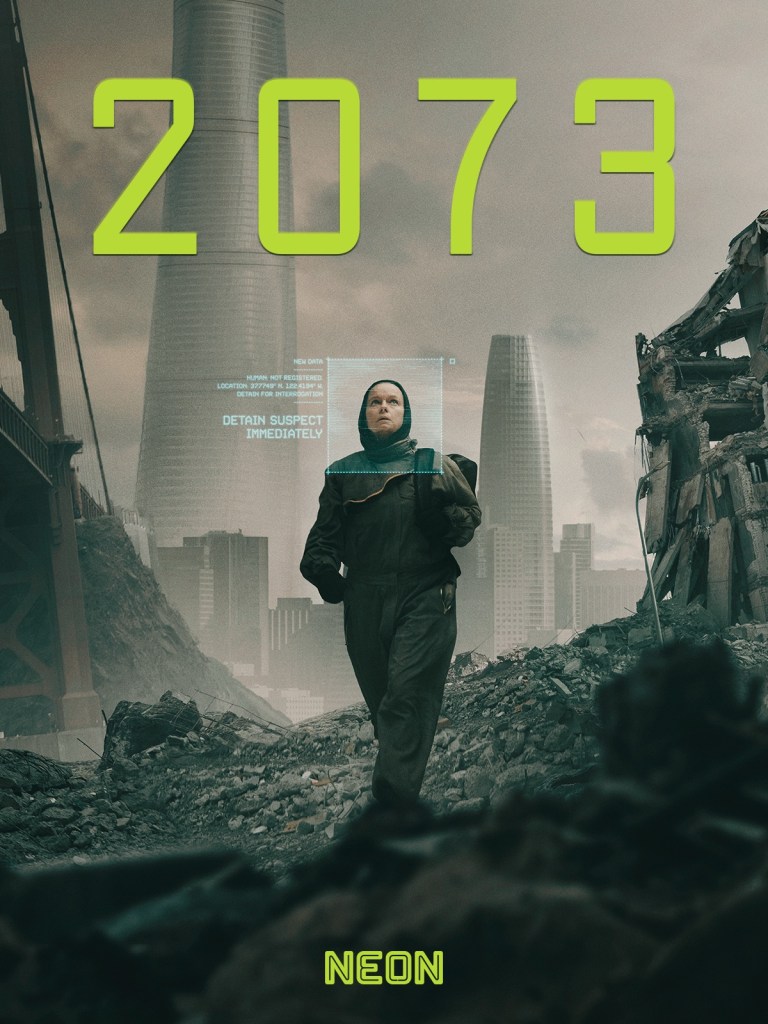
2073 Review


A future of chaos and technology blend in an uncontrollable pattern in 2073, a film that compiles itself as a documentary and a sci-fi thriller. The “documentary” component is the one with most sophistication in the film in and of itself. Written and directed by Asif Kapadia, the many global events which have happened in real-life play a key role in 2073. Society is the in-depth track of the film’s pandemic setting in its “sci-fi” direction. Even though it seems rushed and all over the place, the vast amount of knowledge, concern, theory, and true politics rise above and swiftly pull things together in 2073.

The film opens with a survivor, played by Samantha Morton. She is an individual living a life of peril after a global event has wiped out the many resources in the year 2073. She also narrates how her life once was before the world went awry due to many moving parts trying to make change, and most of the population not being on the same page. Issues such as AI, politics, and corruption are the pieces to the puzzle in 2073. The vastness of living on a thread digs deep, and then it transitions back to real-life events that have happened throughout the world today.

The archive footage side of 2073 makes its audience think back a lot to how the world is evolving. Despite the negative portrait painted, it is a film that speaks truth to how out-of-hand problems can be. This can be seen especially with robots taking over humans, technology outsourcing jobs, and the politics having the abuse of power to control what they see beneficial. Even though it is a context of harshness, 2073 feels like a fictional reality that can more than likely happen. It is just a matter of when.

The film links to names like Mark Zuckerberg, Boris Johnson, Steve Bannon, Donald Trump and more. It looks at many events the world has faced in the past and the ones it faces today. It focuses a lot on the markets, the evolving technologies, and economic inclines and declines. 2073 loops in the objective of the thought of a better future to sadly imply that the reality of what is truly ahead is not so great. The presence of facts and reality do make 2073 feel immensely engrossing. It is only a matter of time in 2073.

The storyline and writing of previous events happening and then jumping to the aftermath portion is a direction of interconnectedness. This is especially impactful when it showsthe events of the 1990s and the early and late 2000s. However, the timeline of detrimental consideration is the flaw of 2073. There is a point of creating a timeline and calculations for curiosity with the only conclusion being that each innovationcreates a form of depreciation around the world. Morton’s performance is the very last of that.

When it links back to Morton’s performance, the writing of the film creates the thought that the evolving technology of today is only depreciating resources going forward, since Morton’s role is one of a woman living in despair. “Despair” is a term of thorough meaning in 2073. I will say its presentation is engrossing, but in terms of thought process it continues into the tracks of the dark side of reality.

With the film transitioning between news footage from real-life events to a plot of survival simultaneously, it always has the thought for its audience about where their jobs may stand in the future. The film touches on operations of data, and then loops in how scanners in warehouses create people to be a label—the people’s performance are the data of success for a thrivingbusiness. The truth of technological factors having both a positive and negative impact loops in the truth of where the real world may be heading in 2073.

The film is vast in its tracks of evidence over its plot. Where does the story go for Morton’s performance? Why the suspensearound her life in particular? Is the archived footage the bigger problem to oversee? 2073 tends to have cliffhangers sporadically, yet it still remains on a track of enticement. Three out of four stars for 2073. 
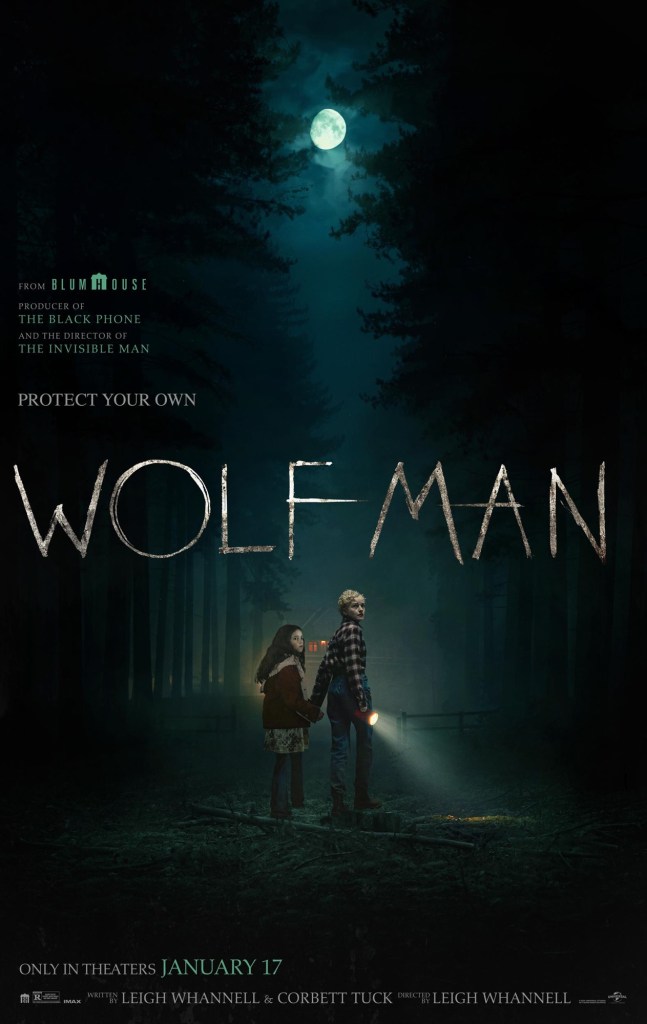
Wolf Man Review


There is terror hidden below the surface that flows through the mountains of Oregon. The backdrop features misty foggy weather and gloomy lighting that makes the howling feel real. Wolf Man has a calm layer to its horror setup, and it is executed in a slow manner. Directed by Leigh Whannell, a transformation involving larger conflicts takes place during the film. Wolf Manis not a typical horror movie or scary flick. Instead, this storyfuels the humanistic side in which the one who is infected is also the one who is fueled.

The setting of the film is the present and focuses on a family. Blake (played by Christopher Abbott) and his wife Charlotte (played by Julia Garner) have a young daughter named Ginger (played by Matilda Firth). Blake and Charlotte are looking for a getaway. They decide to go to Blake’s father’s farm in the mountains of Oregon. Once they begin this journey into the mountains, bizarre signs start showing up in this secluded placewhere the forest has a haunted aspect to it. Then, a creature bitesBlake, and he slowly turns into a wolf man. However, he still has the determination to fight for his family, but his time may be limited.

The story of Blake becoming a monster while still trying to protect his family before his symptoms worsen is an essential part of the genius factor in Wolf Man. The way this storyline is handled in this film is not commonly done in other suspensemovies. It leads to a climatic ending and lots of fearful moments along the way. It is a two-sided danger because of the fear of what is dangerous in the forest as well as the limitations of Blake’s protection since he is infected and growing into a rising creature. The film is faithfully directed with the focus on the infection causing time to be of the essence. As the darkness lingers, the growth of a monster keeps evolving while theminutes to find a cure slip away. And there may not even be a cure, but instead they could be fighting for their lives in a forest with no resources or help. For Charlotte, the concern is that her husband Blake may not ever be able to be go back to normal. Can he save his family from the dangers encountered in the forests?

There are moments filled with gruesome scenes, yet the film is not as creepy or suspenseful as some may anticipate. Overall, the movie is classy and has qualities which make it a real gem. The story makes the audience think about what could potentially happen if certain measures are not considered. Wolf Man thrives due its suspenseful pacing which creates a surreal experience. The film is unique in the ways it stays on a path that makes itfeel realistic. It is not mesmerizing, but it does a stellar job of using a different track to create memorable intrigue. Three out of four stars. 

The Room Next Door Review


Director Pedro Almodovar has always worked on films that force audiences to step out of their comfort zone. His directing style is unique in finding angles of suspense and consequences of feelings. From Talk to Her (2002), Broken Embraces (2009), The Skin I Live In (2011), Pain and Glory (2019) and other films, his films have mostly come with a hard R rating because of their context and contents with heavily mature themes. The Room Next Door though is his first PG-13 rated film and English-spoken project.  It is presented with a lighter tone to the adult material but still a heavy subject matter. His films are about finding ways to heal and to deal with conflicts and actions for unexpected events. The storyline of The Room Next Door revolves around one of these “unexpected events.”

The film takes place in New York and is focused on two writers, Ingrid (played by Julianne Moore and Martha (played by Tilda Swinton). Ingrid is an accomplished book writer, and Ingrid is a war journalist. They are quite close but have been out of touch for a while. Ingrid gets the news that Martha has cancer. Going forward, both reconnect and from there The Room Next Door is an emotional direction of doors that repeatedly open and close. There are moments of happiness and sadness—it is a bipolar force of a drama with intense writing.

Almodovar is the master of looping in moments of turmoil for a deeper purpose. Martha’s illness is the pot that boils the agony fearlessly in The Room Next Door. The film’s title is based on the setup and agreement between Ingrid and Martha. Martha wants Ingrid to stay and have a getaway with her for a few days before her death. This is where the film’s writing starts to rapidly create its blend of humanistic emotions. Almodovar is keen on making his audience feel what his characters are feeling—sad, distraught, aggravated, and confused. The cancer mixed with relationship issues causes all kinds of feelings.

Despite the hard favor asked of Ingrid, it is a situation that connotes realism on an honorable level. This is especially true when a third friend comes in fragments. That friend is Damian (played by John Turturro). He talks to Ingrid and stays in touch with her, as he takes on the role of one she can vent to. He is also a writer. This is the trail of three accomplished friends and writers, one of whom is bound to see her final days of life. Damian adds value to this though, because he talks about how life and sacrifice are things to think about carefully. Damian does not want much of the drama, however for Ingrid though, Martha is too important to her. The dynamic of this shows how some truly keep their distance while others remain close. The humanistic value of appreciation finds the boundaries within itself from the mind of Almodovar in The Room Next Door.

With correlating careers of growth, The Room Next Door dives to feelings of competitiveness, as the performances between Moore and Swinton start to briefly meander. The expectations of finding a strategy to live the best days of their life before one of their lives ends is a structure that encounters many obstacles in a row. Nothing is black and white. Almodovar’s direction of being ready for what is unsettling is what is captured thoroughly in The Room Next Door. Writers, friends, and life with complexities all thrive in arthouse moments throughout The Room Next Door. Three-and-a-half out of four stars.

Treating cinema in many forms of art!