Tag Archives: Film reviews

The Alto Knights Review


Director Barry Levinson has always captured the dynamics of fulfilling matters. The Alto Knights is a true story that keepsfalling stale. With a 20th century setting, the film builds on the fundamentals of cinematics to tell a story of politics, criminality and connection. Much of this movie relies on the performance of Robert De Niro who plays both Vito Genovese and Frank Costello.

The richness of The Alto Knights is in its approach using noir-type writing. Like many other mob flicks, the character development does not sync up with the foundation in The Alto Knights. The only lines that seem straight are in theperformances of De Niro’s characters going up against each other.  Over the years, De Niro has always displayed a loyal attitude with his serious words. Those elements are utilized again, but the continuity is flawed in The Alto Knights.

The plot focuses on both Vito and Frank and their background as crime family rivals. With their various connections and contacts, discrepancies brew below the surface in The Alto Knights. The wife of Frank Costello is Bobbie Costello (played by Debra Messing). Family integrity is presented as critical in a captivating way in The Alto Knights. There are many conflicts and disagreements between Vito and Frank, many related to the mob and previous events. Some issues end of in the courts where more secrets are revealed.

There is no clear line of resolution in The Alto Knights even though there is an attempt to paint a portrait of good and bad. Since both Vito and Frank are criminals, the apple does not fall far from the tree. The dynamics of the story weave frustrating emotions through the film’s central theme which tries hard to fly high. Levinson’s direction does what it can to aid understanding. The execution, however, is mediocre.

The uncharted territory surrounding the mob seems too vast to build an effective storyline. Vito and Frank both look like emperors of the mob. Deep down, the story is about relationships and trust becoming the bigger problem, yet the lines are unclear in The Alto Knights. Unfortunately, the theme of a family sticking together does not sell like it used to. Levinson’s direction this time around lacks to a massive level in The Alto Knights.

On a positive note, the biographical side of the story compelling, especially when related to the evolving era of mobsters and drug dealers. The deep examination of “who one knows” does not reveal any truth but simply adds to a stirring pot that keeps trying to find the pieces. De Niro’s performance is entertaining, yet not amazing because of the script.

Truly, this is one of the most disappointing films by Levinson. I rarely throw movies under the bus and instead try to find the best in all films. This is only the second time that Levinson has directed a mafia flick. His last one was Bugsy back in 1992 and now three decades later, the writing simply got stale when it came time for this film. Deep down, The Alto Knights has a stellar foundation of separating groups from gangs, affiliations, and operations. Frankly, building on this foundation is where all bets are off on any form of achievement this time around. The only real achievement in this movie is seen through the eyes of De Niro. One and a half out of four stars.

Snow White Review


The songs the world loves and personalities that blend in the search for happiness all thrive in Snow White. Directed by Marc Webb, the journey of combining good and evil leaps in the characterization approach of Snow White. In comparison to Snow White and the Seven Dwarfs (1937), the magical doors open at the moments of revelation. As one who went in with mixed feelings, I walked out feeling amazed and positive. The scenes and depiction of the dwarfs, the witch, and the new places all had me in a place of empathy and awe.

Going into detail about the characters, Gal Gadot plays the Evil Queen and Rachel Zegler plays Snow White. I will say that the performances are competitive among musical tracks. There are moments of combat and evil tactics. What is done right though, is keeping the tones afloat with the story line of trying to findthe light in the paths of darkness. Of course, that all begins when Snow White becomes friends with the dwarfs. The dwarfs are the key to evil losing and Snow White having the incentive to find peace again. The dwarfs range from Dopey (played by Andrew Barth Feldman), Bashful (played by Titus Burgess), Grumpy (played by Martin Klebba), Sneezy (played by Jason Kravits), Happy (played by George Salazar), and Sleepy (played by Andy Grotelueschen).

As the foundation of Snow White unravels its distinctive pattern for the real effect, the chance of connection keeps coming alive. Especially around moments of acceptance through the eyes of Zegler’s performance. She has a knack for finding inspiration and joy and that is the tool that makes Snow White feel like a labyrinth where there is both discovery and darkness. The paths with “darkness” have moments that can turn to light when one tries to change things.

Deep down though, Snow White is one of the most respectful approaches to an adaptation I have seen in a while. The battles of dynamics through the eyes of different people, creatures, and authorities feel like a universe where change comes around more swiftly than expected. This is especially seen in the relationship that Snow White has with Jonathan (played by Andrew Burnap), and the dwarfs—they are all the humanistic foundations that bring down the Evil Queen. It does not come easy, but the writing keeps soaring authentically to fuel the wonders of joys to come in Snow White.

I do recall that before watching the film, my mood was kind of up and down. More than anything because I am always consistent with watching so many movies and consuming tons of media. I do recall that my mind was encouraged and curious to see it because of the names of the dwarfs—all of which are in terms of feelings. My emotions of feeling “Happy” soared endlessly after seeing Snow White.  The wonders of the animation came back to me in full force. The CGI is done right, and all the factors of what makes a Disney film feel special areintact and working well. Snow White is one in the books for 2025. Three-and-a-half out of four stars.

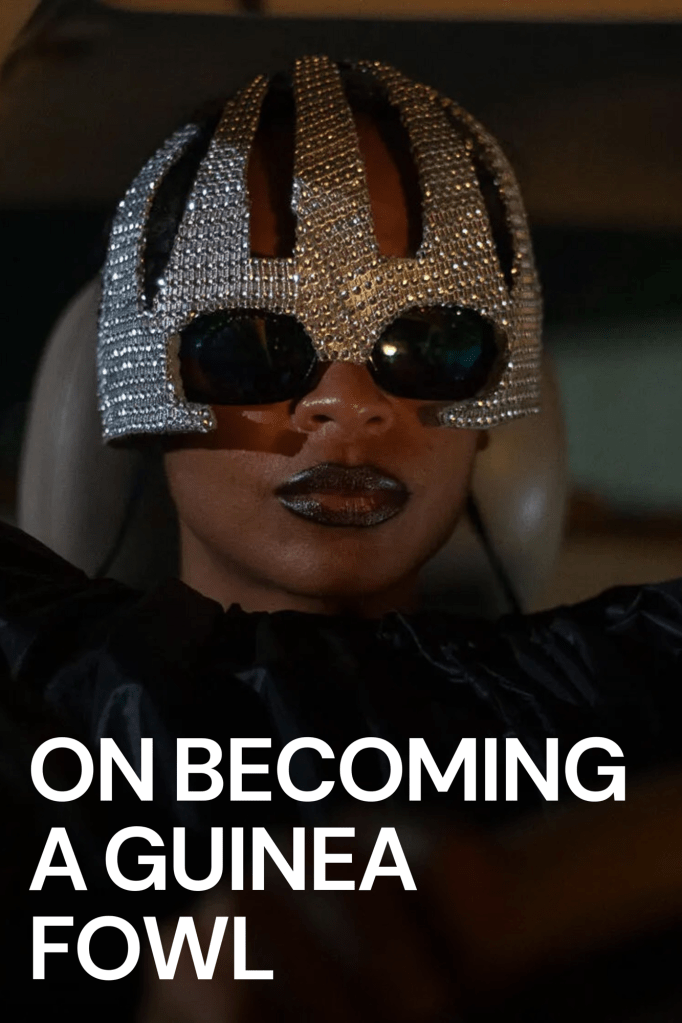
On Becoming A Guinea Fowl Review


There is that notion of curiosity that lingers in a subtle matter. On Becoming a Guinea Fowl is a portrait of life and reality coming together to hear the harsh truths. Those “harsh truths” are in terms of one who is deceased. The devastating matter goes forward to creating an understanding of what to believe and what not to believe. Adjustments of honesty and facts are in forms of personalities—they are through those dealing with the complicated situation. Written and directed by Rungano Nyoni, On Becoming a Guinea Fowl is a landscape piecing together parts that are hard for a family to bare. It is cinematically enticing and deeply emotional. It will leave audiences to wonder what notions to buy.

The film surrounds Zimbabwe and a middle-class family. The character of the show is Shula (played by Susan Chardy). Shula is driving on an empty road and comes across her uncle lying dead on the street. Once this happens, word-of-mouth happens instantly, and funeral arrangements begin to come together. Her cousin Nsansa (played by Elizabeth Chisela) comes into the picture. Nsansa displays an obnoxious personality, and Shula is introverted (her characterization and facial expression have traits which prove she has a lot on her mind). With the family trying to cope and deal with the funeral arrangements, deeper and horrid revelations come around. Her uncle has done some things that are unforgivable, and with the family all together, the weaving emotions struggle to remain unseen.

The painted picture is suffrage at its finest in On Becoming a Guinea Fowl. There is no light on what is mentioned, but Shula is the one that keeps thriving for her family to find what is good in the dark after one is deceased. It is enticing with the family clashing, disagreeing, and not seeing eye-to-eye. A mesmerizing path of putting behind the bad does not come easy in On Becoming a Guinea Fowl. The apple does not fall from the tree in terms of the hatred that spirals like crazy.

The film loops in expressions of complications—no one knows how to view the scenario. The more family that arrives, the more suspicion. Nsansa is always looking at the offensive context of their uncle. “Offensive context” is painted fresh throughout all the vivacious negativity of the funeral process. It is one of those films where my mind kept making me wonder how the funeral can play out. Does one plan to make a scene? Does one plan to make a confession? Are there more unfortunate awakenings abounding? In the film there is the saying, “The good die to soon.” That saying means that clearly there is a major percentage of relief after the death of Shula and Nsansa’s uncle.

The writing of coping is cinematic. More hidden truths become increasingly disturbing—enough to make there be grievances and hostilities. However, “grievances” and “hostilities” are the building blocks that Shula continually works to downplay. On Becoming a Guinea Fowl is a masterpiece that measures how family absorbs a loss—in a precise approach—the thoughts of the individual family members create a pattern of distress that will hit it audiences emotionally and vividly. The drastic sense of trust is about the norms of those in attendance at the funeral. Three-and-a-half out of four stars.