Tag Archives: Film reviews

The Fugitive—FACETS 50 Capsule Coverage


FACETS has a season of diverse and cinematic media that spans a lot of nostalgia. With programs ranging from new to restorations, FACETS knows how to keep classic movie-going experiences alive and thriving. I had the pleasure of experiencing The Fugitive in the FACETS 50 series. This series contains variety of films that are back for revisited moments. The Fugitive is a Chicago thriller that brought me back to the first time I saw it. I have never seen The Fugitive on TV butinitially saw it at the Music Box Cinema in the fall of 2019. This was only the second time experiencing this movie. The suspense of the Chicagoland setting and many runaway scenes reminded me how diverse Chicago’s landscape is. The Fugitive is one of the most mesmerizing portraits of what makes a masterpiece.

Director Andrew Davis took viewers to a new world of suspense with The Fugitive in 1993, the year I was born. Revisiting the 1990s made me realize how The Fugitive is best viewed on the big screen. The chases and discreet moments in many Chicago venues are unique and intriguing.

The event continued with a post-screening discussion with Davis and other filmmakers on Zoom. The night of Chicago cinema continued to dazzle as more details were shared about The Fugitive. There were gems discovered related to the writing of the script and the sets in the film. Davis said that he stated in the early in the process, “The script doesn’t make sense!” But as production went on, more was added. The biggest revelation was the St. Patrick’s Day parade, an idea that added to the suspense of the film.  In addition, attendees learned about the dynamics between Harrison Ford and Tommy Lee Jones during the production process. The conversation about the behind-the-scenes elements made this FACETS event special for cinema aficionados of all ages.

Overall, FACETS is a wonderful home for movie moments of both films being viewed for the first time or ones being revisited. Director Davis brought to light an understanding of how our world has evolved over time and the impact on movies. Despite all the changes we see today, his words resonated with me when he said, “The Fugitive opened the door for many movies to be shot in Chicago.” It sure did! For more upcoming events and diverse programming visit facets.org for listings of the many wonderful programs they have coming up. There are also memberships, souvenirs, and all sorts of other ways to participate in the appreciation of film at FACETS. It is definitely worth the time and energy to visit in honor of its 50th Anniversary .
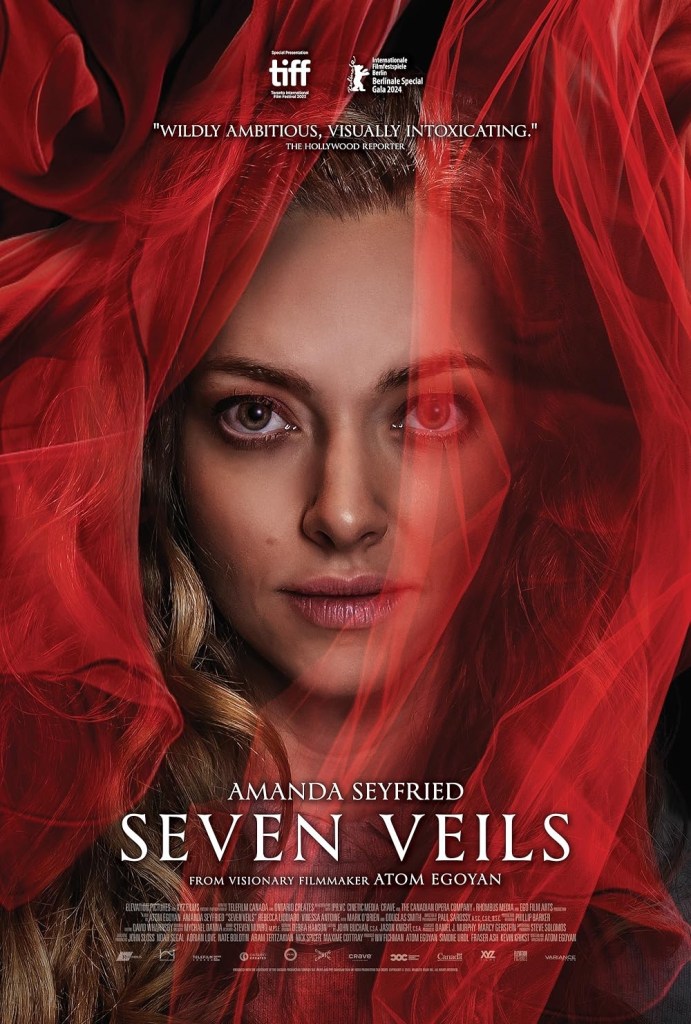
Seven Veils Review


This is one of those rare experiences that feels like a project is the height of the masses. Seven Veils exercises anxiety and pressure to the point of disgust and the chances of having a meltdown. It also leads to a cinematic storyline of what thrives to make a portrait personal. “Personal” as to incorporate past moments to make a show breathtaking. Written and directed by Atom Egoyan—he has a background with parents that were artists. His inspiration for visual audaciousness is one of a natural element—it is present in Seven Veils.

The film’s main character is Jeanine, and she is played by Amanda Seyfried. Seyfried worked with Egoyan in the 2009 thriller Chloe, and she played the role of an escort. Her attitude shifts to the more serious and mind-boggling approach as she plays an opera director in Seven Veils. Her task is to put on an opera that was under the direction of a previous director. This task of hers is one that is mentally and visually overwhelming—both those elements grasp with a form of continuity that boils the film’s tension. Going forward, the film also introduces us to Clea, and she is played by Rebecca Liddiard. Clea is the props assistant, who creates crafts for many theatricals. The film has slews of narrations from both the performances of Seyfried and Liddiard—this paints the portrait that putting on a production and the stage has its own tensions off the stage.

The film had my mind wondering consistently about the artistic value in the sense of impact. Jeanine is written to be a person who is passionate about her work but also has problems at home. A lot to do with on and off relationships with her husband Paul (played by Mark O’Brien). Both their priorities are shifted, and that is the additional stressor for Jeanine (on top of directing an opera). The sense of exploration to tie in “personal” begins to become fiercer on and off the stage in Seven Veils. It is irresistible. Then there is a point where support comes from a fellow friend named Luke (played by Douglas Smith). He is one that is inspired by Jeanine. Overall, though, the ethics of what creates a performance to feel immersive thrives in an immense mode of prestige.

I found the film to be a study of a pattern. One that is faithful but also tries to focus more on the negative over what is positive. To an extent though, I respect this pattern, since it is one focusing on taking on a challenge (not anticipated). The ultimate question is do the outside moving parts truly fuel the narrative? Is there a reason for what is creating weird conflicts before the opera? Are their personal and competitive politics coinciding with Jeanine or Clea? The arts are a place of deception (in some circumstances). Ultimately, it is about if there is a light that sparks in the minds of those putting forth production. Almost, executed with a well-written craft, but still maintains its subtle speed in tone. Two-and-a-half out of four stars.

Black Bag Review


Director Steven Soderbergh has an eye for making his characters fly suspiciously below the radar. He has a sense of direction that sends off vibes that allow audiences to know there is an operation that does not make sense. He has done this successfully with his films ranging from Sex, Lies, and Videotape to Erin Brockovich to Solaris to Contagion to Presence. The major difference is that Black Bag centers around espionage—which adds a layer of confidentiality to its writing. There are moments of vividness in this film, but the pacing tends to fall off the tracks in some parts.

Black Bag centers around the core theme of betrayal mingled with loyalty and deception. The film focuses on Kathryn St. Jean (played by Cate Blanchett), an undercover agent. Her husband is George Woodhouse (played by Michael Fassbender), an agent as well. There is a sense of a nation at risk due to dishonesty involving the spy tactics of Kathryn and George. However, the picture is painted showing Kathryn as the one making the matter seem harmful. The other characters involved are Clarissa DuBose (played by Marisa Abela), Freddie Smalls (played by Tom Burke), Dr. Zoe Vaughan (played by Naomie Harris), Col. James Stokes (played by Rege-Jean Page), and Arthur Stieglitz (played by Pierce Brosnan). All these characters are key to the film’s primary puzzle. The cat-and-mouse game approach proceeds along a professional track. To clarify, there are no haunting surprises or outbursts of truth. Neither would be the style I would expect from Soderbergh.

The film labels Arthur as the superior of the spy operations. With George and Kathryn as husband and wife, the curiosity related to who they trust and can communicate with provides on going questions. Some moments one seems more trustworthy than the other. Audiences will want to focus on the personalities and tactics of everyone involved—that is the key to the film’s underlying pattern. In retrospect, there is the fear of something to lose which is the subject of the breach. To some extent, the story keeps trying to cover up the answers through the characters’ egos and professional backgrounds. The two-faced dynamics that every character possesses offers additional lines of questioning in Black Bag.

As someone who has always been fascinated by Soderbergh, I was pleased with the calculation of focus in this film. Unfortunately, the methods of execution and ultimate resolutions led me into a state of disarray. Even though many moments are quirky and slow as expected, there is no proper meaning to the conclusion. It is almost like a more serious version of 12 Angry Men. The primary differences are the people and their jobs which cause lingering issues with the level of trust. At various points I had the notion that I was going to figure out that everyone is at fault—which is not the case. The dynamics of this film had me sold, however its subtle approach is written in a way that felt dry. Overall, it is a fun Soderbergh flick with plenty of interesting scenes. Two-and-a-half out of four stars.