Tag Archives: Focus Features

The Uprising Review


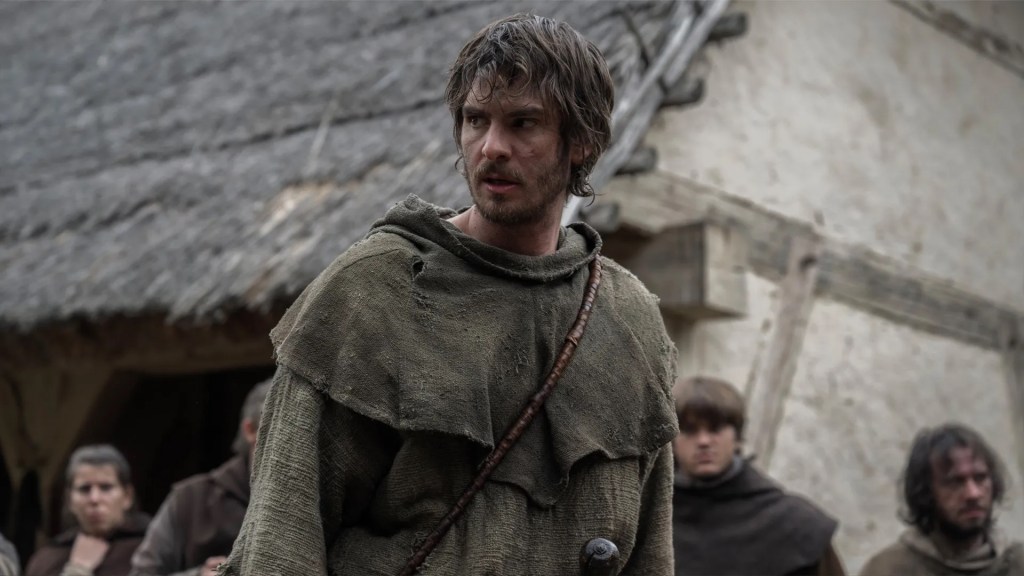
Written and directed by Paul Greengrass, he dives with realism into the medieval era. Greengrass  directed the films in The Bourne series as well as films based on actual events ranging from United 93 to Captain Phillips. His writing is strong and surreal as it builds momentum as it delves into peril and corruption while oozing with vengeance. The Uprising brings the audience to England in the year of 1381, a time when there are unfair wages and taxes so living is not up to par. One peasant stops at nothing to find the light. Andrew Garfield plays the hero, Ploughman. He is the king of a rebellion who stands up against a young King with a disgusting ego.

The young King is King Richard II, played by Woody Norman. He is cynical and full of arrogance. Norman thrives in the role of the pompous King well and dazzles with the wrath of vengeance. Garfield’s Ploughman wants justice for the people in the rebellion. His friends John Ball (Jamie Dornan), Wat Tyler (Cosmo Jarvis), and Alyce (Thomasin McKenzie) stand with him. They travel through political tides and try to work out plans to get King Richard II to offer a form of freedom, but there are many hurdles and lots of lies. There is war waiting regardless of the outcome. Greengrass knows how to write about preparing for an attack and how to create the anticipation for his audience to know a battle is coming. 

The momentum for anarchy spiraled in a similar fashion to United 93. Both films have signs that there are elements which are not right, and that fighting must be taken into consideration. In United 93, it involves the passengers versus the ones who have taken over the aircraft. In The Uprising, it is the peasants fighting for peace and a better life. The Uprising is about an unforgettable alliance. Once a war begins, there is no going back.

What fuels the film is Norman’s two-faced performance. He plays a King who wants to appear benevolent while refusing to suppress the power-hungry demons within him. He also feels a need to impress the lady by his side, Countess (Katherine Waterston). As Ploughman continues down the path to help his people talk the King into better resources, Greengrass’s writing reminds viewers that there is the chance of blindsiding to come. Just when it seems like positivity might abound, there is ravaging violence. Betrayal has a wicked aftermath leading to a climax with a spellbinding redemption.

What makes The Uprising so dazzling is not only how the conflict is written, but the amount of counsel that surrounds the King. His team fills his mind with anticipation. He finds moments to try to convince the peasants he is destined to change lives, but his team reminds him otherwise. Greengrass is the master of spiraling personalities.. I found The Uprising to be one of the best medieval-era films of the year. Four out of four stars.

Pressure Review


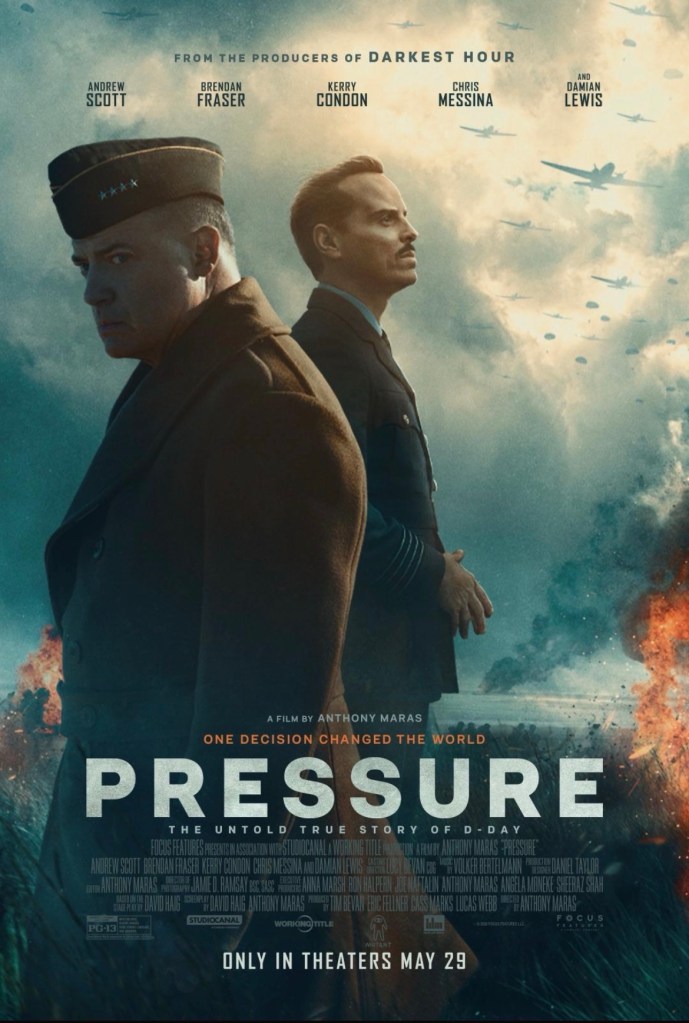
There is a certain type of filmmaking that keeps one’s mind invigorated. The type that makes audiences curious about facts and choices as well prompts thinking about various questions asa movie progresses. Pressure is a film with a series of thought-provoking elements. Written and directed by Anthony Maras and co-written by David Haig, Pressure aims to cover the historical true story of D-Day. 

Brendan Fraser does an astonishing job playing Dwight ‘Ike’ Eisenhower. This role as a captain follows his impressivecinematic comebacks and monumental performances in The Whale and Rental Family. Andrew Scott plays James Stagg, the Lead Meteorologist. He also displays a compelling level of seriousness that will captivate audiences. Chris Messina plays Irving Krick, another meteorologist assistant. The plot of the film takes place just seventy-two hours until D-Day arrives.Eisenhower finds himself in a blur making choices based upon the weather and the coast. Because the critical choices all matter, Eisenhower displays a level of hierarchy that makes it appear that errors do not matter. Krick is in sync with this way of thinking and displays loyalty to Eisenhower. 

Stagg believes that identifying the correct facts and information must be taken seriously. However, he also believes that previewing the range of options before deciding is vital. Given that the complexities of politics and war abound, his choices are viewed differently. The tension as they consider the options under time pressure makes Pressure spellbinding. Audiences will wonder if is going to rain. Is weather going to have an impact? Who has the appropriate facts? The historic side of the film is painted vividly and portrays reality during this anxiety-filled time.

The dynamics involving Stagg provide this film with humanistic value. Kerry Condon, who plays lieutenant Kay Summersby enhances this value. She handles the moving parts for Eisenhower, and many of the clerical tasks. The frustrations around making D-Day decisions and navigating the associated politics consume much of her time. The stress of these matters also falls upon Stagg, and the seriousness of his position gives him doubts. Without Stagg, the historic value of the film would be severely diminished in Pressure.

The film feels like a free-for-all wrestling match.  Audiences know that the performance of Fraser is bound by authority. They also know that the performances of Scott, Messina, and Condon are about characters who are below him in hierarchy. When there are moments in which tough choices cannot be made, and science does not seem to speak, Pressure revisits the science by examining the sky and incoming currents. Much of the film reminded me of a meteorology class I once took, but the seriousness of Pressure may well make audiences stop and think that global warming should be taken seriously. This film about an actual event highlights the importance of accuracy when making difficult decisions. Pressure is spellbinding and one of the best films based on true events of 2026. It is an emotional ride where the facts being considered keep matters enthralling. Four out of four stars for Pressure.

Lorne Review


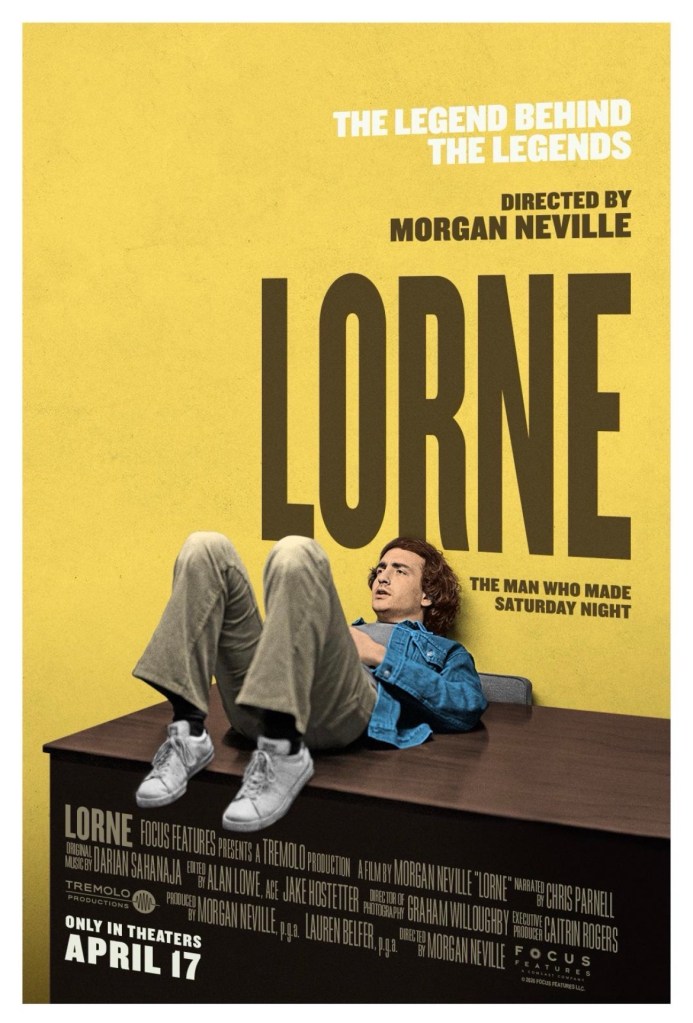
I have always been curious about what makes Saturday Night Live so lively and successful. I am a millennial and remember my parents always enjoying it on those weekend evenings. I even remember falling in love with the many unforgettable skits and sketches. What I did not know though, is that so much of it comes under the control of one man. Lorne is an absolute treasure of a documentary. Directed by Morgan Neville, there is a rich backstory of the world of television and finding an audience—the structure of continual change delightfully fulfilling. Lorne Michaels is the man behind all the angles of Saturday Night Live.

The first question that comes from the film is, “What is funny?” There is frequent portrayal of the serious business side of comedy presented in Lorne. Lorne has been around Saturday Night Live since it all began and the structure of his life is what defines the pattern of how the show runs today. The film brings back tons of nostalgia with a lot of compelling voices. The quote that defines Lorne frequently is that he is, “A creature of habit!” That element is in the weaving elements of this strong and profound documentary that I find truly special.

The level of prestige is what Neville is amazing at capturing. He knows how to grasp what is real about an individual. The narrative set to be so strictly around Lorne is where I found the backstory of Saturday Night Live compelling. Lorne is a film that carries  a prestigious list of contributors to the setting. There are many interviews with Mike Myers, Colin Jost, Jimmy Fallon, Dana Carvey, and more. They mention moments of his routine. Moments where shows have had ups and downs—the realism of what makes Saturday Night Live today feel as present as ever in Lorne.

The fact that Lorne Michaels was a man that was trying to fill a late-night slot is the aspect of what had my mind so driven for more information with Lorne. I was thinking so much about how audiences were more in tune in the era before personal computers and cell phones– in a time frame where television was just making the rounds. The “creature of habit” tones keepstreaming through the attitude of Lorne. Audiences will see his patterns, his moments, and his personality.

As the documentary continues to capture interviews from current and former members, audiences get a better idea of why Saturday Night Live continually evolves. The landscape of reality is surreal in Lorne. The fact that sacrifices and unfairness are all part of the game in the business side of creating an entertaining show comes through in the narrative. With the show’s colorful writing more context continues to unfold in the evolution of Lorne and the series himself. There is just a humanistic aspect that feels special to me.

It is mesmerizing, breathtaking, and historic. Lorne is a reminder of what talent can bring to the table when there are the many dynamics of show business and the right-thinking process involved. This gem has a flow of continuity to recreate a time and era of comic gold. Former cast member Tina Fey states, “You have to find a lunatic writer and put up with them!” Astatement saying it all– that tolerance of talent can be rewarding. Four out of four stars for Lorne.