Tag Archives: Film reviews

Armand Review


When it comes to movies that revolve around parenting and adding the component of school, they are often written with the intention for its audience to pick a side. “Side” as in the elements of proper parenting, well-behaved children, and all the dynamics that go along with that. Then there is also the factor that much of what is seen is not true—presented in order to have its audience experience moments of feeling no forms of trust. Armand lacks “trust” in the strongest sense possible. Written and directed by Halfdan Ullmann Tondel, Armand is a drama that gives off a vibe of uncertainty that I especially felt with the film’s movement around the subject matter. It starts off as minor, and then gradually keeps introducing more moving parts to have you think otherwise. Armand is a blindsided direction into a dynamic of haunting value—as it tumbles toward the inevitable it becomes interesting, but also not so pleasant.

I did not expect pleasant themes with Armand. Especially with its plot structure. The film’s main character is Elisabeth (played by Renate Reinsve), and she is the mother of a young son, Armand. The film’s other characters of focus are Sarah (played by Ellen Dorrit Petersen) and Anders (played by Endre Hellestveit). They are also the parents of a son, Tom. The conflict occurs after an incident between Armand and Tom. Supposedly, Armand has assaulted Tom. This is a conflict that loops in for a two-hour intervention with Elisabeth and Sarah bashing heads. The boys’ teacher, Sunna (played by Thea Lambrechts Vaulen) struggles to keep the calm and find a better process to navigate the situation. It is one where two wrongs do not make a right, but sadly both sets of parents do not want to believe what the true scenario is. Disbelief is the cause of distrust.

The dramedy of Armand finds its opportunity to get even more detrimental when the higher authorities of the school must get involved in the matter. They are Jarle (played by Oystein Roger) and Ajsa (played by Vera Vljovic-Jovanovic). Both come together to think about where the issue remains at hand. However, the dynamics of the film and the individuality among the parents are what makes the film more serious than audiences expect.

The direction of the film has its moments where it makes a placefor joy and escapism, especially with the quirky personality from the performances of Reinsve and Hellestveit. Their behaviors and thought processes are questionable in the film’s matter. That is where the expansion of the problems to consider creates an underlying tone with more disturbing factors in Armand. The writing, along with the technological aspects of drama, is not only about finding a peaceful solution to a small problem at a school, but also to figure out if there are outside influences that may have led to such a problem with these two young boys. Is it a problem at home? Problems with parentalrelationships? Roads of darkness do not fade in Armand; they only create the puzzle to present the clearer portrait of what the matter may truly be. 

The puzzling fascination of Armand is all around the personality traits. Each conversation is one where the camera angles close in on the thoughts and perceptions of the characters. The setting of Norway also loops in a cultural feeling that leaves the audience curious about how matters of education and conflict are bound to be dealt with. It is subtle with its tone in broaching the subject of some realistic stressors.

Although it is not brilliant, it keeps its authoritative tracks to have presence. Conflicts of younger individuals boils over into many dynamics that spew repeatedly. There is no clear directionas to how the scenario should be handled. Armand does contain artistic value which levels responsibility in a fascinating light. Two-and-a-half out of four stars.
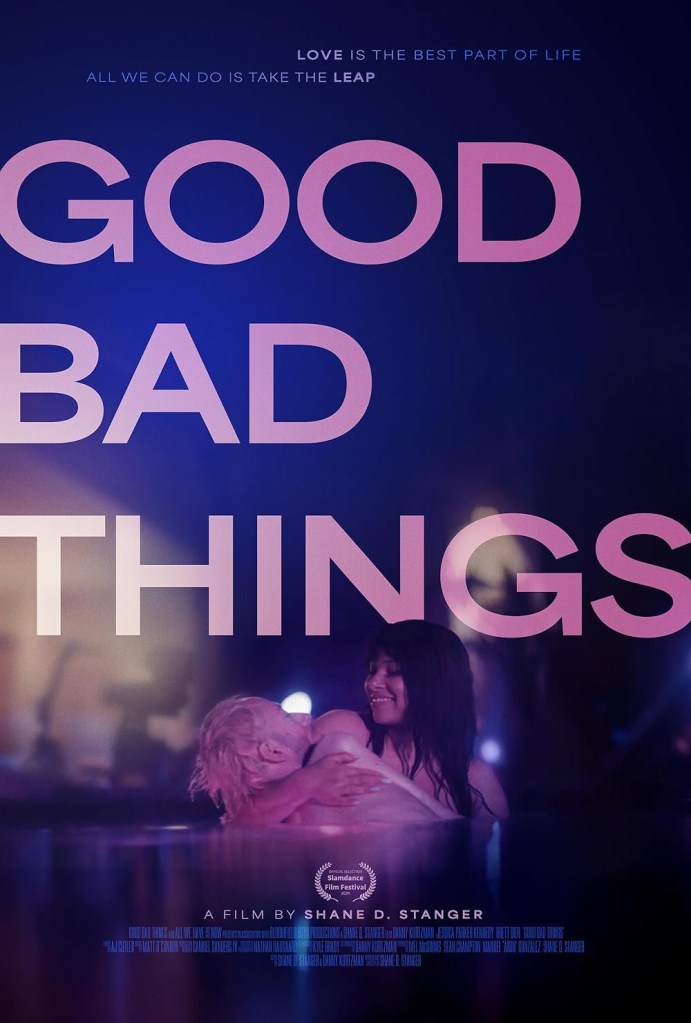
Good Bad Things Review


When it comes to being limited due to physical disability, Good Bad Things takes hold of limitations and turns them into portraits of a touching story. Directed by Shane D. Stranger, Good Bad Things navigates the challenges of a disability through the life someone who is physically impaired and an entrepreneur. The main character Danny (played by Danny Kurtzmann) is the co-writer of with Stranger. Danny’s path toself-discovery shares his individuality with the masses—it is all about the moving parts in his life which help him find positivity.

Good Bad Things keeps a steady pace that gives the audience a feeling of resilience in Kurtzmann’s performance. He spends his days running his routine to get a dating app called Rubi up and going. His friend, roommate, and colleague Jason (played by Brett Dier) encourages Danny to make a profile on his dating app. Hesitancy strikes Danny at first, but then when he gets his first match with someone named Madi (played by Jessica Parker Kennedy), a new world of amazement flows magically for Danny. The feelings of love and connection bring Danny along with the audience to a place where euphoric, surreal feelings abound. 

Reality and excitement via an app are unfamiliar to Danny and Madi is his dream come true. The writing and pacing loop in emotional tones which reflect what Danny is experiencing. His gut is sensing unforgettable connectivity. Despite his limitations, Madi may be his revelation. Good Bad Things is a poetic project of purpose. It provides hope that everyone can find love…no matter what their disability is.

Through the realizations throughout the film, Good Bad Things displays a trail of ups and downs presented truthfully. Danny’s life requires assistance, but his assistance may be found in the love of his life. Madi thrives with Danny. The film captures theart of human connection that is empathetic and endearing. How true is the love? Is it real or fate? 

With Danny navigating new beginnings, there is a two-sided component in Good Bad Things. Both sides seem combative yet destined for aspirational hope. The first is his livelihood as an entrepreneur, and the second is his relationship with Madi.  Will both have outcomes that benefit Danny? Good Bad Things keeps audiences going with questions about Danny, because his limitations are vivid as are the frustrations and sadness portrayed with grains of realism through his eyes. Good Bad Things is a film about finding the paths where chances exist. In Danny’s case, finding true love and professional success both have value displayed in an artistic form.

As Good Bad Things continues to pursue parallel values, curious thoughts emerge easily, especially about the relationship between Danny and Madi. Danny feels something new, and so does Madi. Both have distinctive differences, yet commonalities. Danny is artistic with a mind to create for business purposes, and Madi is brilliant with photography skills. They both have artistic talent that finds common ground through the lens of Good Bad Things. The film is irresistible, engrossing, and leaves the audience with empathy that feels essential. Three-and-a-half out of four stars.

The Monkey Review


When there is a feature of horrific scares from Osgood Perkins, it is an extravagantly adventurous treat. Perkins knows how to create elements full of surprises as a writer and a director. The Monkey contains a lot of them, even including backstories that come before the unexpected. The Monkey is a gem for its stories and the interconnected moments in which karma meets its maker. “The Monkey” is a toy that brings out the evilest of wishes and creates much peril along the way.

Perkins brings us into the story of twins: Hal and Bill (both played by Theo James). They have had a messed-up childhood due to many catastrophic events. Both accidents and bizarre deaths and accidents messed up their lives. Perkins’ focus is revealed in the title. With the presence “The Monkey” many events go awry. From childhood dangers to twisted moments, the brothers find themselves at odds and go their own separate ways. The Monkey is filled with many epic and crazy moments. The tagline on the box that reads, “Like life,” is a quote that describes the hidden can of worms waiting to be opened. Perkins knows how to entertain his audience by adding to the creative treasures The Monkey has to offer.

I was sold was on the concept from Perkins that if one faces tragedy by a stove exploding in their face, then karma is not to be dismissed. As the film continues with Hal and Bill living different lives, escaping “The Monkey” is critical. How well do they know their fate if they have had different outcomes from the many dramas they have encountered? The characterizations of their personalities and perceptions do a tango that is akin to fire from torpedoes flying gloriously and shockingly.

It is an odyssey that feels unreal because of the spectacular heights it reaches. Perkins escalates the fears of the characters and the past to a level where personification meets a new maker. The Monkey left me begging for an outcome, and I got one along with plenty of spooks. While feeling mortified. I also kept thinking about Perkins’ innovative mind. Fans will not be let down; they will be sucked in!

Perkins has a vivid imagination and knows how to place characters in the most unexpected places. With Elijah Wood playing someone who runs a church, I thought to myself that Frodo found Christ. However, it left me with a question. Does faith conflict with the outcomes in The Monkey? It may be problematic for some, but blindsiding as a tactic is essential when creating a scary flick for newer audiences. Perkins establishes a structure where hatred lies, and deadly wishes are likely. The Monkey is a film with many interactions galore that take place in a new breathtaking world.

Deep down the characters’ choices and the film’s pacing made me anxious. Once one fools around with “The Monkey” bad outcomes happen. It is like the Perkins’ version of Final Destination, but Perkins tops that by throwing in evidence and important factors which cause evil to linger in The Monkey. The treacherous feelings were awe-inspiring especially when Hal and Bill must come forth with “The Monkey” again in their lives. The words that rang in my ears were, “Whatever you do…don’t turn the keys in “The Monkey’s” back!”  Not only do the keys represent more to be fearful of, they also brought out one of the most unexpected frights I’ve ever experienced. When a director knows what it takes to shock with many unique qualities, then they also know how to bring in risks that take the cake at a surreal and award-winning level.

The Monkey is by far one of the best films I have seen since the start of this year, particularly especially in the scary movie genre. It creatively divulges and loops into the past to bring in the present. What was once dismissed always comes back with a vengeance in The Monkey. The question is, how badly will the audience want the doors to be opened? They will have to find out for themselves. This is a Perkins’ sensation filled with vivid fascination. A mesmerizing odyssey of a film that shocks its audience well. Four out of four stars for The Monkey.