Tag Archives: Focus Features

Conclave Review


The term “conclave” refers to an assembly or gathering, especially one with specific power or influence. In Edward Berger’s film Conclave, the dynamics of political theories combined with religion and faith collide poetically. It is a powerful examination of the moving parts in the quest to find a new pope, with an ensemble cast that includes Ralph Fiennes (as Lawrence), Stanley Tucci (as Bellini), John Lithgow (as Tremblay), and Isabelle Rossellini (as Sister Agnes). The interactions of the cast are relentless and invigorating. Conclavecreates a curiosity about where the lines are drawn when selecting one who can lead the Catholic Church. The foundation of consideration reaches a point where established hierarchy and degree of faith challenge this important process.

The plot of the film begins with a deceased pope. The death is quiet and assumed to be unexpected. Over a hundred cardinals from around the world gather for a vote on the new pope. Lawrence is leading the “conclave” process. He keeps Bellini and Tremblay close. Despite their loyalty, they do not always see eye-to-eye. The Vatican halls are where new evidence will evolve, lies will be unfolded, and seniority and beliefs will interfere. Tremblay is subtle, yet frequently questioned by Lawrence. Lawrence privately believes that choices and secrets are in tune with the close relationship Tremblay had with the deceased Pope.

The rumors which are circulating take a major toll on the voting process. Conclave is a fascinating study of the cardinals’ minds as they present their own unique approaches to faith. For Lawrence, however, going by the book and following protocols speaks more to him than the faiths of the other cardinals. Fiennes’ performance as he develops a harsh reputation is where Conclave delivers a massive achievement in terms of characterizations. How far does one go to achieve the ruling of a new pope? What is the logic behind choosing who deserves to hold this position known to the entire world?

Conclave is an audacious thrill ride of the pressure, solidarity, and background of the political theories surrounding the votes throughout the process. The person who truly questions the choice of Lawrence is Sister Agnes and her extreme frustration shows in Rossellini glowing eyes. The real boxing match in this story is in the capable hands of Fiennes, Tucci, and Lithgow. They deliver powerhouse performances which showcase how faith in humanity and deep loyalty discover their shining presence. The movie is captivating in the way it explores the subjects of faith and worship and the role they play for the votes to count. The political issues related to hierarchy of authority, years of practice, and personal backgrounds are also intriguing.  With hundreds of cardinals, there are a lot of analytics to consider during the conclave. It is a riveting and unforgettable portrait of the critical choices involved when the Vatican must select a new pope who will shine a light of authentic power. This is one of the most monumental and visually outstanding films of 2024. Four out of four stars for Conclave.

Touch Review


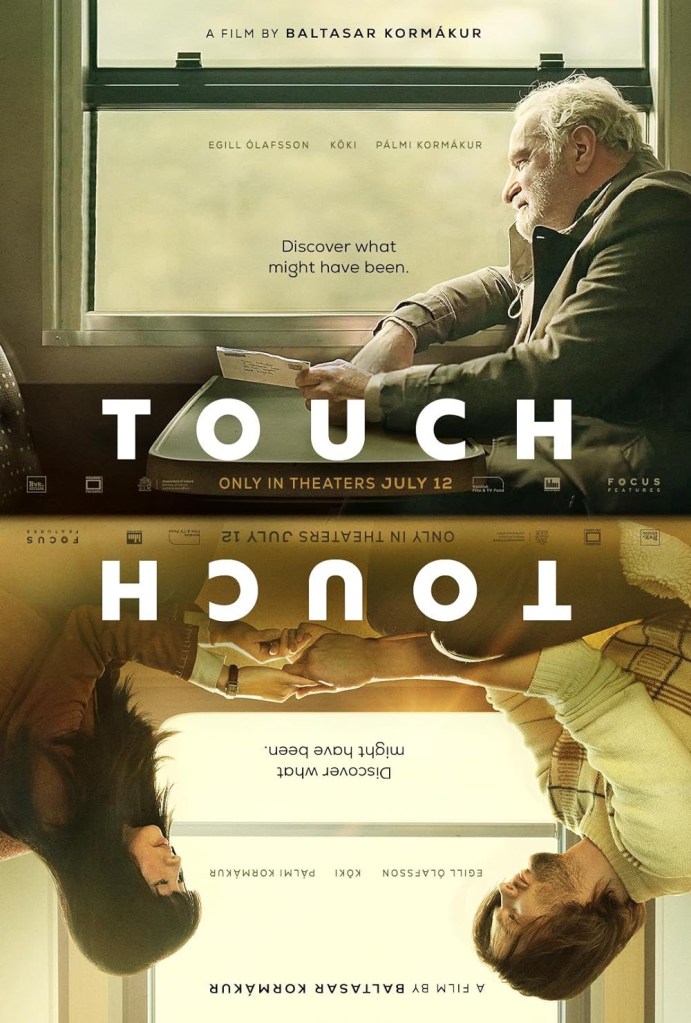
How long does love last? How many miles can be between people in love? How many memories does love inspire? Touch is a moving portrait with invigorating elements. Written and directed by Baltasar Kormakur, the film is based upon the novel by Olaf Olaffson. Touch is a journey of one young lover where reconnection creates a journey of compassion. Touch is mesmerizing and beautiful. The scenery in a place of escape filled with many memories boils over with positive feelings. Touch is culturally rich in the way it explores love and disconnect—finding moments of bonding that were once lost.

It is love at first sight that is enduring in a cinematic sense. The direction is authentic as is the film’s diverse writing. The direction begins with two young individuals, Kristofer and Miko. Palmi Kormakur plays Young Kristofer, Koki plays Young Miko, Egill Olaffson plays older Kristofer, and Yoko Narahashi plays older Miko. Most of the film is focused on Young Kristofer and Young Miko, and then Kristofer once he is a grown-up. Young Kristofer takes a job in an Asian restaurant at a young age, and he finds love while working in that restaurant. Miko becomes the love of his life. They become star-crossed lovers sharing true compassion towards one another.

It is fifty years later, and Kristofer spends his life in Iceland. The scenes take place just as Covid is heightening. Thoughts of Miko consume his mind. The focus of Kristofer crossing paths with Miko again delivers significant meaning in Touch. It is a vivid portrait that moves its audience. Touch is a title that may seem generic. Once the film is experienced, however, the title highlights the euphoric aspect of the word’s meaning. The film demonstrates how love and resilience have unique patterns, yet love can come most unexpectedly.

When Kristofer finds connectivity and learning in a new environment while he is young, many wondrous doors open for him due to his love for Miko. During an era in his life when things are shifting, Kristofer quits school to work in a restaurant. While he possesses a clever mind, he prioritizes his relationship with Miko. Their love is like a light turning on indicating good vibes moving forward.

Touch is simply wonderful. The film takes viewers on anexciting ride where love that was once lost is found again. Kristofer’s journey does not stop until he finds Miko again. Touch is one of the most breathtaking films of the year. Although it is subtle, the story successfully portrays continuity between the past and the present. Three-and-a-half out of four stars for Touch.
The Bikeriders Review


Motorcycles are dangerous. Motorcycles form a gang. Does it have a beneficial factor? The Bikeriders go down a road of a blur along this aspect. Written and directed by Jeff Nichols, The Bikeriders feels like a mafia atmosphere. The only difference is that it is a gang that rides motorcycles. This direction is based on the 1967 photography book (the book carries the same name as the film) by Danny Lyon. That is where the fascination for the film came from. That would explain why the film feels more like a surreal journey than a biopic. It contains more along the lines of personality dangers over motorcycle adventures. That approach is where the line is blurred.

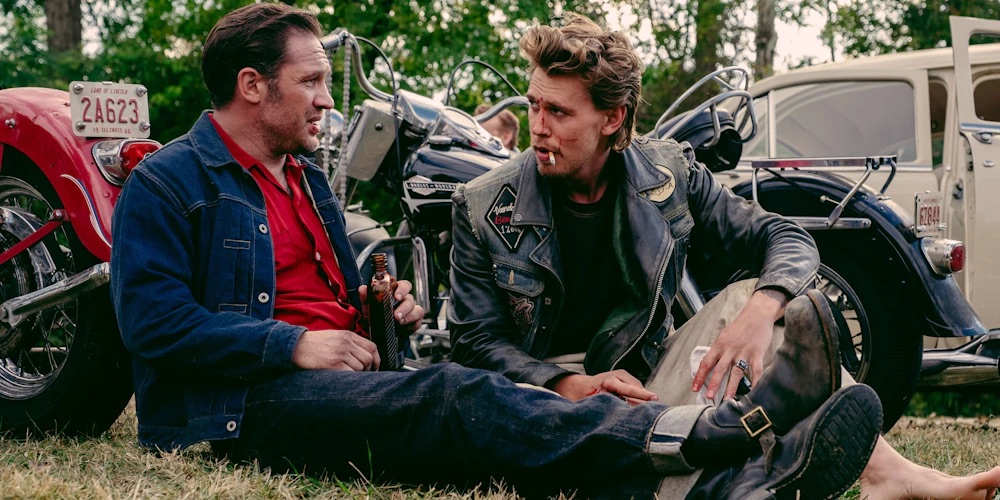
Austin Butler plays Benny. Benny loves to ride his motorcycle into paradise like a king. He also loves his wife, Kathy (played by Jodie Comer). Benny has loyalty. His mentor is Johnny (played by Tom Hardy). Johnny is the king of the motorcycle crew. They call themselves the Vandals. As Benny goes deeper, Kathy feels there are more detrimental aspects to come around in her life. With Benny always being in love with his motorcycles and the crew, how good of an influence is Johnny? The actions of Benny have consequences, and it does so for Kathy as well. If Benny cannot ride, he will feel incomplete. Is that a road that Kathy wants to go down with Benny?

The tension is there, but the presentation is mediocre. The film transitions to Kathy telling a story with a journalist throughout the film. She goes into detail about the activities she took part in with Benny. She talks about how the gang has had its share of crazy scenarios. This approach delivers an appreciation of the emphasis of the film. Its delivery feels like a sob story direction.

Being on a motorcycle is what makes Benny feel like he is truly alive. Having Johnny by his side is that layer that keeps him going. He disregards his actions just for Johnny repeatedly. When it comes to the subject of love, it seems Benny cares more about anything to do with motorcycles than Kathy alone.

The Bikeriders is a powerhouse dynamic with superb scenery. Its artistry with motorcycles and its focus on the Midwest carries weight in the film’s continuity. It just does not fulfill the spectacular expectations that some audiences may expect. Two-and-a-half out of four stars.