Tag Archives: Neon

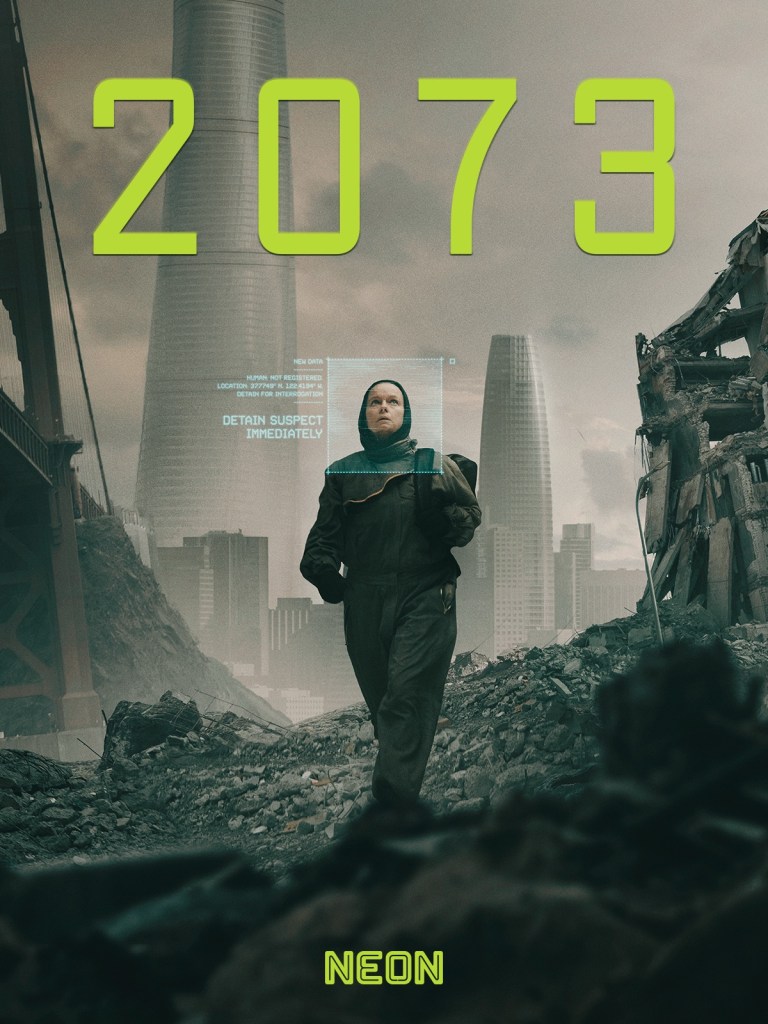
2073 Review


A future of chaos and technology blend in an uncontrollable pattern in 2073, a film that compiles itself as a documentary and a sci-fi thriller. The “documentary” component is the one with most sophistication in the film in and of itself. Written and directed by Asif Kapadia, the many global events which have happened in real-life play a key role in 2073. Society is the in-depth track of the film’s pandemic setting in its “sci-fi” direction. Even though it seems rushed and all over the place, the vast amount of knowledge, concern, theory, and true politics rise above and swiftly pull things together in 2073.

The film opens with a survivor, played by Samantha Morton. She is an individual living a life of peril after a global event has wiped out the many resources in the year 2073. She also narrates how her life once was before the world went awry due to many moving parts trying to make change, and most of the population not being on the same page. Issues such as AI, politics, and corruption are the pieces to the puzzle in 2073. The vastness of living on a thread digs deep, and then it transitions back to real-life events that have happened throughout the world today.

The archive footage side of 2073 makes its audience think back a lot to how the world is evolving. Despite the negative portrait painted, it is a film that speaks truth to how out-of-hand problems can be. This can be seen especially with robots taking over humans, technology outsourcing jobs, and the politics having the abuse of power to control what they see beneficial. Even though it is a context of harshness, 2073 feels like a fictional reality that can more than likely happen. It is just a matter of when.

The film links to names like Mark Zuckerberg, Boris Johnson, Steve Bannon, Donald Trump and more. It looks at many events the world has faced in the past and the ones it faces today. It focuses a lot on the markets, the evolving technologies, and economic inclines and declines. 2073 loops in the objective of the thought of a better future to sadly imply that the reality of what is truly ahead is not so great. The presence of facts and reality do make 2073 feel immensely engrossing. It is only a matter of time in 2073.

The storyline and writing of previous events happening and then jumping to the aftermath portion is a direction of interconnectedness. This is especially impactful when it showsthe events of the 1990s and the early and late 2000s. However, the timeline of detrimental consideration is the flaw of 2073. There is a point of creating a timeline and calculations for curiosity with the only conclusion being that each innovationcreates a form of depreciation around the world. Morton’s performance is the very last of that.

When it links back to Morton’s performance, the writing of the film creates the thought that the evolving technology of today is only depreciating resources going forward, since Morton’s role is one of a woman living in despair. “Despair” is a term of thorough meaning in 2073. I will say its presentation is engrossing, but in terms of thought process it continues into the tracks of the dark side of reality.

With the film transitioning between news footage from real-life events to a plot of survival simultaneously, it always has the thought for its audience about where their jobs may stand in the future. The film touches on operations of data, and then loops in how scanners in warehouses create people to be a label—the people’s performance are the data of success for a thrivingbusiness. The truth of technological factors having both a positive and negative impact loops in the truth of where the real world may be heading in 2073.

The film is vast in its tracks of evidence over its plot. Where does the story go for Morton’s performance? Why the suspensearound her life in particular? Is the archived footage the bigger problem to oversee? 2073 tends to have cliffhangers sporadically, yet it still remains on a track of enticement. Three out of four stars for 2073. 
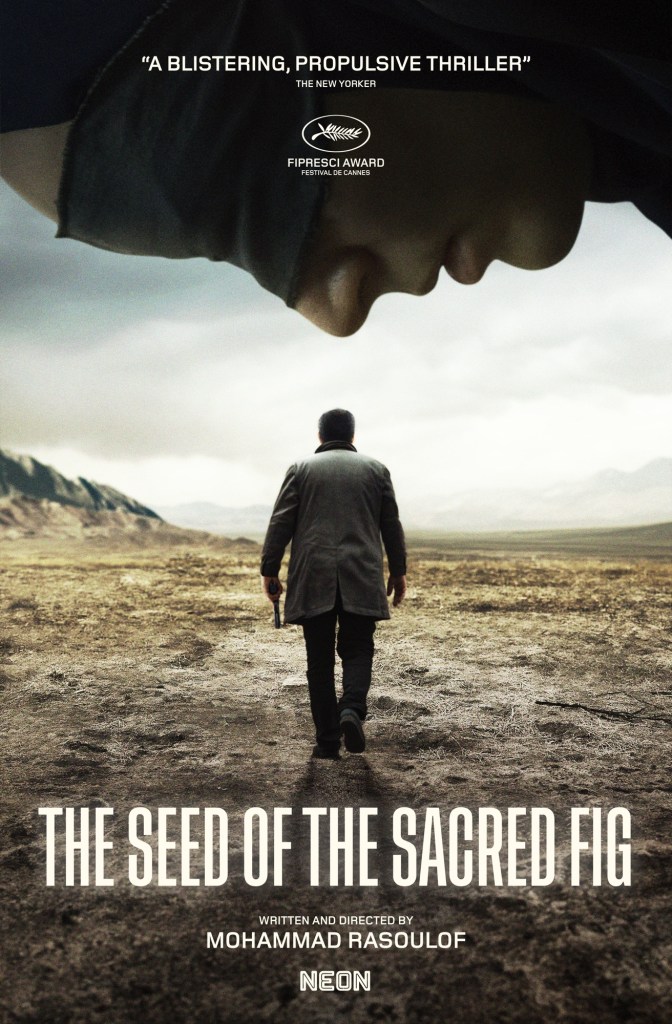
The Seed of the Sacred Fig Review


What is more detrimental than politics and culture? Is it expectations? Is it faith? Writer and director Mohammad Rasoulof painstakingly challenges these subjects. The Seed of the Sacred Fig is an anxiety-provoking journey of morals and sacrifices. Political unrest is deep below the surface while ethics are backwards. The Seed of the Sacred Fig diminishes the impact of its main character.

The story takes place in Tehran. The focus is on Iman (played by Missagh Zareh), a judge, husband, father, and liar. Iman hides political secrets for the safety of his job and his family. His wife is Najimeh (played by Soheila Golestani), and his daughters are Rezvan (played by Mahsa Rostami) and Sana (played by Setareh Maleki). The dynamic in the house is fueled by unrest thanks to the orders from Iman. His role involves bending the rules by creating propaganda in order to provide a home for his family.

The tension between politic and two worlds colliding is extraordinary. The conflicts in the authoritarian government are what fuel the frustration and lack of faith for Iman and his family. Their unsettling reality provides an intriguing structure. Iman knows they are in danger, but his career comes first, and his family knows it. His daughter’s rebelliousness causes The Seed of the Sacred Fig to go down a suspenseful rabbit hole. Once a gun goes missing, the clock of political corruption starts ticking.

With Iman’s gun missing, his job is on the line, and so is his family. The writing and continuity of the film made my head race with thoughts. Some people keep secrets to protect the ones they love, but other secrets open doors to darker alleys. The frustration of Iman’s daughters and his wife makes him question their respect and loyalty. They see the war in the media and know their dad is part of the chaos. The concepts of betrayal and sacrifice play off each other in The Seed of the Sacred Fig.

The film’s direction displays a portrait of tension and realism given the various events occurring which shift the characterizations. The Seed of the Sacred Fig does a stellar job of tying in the political factors to create suspense. With the many choices facing Iman, his world is rolled over as his expectations rotate. Who truly suffers?

The cultural components in the film form a connective and deceitful bond. The Seed of the Sacred Fig carries elementswhich reach their limits. With the family feeling brainwashed, the fight to find their voice delivers a breathtaking force. A powerful battle for change, honesty, and loyalty ensues. Iman’s fate is presented as non-negotiable, but his family may feel there is a way around that given their suffering. The Seed of the Sacred Fig is compelling, shocking, and politically empowering. It is one of the best thrillers of the year! Four out of four stars.

Anora Review


Champion of the Palm d’Or at the Cannes Film Festival, Anorais an absolute wonder of a film that surpasses expectations. Written and directed by Sean Baker, Anora is his best film yet and is unconventional in the way it combines comedy, drama, and romantic genres. The writing is vivid, and the story leaves audiences breathless. This is the romantic comedy masterpiece the world needs. It displays how young love includes many moments to cherish while also navigating obstacles when things do not go as planned. The setting in both New York and Las Vegas provides a grandeur of adventure that spirals in an exhilarating light. These two cities never sleep and neither does Anora.

Baker’s Anora brings audiences into a strip club setting where they are introduced to Ani (played by Mikey Madison), a young escort in Brooklyn working many shifts and doing extra deeds to make ends meet. She has a kind-hearted attitude and presents a playful face that draws the attention of men. Out of the blue, a young stud named Ivan comes into her club (played by Mark Eidelstein). Ivan falls in love with Ani at first sight. He has many sessions with her and pays her well. He brings her into his castle-like home. They have so much fun together are inseparable. Ani and Ivan have incredible chemistry which is what makes Anora so riveting). Their love story goes from Ivan having many sessions with Ani, to them falling in love, and then Ivan proposing to Ani. Once they get married, the film shifts to a conflict over an issue that tests where Ani and Ivan stand with each other.

The moving parts in Anora have deep layers that are mind-boggling and engrossing. Emotions are heightened as the plot is exposed. The surprise is that Ivan is the son of a Russian Oligarch and comes from a family of wealth and power. His rich boy life is all because of his family, and they are distraught by the fact that Ivan has married a prostitute. When the news breaks, the fight for love truly begins. Soon, Ani is caught up with the authorities in Ivan’s family who wish for their marriage to be annulled. This is where the performances of Madison and Eidelstein get emotional, suspenseful, and even funny. With their marriage happening in Las Vegas, this creates a turmoil around whether their marriage is meant to be. The writing involving these circumstances and stressors makes the film more appealing despite the amount of added anxiety.

Love makes for a dazzling portrait, and it is painted with many layers in Anora. The life of two star-crossed lovers finding each other unconventionally creates an unforgettable landscape where happiness thrives audaciously in early parts of the film. When the dynamics of the family come into play, the emotions make audience repeatedly jump out of their seats.

Young love is true and surreal in Anora. Madison’s performance is a force of determination that fuels the hopes for lasting love. When their love story seems to be falling apart, her sensational acting will cause viewers to shed tears. Anora is a wild and breathtaking flick that is full of romantic vibes that lead to self-reflection about life and love. Mesmerizing and surreal, Anora is a knockout. Four out of four stars.