Tag Archives: Neon

Immaculate Review


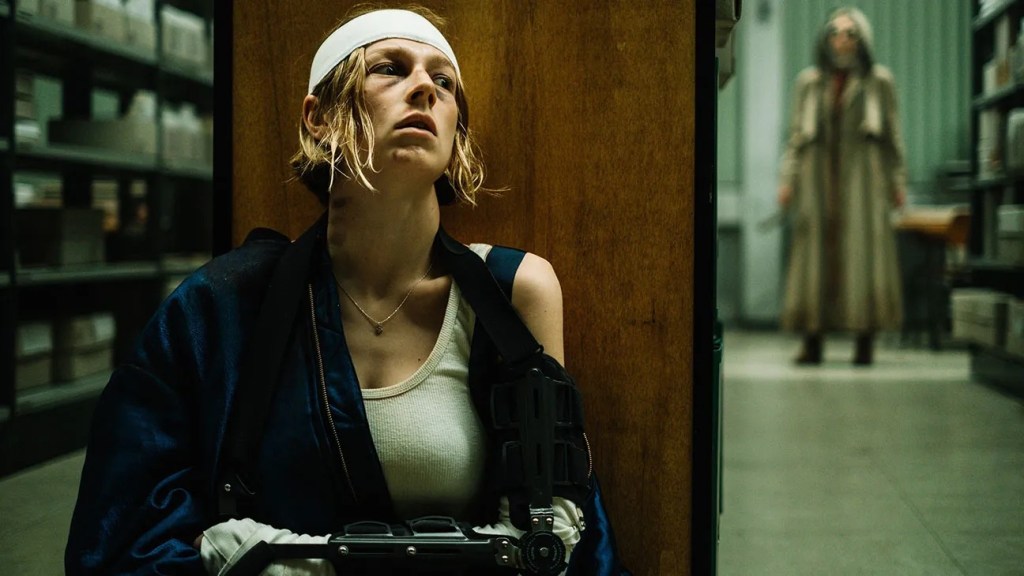
Immaculate is about faith being tested. The story is not so much about making religious or culturally-influence choices, but more about dealing with choices involving betrayal. The movie is directed by Michael Mohan and written by Andrew Lobel. Immaculate is audacious in portraying how difficult it is to maintain the faith especially when things begin to go south. The trailers caused me to anticipate that this film was going to be a bumpy ride of surreal terror which it was. The psychological tracks in Immaculate are destined to break norms and barriers.

The film introduces its audience to Cecilia who is played by Sydney Sweeney. Cecilia is a young American who is devoted to religion and takes a position at a convent in Italy. She has faith that this is her new Safe Haven until the attitudes of the other nuns and the staff start to create a pattern of disturbing questions. The Father at the convent is played by Alvaro Morte. He tries to convey that Cecilia is now in a place that is extremely safe. However, as Cecilia gathers facts and information from other nuns, she increasingly feels that the convent has some very unsettling vibes which are both devilish and life-threatening.

With Sweeney in the lead role, she has a very cute and innocent personality as a young practicing nun. Due to her youthful and pleasing style, the audience hopes she finds a way out of the convent before it is too late. The film periodically traces back to the practices of the convent and shows various times when many of the nuns are held back from going elsewhere. Whateverdetrimental actions and behaviors are happening at the convent,it appears that the more likely of the same is likely to occur. Immaculate is a movie about religion and faith where a trail of lies highlight the journey with their shock value.

With the setting in Italy, the language barrier also contributes to the tension in Immaculate. Cecilia cannot understand what is being said through most of the movie. What she sees and feels cause  her stress and uneasiness. Immaculate is an experience that is quite unsettling. Can Cecilia save herself from the terrorswaiting for her? Will her faith sustain her? What is the evil that lurks in the convent? Immaculate made me feel like I was in a historic church being subjected to extreme darkness which wasquite unsettling. The film is not an easy psychological thriller to absorb. It takes some mental preparation and toughness especially due to the violence and realizations that further put Ceclia’s safety in jeopardy.

Immaculate is a daring movie for a daring actress. Sweeney’s role is filled with pure adrenaline. However, the film overall was not amazing. It is one of those terror flicks that keeps trying to throw violence in to heighten the effect. In the end, I did not feel as satisfied as I had anticipated I would when I left the movie was over. Two out of four stars for Immaculate.

Robot Dreams Review


This is an animation film that is different than most would expect. It is a revelation of brilliance and wonders that soars truthfully and faithfully. Robot Dreams creates a sensation that thrives in all its empathetic and connecting directions as thoroughly as it can. The film premiered at the Cannes Film Festival in May of 2023, and it has been nominated for Best Animated Feature in the upcoming Academy Awards. Director and writer Pablo Berger explores the creation of drama and heartfelt laughter through his narrative eyes with Robot Dreams. The film has no spoken dialogue, as the story follows the life of a dog and his robot.

Robot Dreams uses animation that is blended to a point of surrealism at its finest. Its setting is Manhattan, New York in the 1980s. The film focuses on a character who is labeled as Dog. Dog lives a solo-life in New York. He is lonely in his apartmentand has his introverted routine of watching TV and eating junk food. He occasionally strolls the streets of New York. His loneliness gets to him until a box shipment shows up to his house, and he builds a robot. That character is labeled as Robot. Robot comes alive, and Dog and Robot form a great friendship.They watch TV together, go on excursions, and jam to music. Life is truly one where Dog feels a deep sense of connection with his friend Robot.

The brilliance of Robot Dreams just comes from the inner emotions it stirs. With no written dialogue, the facial expressions of Dog and Robot tell the story. There are no humans in the story, yet the animals in it act as if they were humans. The animals are taxi drivers, security guards, and other normal people. It is a Manhattan, New York Zoo world of surreal imagination. There are many moments that will leave the audience curious about this unique friendship. Dog and Robot do face an instance of disconnect when Robot is stuck on a beach and Dog cannot save him. Therefore, Dog leaves Robot on the beach and assumes he can help get him fixed the next day. Sadly, the fence to the beach is closed, and Dog cannot get over to help him.

The separation moment of Dog and Robot is where the film starts to find its sad moments. This is where the animation hits the audience hard. Going forward though, this is a time whenboth Dog and Robot try to find their happiness solo, as they try to grasp life at their finest moments. There is hardship and sadness all through the film’s eerie approaches, yet it still delivers bits of joyfulness and connection. Robot Dreamsprovides a non-stop empathetic experience in a world of unique animation. It is a “unique animation” because its story is told exclusively through the animation and literary directions via technical aspects—the feelings in Robot Dreams are brought forth through the portrayal of the seasons in the animated version of Manhattan, New York in the 1980s.

Robot Dreams deserves to win in the Best Animated Feature because Berger knows how to dive into his mode of directing. His writing and his storytelling are of inspiring value. Robot Dreams made me laugh, cry, and feel a form of appreciation that was irresistible. Four stars for Robot Dreams.

Perfect Days Review


The mind of director Wim Wenders is one where art is a development. He often focuses solely on people, places, or fascinations. One of the themes in his new film Perfect Days is that of loneliness and routine combined with mental structure. There is a feeling of appreciation that flows smoothly through the film’s faithful cinematography. Wenders is gifted in his ability to explore a character or a place to the smallest detail. In Perfect Days its sole focus is on one man who lives a very orderly life, and when he is out of that routine, his mind expands in directions of realizations and fascinations that are astoundingly well written.

Perfect Days takes place in Japan and introduces its audience to Hirayama (played by Koji Yakusho). Hirayama is a man of routine—he is quiet, structured, organized, and thrives creativity in his solo life. He works full-time as a janitor. Hirayama’s routine is multi-step, a vivid exploration by Wenders and his direction to create a portrait of a unique character. Most of the beginning is Hirayama working his shift as a janitor. Hirayama displays a look of annoyance, yet he continues to be persistent with his seemingly mundane job. The company he works for is called The Tokyo Toilet and it is a distasteful vocation to those around him. Despite the low-grade job, Hirayama is a pleasant man. He helps his colleague Takashi (played by Tokio Emoto) when he can, and he has a good heart. The film delivers the sense of reality in which Hirayama chooses to live a solo existence.

The beautiful and artistic value of this film lies is the moments of fascinating nature—Hirayama absorbs the outdoors and takes photographs. He enjoys breathing in what is on the outside. Perfect Days is a vast journey of one man trying to find the positives around him, despite his low social status. Hirayama is fascinated by plants and does projects with them. The scenery of Japan is Hirayama’s playground.

The film is a contemporary experience of an introvert living a life of highly structured activity. It encourages its audience to think positively. Hirayama has one main mode that lifts his spirits the most…cassette tapes of classics! In his work van he loves to listen to music by Lou Reed, Van Morrison, the Rolling Stones, and many more. The song “Perfect Day” by Lou Reed is played in the film and that song truly correlates to the life of Hirayama.

Even though the film keeps a strong focus on Hirayama it does explore another character, Hirayama’s niece, Niko. Hirayama has not seen Niko in years, and there are some family conflicts that are not explained. At first, viewers would expect Hirayama to be annoyed by Niko’s sudden arrival, but he is welcoming. This is a chance for Hirayama to share what he is passionate about in his search for happiness in the world. Whether it is books, music, or movies Hirayama always has something rewarding for someone. He does not see how nice he really is to those around him, but he is also not confrontational.

The theme of happiness within solitude is presented strongly in Perfect Days. There is that technological aspect of Wim Wenders that I recognized from his 1987 classic Wings of Desire—photography moments in black and white with fluorescent forms of movement. The true sensations of Wenders direction are seen through Hirayama’s eyes as he explores happiness and art in Perfect Days. This is an unforgettable experience, howeverthere may be a few moments of quietness and slight boredom. Regardless, its presentation is a masterpiece in the context of structure and pacing and moving aspects brilliant in their form. Three-and-a-half out of four stars for Perfect Days.