Tag Archives: Netflix

The Pale Blue Eye Review


This is the third time Christian Bale has starred in a film directed by Scott Cooper. The first time Bale played a steel mill worker trying to save his brother in Out of The Furnace (2013). The second had Bale playing an army captain in Hostiles (2017). Now, in The Pale Blue Eye, he plays a detective in the 1830s.

The premise of The Pale Blue Eye focuses on Detective Augustus Landor, played by Bale. The characters also include include West Point Cadet Edgar Allan Poe, played by Harry Melling, and Jean Pepe, played Robert Duvall. These three are the most important characters surrounding the film’s trembling terror of a crime spree.

In The Pale Blue Eye, Det. Landor is assigned to investigate a murder of a West Point cadet, and he recruits Poe to help him with the investigation. Many people assume the cadet died by suicide, but the evidence makes the case creepy for Landor and Poe, and time is of the essence in solving the case.

With Bale’s role as Det. Landor, expect a great amount of realism. Landor is a widower with alcohol issues, and the case grows to be more and more dangerous for him. I found myself wondering whether Landor could mentally handle the murder case. Duvall’s character, Pepe, is a philosopher who helps the detective understand the writing and symbolism clues tied into the murder case.

The twists and turns for Landor and Poe in The Pale Blue Eye are inevitable, and there are interesting political and religious aspects to the investigation. There may even be a cult involved in the cadet death, and that murder is just the beginning. The 1830s is an era where lanterns are flashlights, and there are of course no computers. The lack of technology means the case must be solved thorough calculations and logic.

The cinematography in The Pale Blue Eye gives the film a very eerie feel. The film is saturated with darkness, and it’s set in the fall and early winter with forest scenes and snow, which is unsettling. An interesting aspect of the era is that despite the lack of modern communication, whatever is said, seen, or heard is thrown right into the open; there is little confidentiality. So who can be trusted? Join the mystery and find out. Three stars for The Pale Blue Eye.
Bardo: False Chronicle of A Handful of Truths Review


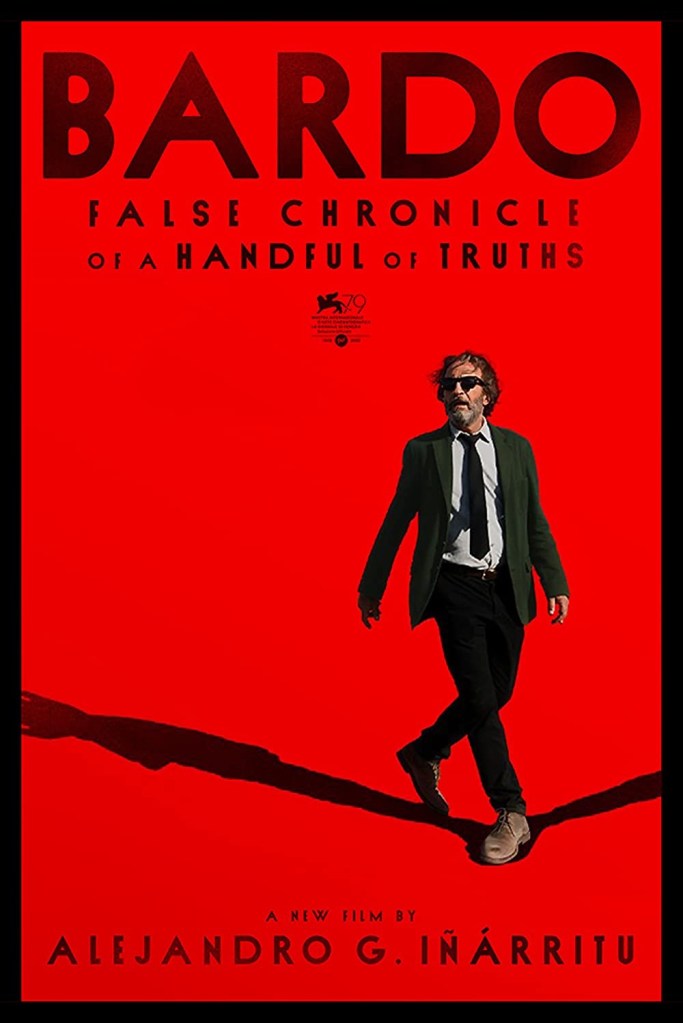
Alejandro G. Inarritu is a revolutionary director. On top of making numerous award-winning films, he can also direct a masterpiece about a filmmaker. Bardo: False Chronicle of a Handful of Truths is dazzling. It contains many inner emotions of one person that explodes with visuals and all kinds of excitement. The film is like Inarritu’s Birdman (2014) meets Fahrenheit 9/11 (2004). This comparison is because Bardo: False Chronicle of a Handful of Truths portrays a filmmaker in sporadic stressful moments that lead in exhilarating directions.

Bardo: False Chronicle of a Handful of Truths has many of the common themes that Inarritu tends to explore in his projects. Issues regarding the past, present, and future are the big ones. With Bardo: False Chronicle of a Handful of Truths, he makes their climax more figuratively classical, and then transitions it to darkness. Still, Inarritu knows how to find clever pieces of joy in spite of the darkness.

Bardo: False Chronicle of a Handful of Truthsgears on Silverio Gacho (played by Daniel Gimenez Cacho), a journalist and documentary filmmaker with a lot on his mind. At the start of the film, the story dives into his life. His issues range from dealing with family problems to facing his identity to acknowledging the reality in which he presently lives. Bardo: False Chronicle of a Handful of Truths is a mosaic of thoughts for Gacho, most of which are intriguing and shocking. Its direction takes the cake due to the complex world of problems that keep resulting in revolutionary resolutions.

The concepts of accomplishment and curiosity are what makes this movie spellbinding in both its writing and directing. It is honest in terms of why topics are being revisited and why the challenges are a struggle to be tackled by Gacho. As a fan of Inarritu, my appreciation for his directing is because of the realism he presents in Bardo: False Chronicle of a Handful of Truths. He exposes the mental struggles of Gacho in his narrative. The journey of Gacho’s conflicts immerse viewers in a world of success and failure with many difficult questions.

Bardo: False Chronicle of a Handful of Truths is one where I found myself thinking about how mindful adventures can create surreal experiences that can be vivid, dark, and engrossing. The performance by Cacho is unbelievably good, as is the film itself. Inarritu’s level of artistic directing goes above and beyond. Bardo: False Chronicle of a Handful of Truths is not missed. Four stars.

Guillermo del Toro’s Pinnochio Review


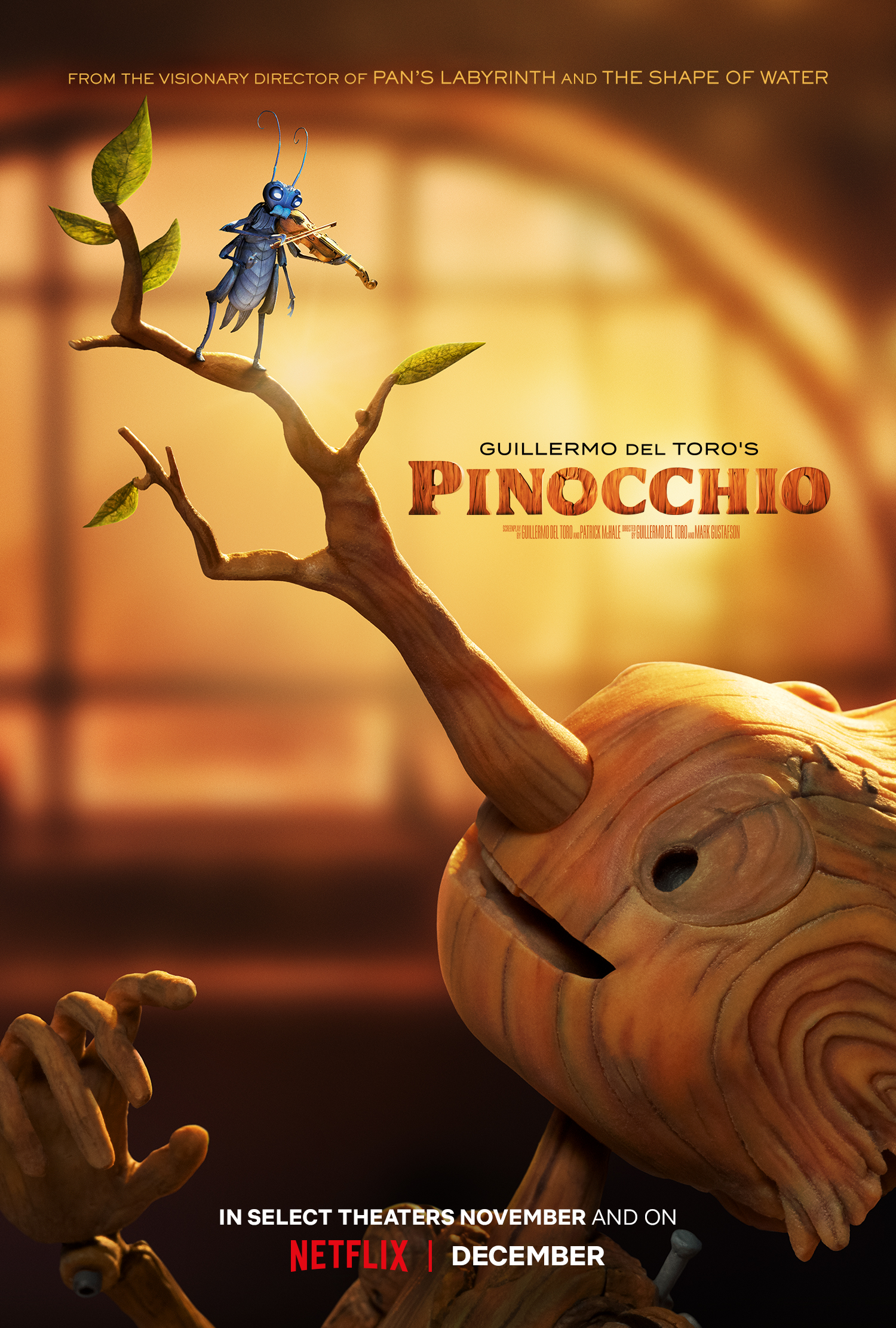
I have watched Guillermo Del Toro’s Pinocchio twice. The first time was in digital projection and the second time was in 35mm projection. Both editions were mesmerizing. As the wonderful world seen through the eyes of Toro grasped my attention, I felt like a young kid again. I love and feel connected to the characters of Pinocchio and Geppetto.  There are so many amazing voices in this atmospheric adventure including Pinocchio (voiced by Gregory Mann), Geppetto (voiced by David Bradley), Sebastian J. Cricket (voiced by Ewan McGregor), Spazzatura (voiced by Cate Blanchett), Candlewick (voiced by Finn Wolfhard), Count Volpe (voiced by Christoph Waltz), and Dottore (voiced by John Turturro). Guillermo Del Toro’s Pinocchio is a world of wonder and joy with an imaginative storyline. Toro knows how to connect his audience to the love Pinocchio wants in the film.  It is simply a grandeur of cinema creativity and magic.

The story begins with a woodcarver, Geppetto who has recently lost his son. Filled with grief and despair, he puts his woodcarving skills to work to create a boy figure. Suddenly, that boy comes to life and calls himself Pinocchio who is full of energy and spreads love all around. At first Geppetto struggles to accept that Pinocchio has come into his life. Over time, however, Geppetto starts to feel like a father again. Pinocchio has some difficulties because he struggles to understand right from wrong in the world. He also finds it difficult to understand he is much different than the people around him. Despite all the differences Pinnochio is eager to feel like a real human being. His encounters with good influences including Sebastian J. Cricket, Candlewick, and of course Geppetto are the ones that care about Pinocchio the most. Sadly, Pinocchio does not understand who truly cares about him which causes him to run away with the evil Count Volpe in hopes of finding attention. With Geppetto still suffering from depression from the loss of his son, he sets out on a journey to get Pinocchio back.

Guillermo Del Toro’s Pinnochio is an adventure of love, peril, and deceit. In between the happy and sad moments, there are many wonderful musical moments that are just extremely heartwarming. Toro’s direction is incredible in the way it makes the audience sense the love around Pinocchio.  Of course, as people know from the famous story, Pinocchio’s biggest issue is that when he lies his nose grows. Pinocchio’s nose is at the center of him learning to make the right choices during this joyful ride of magical animations.

The adventures which are filled with confusion, frustration, and sadness for Pinocchio and Geppetto are spellbinding. I was captivated with the disconnect the film displays in many loving ways. Toro knows connection and imagination. He creates a picture where love is enticing for everyone in the film. He even portrays admirable moments during the perilous scenes. Guillermo Del Toro’s Pinocchio has many moments which deliver silver linings, but the best ones are between Geppetto and Pinocchio which is why I adore Guillermo Del Toro’s Pinocchio. It is about connection, love, discovery, and acceptance portrayed in many endearing scenes.

The second time I saw Guillermo Del Toro’s Pinocchio, I attended the 35mm format at Music Box Theatre. The best part about this experience was that the director attended virtually along with the audience. Hearing Del Toro talk about his imagination and the process of making the film was captivating and surreal. Del Toro is not afraid to throw his creativity into full swing. He is also not afraid to do what it takes to make his audience feel a sense of connection to his projects. Both of his strengths are in full display and spot-on in Guillermo Del Toro’s Pinocchio. Come experience the love with Geppetto, Pinocchio, and many other wonderful characters in this not to miss movie. Four stars.