
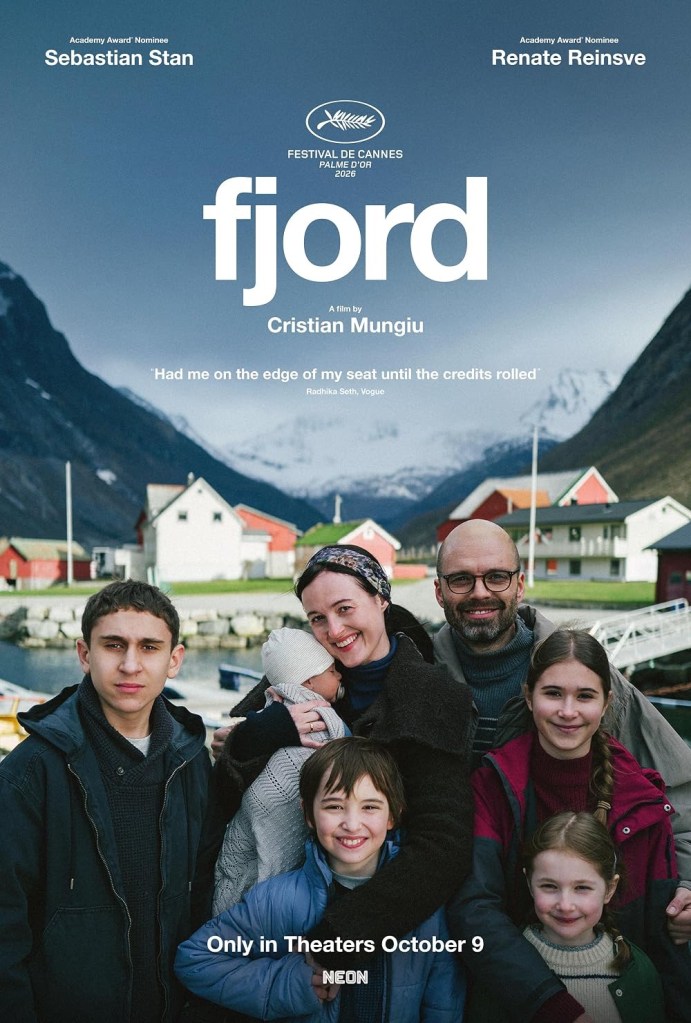
Legalities are spotlighted in Fjord. Written and directed by Cristian Mungiu, the film has received tons of positive press at many festivals. It won the Palm d’Or at the Cannes Film Festival, It screened in competition at the Sydney Film Festival, the Karlovy Vary International Film Festival, the Hurtigruten Nordic Film Festival, the Sarajevo Film Festival, the San Sebastian International Film Festival, and the Atlantic International Film Festival. The film also had its premiere at the Toronto International Film Festival and was selected for the Spotlight Gala section of the New York Film Festival. The film is set to screen at the Morelia International Film Festival and the Tokyo International Film Festival as well. All of this exposure at international film festivals will cause Fjord to be remembered for ages.The serious subject matter and realistic writing will matter to cinema-goers around the world.
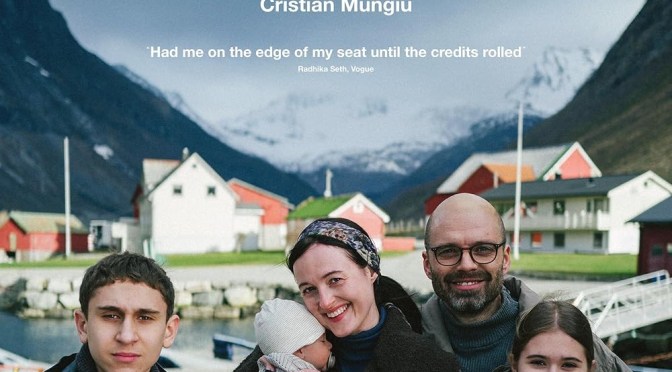
The film focuses on a child abuse scenario. There is an investigation, and multiple moving parts involving a religious family. The father is Mihai Gheorghiu, played by Sebastian Stan. He is a Romanian father laying out the code of conduct with religious practices. His wife is Lisbet Gheorghiu, played by Renate Reinsve. Lisbet is Norwegian. Their daughter is Elia Gheorghiu, played by Vanessa Ceban. Their son is Emmaneul, played by Jonathan Ciprian Breazu. It is a big family that moves to a progressive yet remote Norwegian village. The strict rules and punishments impact the family when Elia shows up to school with bruises. From that point on there is a child custody battle. The story is a vivid ride that is emotional, breathtaking, and causes viewers to think. The religious practices and family-related activities are part of a pattern of devotion but also controversial. The audience realizes that not everyone can handle the strictness of the Gheorghiu family.
Clashes regarding norms of behavior are pushed to the limit in Fjord as religious practices take a turn for the worse. Breathtaking undertones are played out as the path to finding what is right for Elia is pursued. The writing and characterizations boil with family emotions particularly when it comes to traditional rituals and what is considered abusive. The complex parts of the legal system are polarizing and then things really go awry when the children are taken away by child protective services. They hired their friend, Mia, to be their attorney. She is played by Lisa Carlehed. Mihai and Lisbet must deal with the consequences. Their religious norms may not be tolerated by the country they now are living in.
What I found spellbinding was how family values get handled in this story. Mihai upholds time for prayers and limits technology usage. He is also physically violent, but not to the extreme. The children tell their story to the authorities through their own eyes, and they believe they’ve been badly harmed. This is where reality clashes as their parents must now think about how their behaviors impacted them. They also must think about how the situation impacts their own lives. It is not a simple situation or an easy trial, but faith and resilience shine in sensitive and exhilarating ways.
There is a moment when Mihai says, “Beating is coming from heaven!” He says this to demonstrate his disciplinary beliefs to the authorities. He later says, “It’s a cultural thing!” His words may be controversial, but deep down he means them. The family dynamic is strong, yet issues are blown out of proportion. The reality of dealing with the case in Fjord causes sadness to linger due to the unsettling situation. I found the film breathtaking. Legal issues, emotional challenges, and the will to never give up by a family working together as a team creates cinematic power in Fjord. Four out of four stars.

