All posts by Tarek Fayoumi…The Paterson of his Craft!

I am someone who strives to become a professional critic. I watch and review many movies. I view the eyes of movies as something as an art form. I have followed many critics over the years, but once I was thirteen I knew writing film reviews was going to be my passion. I learned from watching multiple episodes of Ebert And Roeper in my teen years, and then in middle school I began writing film reviews for a newspaper club. I am also an avid fan of the arts of Chicago including Theatre, Comedy, and music. Films, however, are my primary focus.

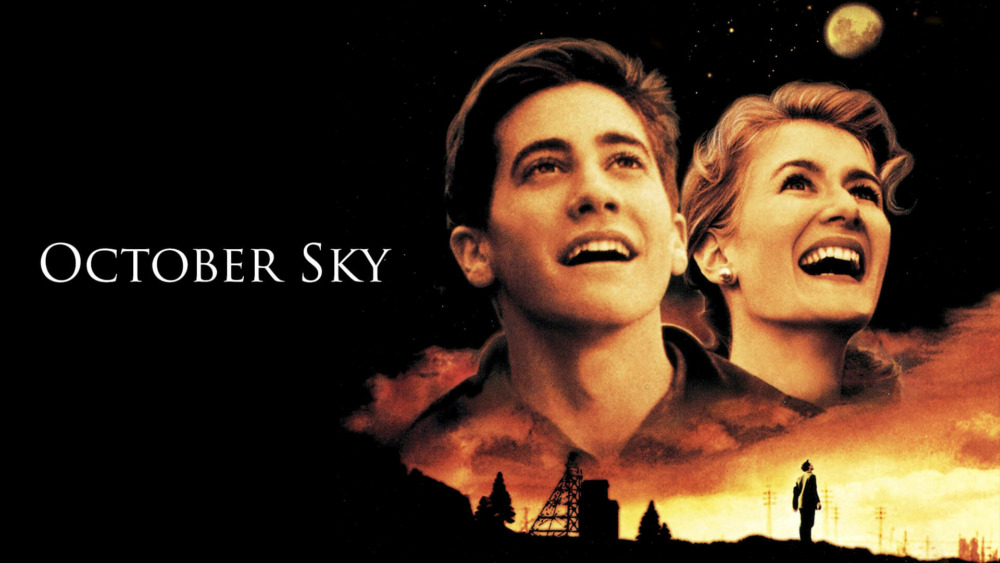
1990 Classic Throwback review of October Sky


Image result for october sky

I came across “October Sky” when I was like age eight or so. I remember not being fully enthusiastic about it at that age. However, I began to appreciate “October Sky” more when I was about age twelve or so. Now, I’m 25 years old, and I view “October Sky” to be a faithful and true story to what it means for someone to follow their dreams. Also, for Jake Gyllenhaal, I definitely would say this film to be one of his most recognized performances of his career. The film is charming, faithful, and true to its real-life adaptation on the life of Homer Hickam (Gyllenhaal).

Hickam is the son of a coal miner, John Hickam (Chris Cooper). The Hickams live in a small town called Coalwood which is in West Virginia. The year is 1957 and the first artificial satellite goes into orbit and its called Sputnik. Homer is fascinated by the science behind Sputnik. This leads Homer to have an aspiration to build rockets. For Homer and his friends, this becomes a big deal for them, however, his father and a majority of the town believes that Homer and his buddies are wasting their time and energy on something that is ridiculous. One person that has faith in Homer is his science teacher Miss Riley (Laura Dern). Riley believes that Homer has potential to be first in a science fair and has a bright future for him if he continues with his rocket science. Homer’s father still thinks otherwise. However, Homer and his buddies continue to build their craft and accept trial and error with their rocket experiments. The film becomes one that challenges controversy, disagreements, and many tensions for Homer. Not just tensions for Homer and his father, but also for those around the small town of Coalwood.

For Homer, he does not really care about impressing his father. That is because he knows that he is capable of doing something extraordinary with his craft and rocketry. On the other hand, his father really only cares about Homer becoming a coal minor or finding something else to do other than rocketry. As the film progresses, the tension builds between Homer and his father. There is a point in the film when Homer and his father have a huge argument. For both Gyllenhaal and Cooper, the argument is a knockout performance. More for Gyllenhaal. Viewers can feel the tension in Homer’s heart as he is fighting with his father and yells, “I’ll be gone forever, I won’t even look back!” This just shows how serious Homer is about following his dream. The director Joe Johnston does an excellent job with the direction for these argument scene.

The time period in “October Sky” being the 1950s really shows the challenges of building a rocket that Homer comes across. The technology in that time frame was not much developed at all. They were not any VCRS, DVDS, fancy TVS, the telephone was still fairly new, and also there was not a lot of resources to Help Homer research for his rockets because there was no internet. The film incorporates this with moments of Homer asking a nerd friend about science and such and also trying to figure out math equations the hard way. He also looks into chemicals that he believes will be stable for his rockets. “October Sky’ challenges the viewers in terms of wondering how Homer is going to succeed.

What I love about “October Sky” is the message basically being to follow your dreams. Homer is not giving up or letting people bring him down, he continues to strive for what he wants to accomplish. I feel I can relate, because in life I want to be a true critic. I know it is a challenge to be a critic, but I am not going to stop writing reviews, I am going to write reviews until it gets me somewhere. Homer got somewhere.


Welcome to Marwen Review


Image result for welcome to marwen

“Welcome to Marwen” was slightly misleading in its trailer. I did not find much memorable moments in the film. If there was any scene from this film that grasped my attention the most, it was probably when Steve Carell shouts, “We need more ammo!” “Welcome to Marwen” is not a terrible film, it is just stale in multiple portions of the movie. The opening jumps into detail without giving its audience a proper premise, viewers are introduced to multiple fictional characters without knowing their background, and on top of that the film feels like it goes off topic quite a bit. I found this movie to be like “Toy Story” (1995) meets “Back to the Future” (1985). That is because a majority of the film consists of talking toy characters and its in the past future back in time (in the mind of Carell’s character).

The film is a true story about Mark Hogancamp (Carell), a man who is brutally beaten by five men and ends up suffering from brain damage. Due to this he becomes an artist with telling stories. To put his memories in order, he creates a world called “Marwen.” That world consists of a made-up World War II setting. In the film, he eventually has to go to court to testify against his attackers.

Now this film was all over the place. The film focuses so much Hogancamp’s world and not so much on him. From the trailers, I felt there would be lots more in depth storytelling or background fragments to help us better understand Hogancamp. There is really not much of that though, it is basically just the world of “Marwen” in so many moments of the movie, and Hogancamp is barely in the picture. I felt I probably saw the main character at the max four times in the film. Now I know Carell has been on a role this year with many great films ranging from “Beautiful Boy” and “Vice” this year, but this is honestly not one of his best films. His performance is terrific, but the filmmaking and story lacks entirely.


For director Robert Zemeckis, this film is probably one that has tanked badly for him. The film had a budget of $40 million and it debuted only 2.4 million. This is unfortunately a big failure for a holiday film. However, I think that is also because nothing can compete with Aquaman or Mary Poppins Returns. I guess no one really cares for a film about a fictional world this year.

I found “Welcome to Marwen” to be a film that should just be straight to streaming. I did not hate it, I was just completely lost. Even when I walked out of the auditorium, I was left with many unanswered questions about certain elements of the movie.

If Beale Street Could Talk Review


Image result for if beale street could talk

For Barry Jenkins, I thought “Moonlight” (2016) was brilliant. “If Beale Street Could Talk” is also brilliant. However, in that context it is more so amazing with its breathtaking cinematography, its vast movement of different camera angles, and its acting. I felt it was very similar to “Moonlight” based on its plot, its conflict, and the focus being the two main characters are African-American facing issues in regards to their race.

The film focuses on Tish Rivers and Alonzo “Fonny” Hunt (Kiki Layne and Stephan James). A couple that is on their way to having their first child, however Hunt is guilty of a crime that is false. Therefore, Rivers and her family struggles to prove his innocence. It becomes a visual and emotional journey of politics, love, distrust, and stress. As viewers watch the movie they see the emotions in both the eyes of the main characters of what they are feeling. Cinemtographer, James Laxon (also was the cinematographer who did the lighting and such for “Moonlight”), has a variety of moments in the film where he gears on emotional faces to which enhances the drama of “If Beale Street Could Talk.”

With this movies technical elements, I loved the vast imagery of New York City. The colors were faded in a sense that strengthens the time period of the people. The time period being the 1950s, the wealthy and the poor, and the different types of businesses that existed. The film also incorporates competition among different minorities and such.

When I walked out of the auditorium after “If Beale Street Could Talk” I left with mixed emotions. Not negative or positive, but I came to realize an aspect of life. That everyone in life deserves to be treated equally. No matter what race, religion, or gender. The conflict of the film is not fair for Rivers and Hunt, the issue though is they do not have enough witnesses or authority on their side to prove Hunt is innocent. That is all because of their skin color. I felt like I was watching “Moonlight” but with different people and a different time frame. “Moonlight” geared on a boy that was African-American growing up with transitional issues in his different stages of life. “If Beale Street Could Talk” follows people struggling because of their race. Both gear on issues in regards to the main characters struggling because of being African-American. Jenkins is definitely good at making his viewers have feelings towards his films when they come to abrupt scenarios.

Therefore, “If Beale Street Could Talk” is a must watch. It will leave viewers in tears, but also captivate them by its scenery and its music. I will give this movie three and a half stars.