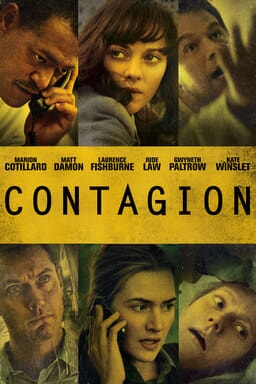
Contagion Review ( A review written because of the coronavirus)


WarnerBros.com | Contagion | Movies


In the fall of 2011, Steven Soderbergh directed a film that shocked audiences around the world about how seriously a virus can impact the globe. Contagion is a dark, sad, and honest emotional thriller about the steps people should take in the event of a pandemic. When people first watched Contagion, it made them want to wash their hands after they left the film in fear. Today, the world is experiencing this pattern almost as accurately as Contagion presented it. The film has recently had many views on streaming services because of the current virus. I think people are now making the connection with Contagion because of its realism to what is happening around the world.

The plot of Contagion revolves around Beth Emhoff (played by Gwyneth Paltrow) who is traveling back from an international trip when she starts to experience flu-like symptoms. She views the symptoms as just a common cold, but later it gets worse and leads to many other health risks. Her husband, Mitch Emhoff (played by Matt Damon), starts to take the illness seriously and get tested, but it is not long until the virus grows out of control around the world. Many government officials and doctors then begin to take precautions to protect the globe during the pandemic. Research doctors, Erin Meer (played by Kate Winslet), Ellis Cheever (played by Laurence Fishbourne), Leorona Orantes (played by Marrion Cotillard) and many others try to figure out the science to determine what can prevent the flu from spreading. There is also a scientist who argues with the media, Alan Krumwiede (played by Jude Law). Krumwiede has many other beliefs which are in conflict with the media, but the pandemic continues to worsen.

In the coronavirus situation that our world is in in now, I keep thinking back to Contagion. That is because the film shows places that are closed as well as stores that remain open, but the essential items are gone.  Eventually, the stores become too overwhelmed to handle the amount of people that are trying to remain safe. The Contagion film has a unique layout where the days are listed as the film progresses. Soderbergh’s directing has this format to give his audience an idea of what may happen or may not happen. There are some resolutions, but the quarantine makes people start to lose hope and go into panic mode. To those who have not seen Contagion, it is a faithful and dark film which now seems very realistic considering what is currently going on in the world.

I will admit that the film has moments where the intensity is over-done. However, it is a thriller that will make people think about how they can help contain the spread of COVID-19 by following similar steps to the ones that Damon’s character takes to keep himself safe.  The question of the duration of the pandemic remains unanswered as it is difficult to predict when things can go back to normal. As I mentioned previously, the film has been ranking high on streaming services which is a bit surprising to me, because even though this is a captivating thriller, some may find it hard to watch now.  Still, there is no question that the film’s message to stay inside and save lives plays a big role in the pandemic today. I give Contagion three stars.  Keep in mind that for some people it may be worthy to watch now, but for others, it probably hits too close to home.

 

The Assistant Review


Image result for the assistant


Director Kitty Green delivers an eerie psychological drama that is based on issues related to the prior problems of Harvey Weinstein. However, it is not focused on just the news stories being revealed, but instead the discreet communications, disturbing phone calls, unexplained schedule changes, and odd strategies that strike the main actress as red flag while doing her job. The Assistant lacks use of music and scoring by including a generous amount of silence which makes viewers feel like they are sharing the moments with Jane (played by Julia Garner) as she comes across critical realizations. The problem is that if she complains, she feels she is bound to lose a position that is top-notch. She tries to avoid a disturbance, but the more the weird conflicts arise in emails, phone calls, or meetings, her anxiety slowly grows.

Jane is an assistant to a prestigious executive in a film office. She handles most of the day-to-day responsibilities that require her to work long hours. While she has adapted to her work routine, over time she starts to become more aware that her position is shady based on the tasks she is told to do by her boss. For example, Jane comes across phone calls with his wife who is angry with him (that is a red flag), she gets many notifications of cancellations with other executives (that is another red flag), and she is told to write many emails in a way that does not make sense to her. This starts to make Jane realize that her boss is being intentionally discreet when she is told to continue the process of what she is doing even though it does not look professional or appropriate. As more aggravations come across her desk each day due to how her boss wants processes done, the more she realizes that there are unacceptable elements that she feels she needs to try to figure out.

I felt that Julia Garner was the perfect type for the role of playing the assistant, Jane. She is professional, not popular, comes to work and stays on task. She also keeps it cool without showing the uncomfortable anxiety she has building up. Garner also did an outstanding job expressing how she is feeling as time progresses.  I felt that she was what stole the movie. The film is decent, not great, but her acting is what drives the film’s main problem.

The Assistant is dry in moments. That is because it’s simply set in the same place throughout the movie and it tries to stay on pace with the setting of a film office (with the strange operations hidden). As Jane discovers more weird problems to take care of or get rid of for her boss, we wonder what her next plan is. It will make viewers ask themselves if she going to do anything.   This question is one that kind of drags on, but in the end the film is truly a haunting thriller based on Jane’s discoveries. I give The Assistant two and a half stars.


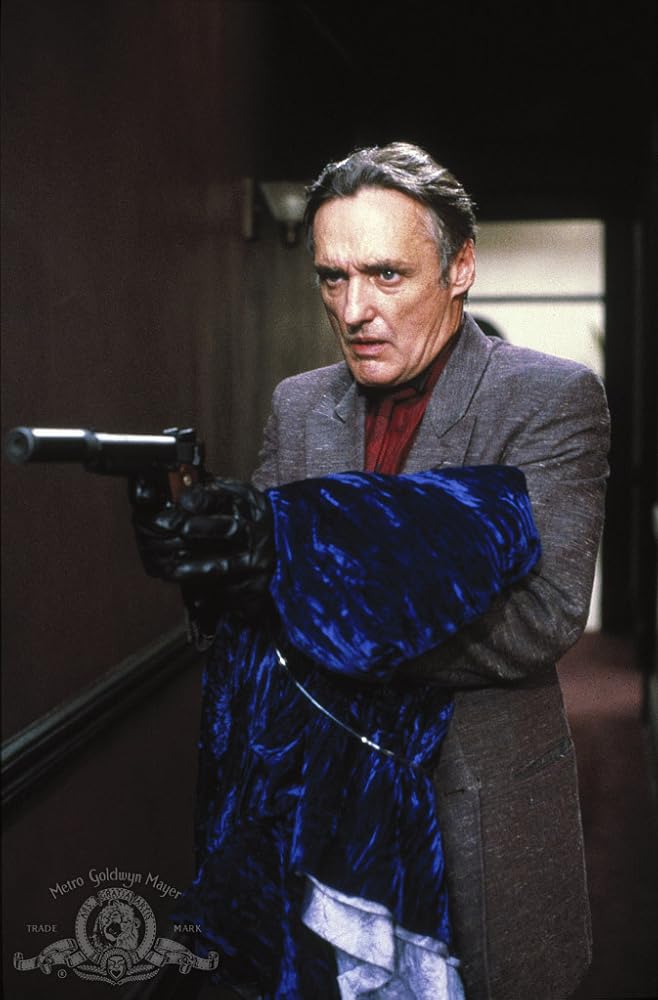
Blue Velvet (30 Year Anniversary Review)


Image result for blue velvet


Image result for blue velvet


In 1986, David Lynch brought us a sinister, psychological, disturbing, yet inviting masterpiece, Blue Velvet. The trademarks of filmmaking that Lynch is known for in his films include slow-motion with scenes of violence and strobe lights to heavy surrealism. Those trademarks are all used in Blue Velvet and they set the tone for the dark setting that his audience is about to experience. In the introduction, the background colors are faded, the music is unpleasant, and the film begins with a depressing scenario before the horror conflict is revealed. Lynch uses small clues in the beginning that lead us to what is about to be a nightmare that is hard to forget.

Blue Velvet takes place in a quiet town in Lumberton, North Carolina. Our main character (also the protagonist) is Jeffrey Beaumont (played by Kyle MacLachlan). Jeffrey is back from college due to his father having health issues and being hospitalized. Since his father is in this position, he needs to manage his father’s hardware store. It is not long before Jeffrey comes across a severed ear on the lawn of his family home. When he makes this discovery, he delivers the evidence to Detective Williams (played by George Dickerson). Jeffrey becomes friends with the Detective’s daughter Sandy (played by Laura Dern). They become very close as friends and are fascinated by what may have resulted in the severed ear. They believe it has to do with someone named Dorothy Vallens (played by Isabella Rossellini) who is linked to previous weird activity and some criminal behaviors in the area. This tempts Jeffrey to spy on Dorothy, but when he does, she catches Jeffrey which involves him in a dangerous situation with Dorothy.  In fact, Dorothy is a slave to Frank Booth (played by Dennis Hopper), a cruel, negative man who abuses his power to get whatever he desires out of Dorothy. With Jeffrey now in the middle of the situation, he feels he cannot leave this horrid scene, until it comes to an end.

Frank is just insane when he realizes that Jeffrey and Dorothy are friends. He gets more abusive, forces Jeffrey into situations he does not want to be part of, and worst of all, is even more crazy towards Dorothy. The sad part is Dorothy is stuck because Frank has connections to the police, so if she tries to get help, Frank can find out and get even more violent. Due to Jeffrey’s involvement, the good people in his life, including Sandy, her father and Dorothy’s family (that Frank has locked up somewhere) may fall-down with him.  Blue Velvet becomes a rollercoaster ride of evil, little to no time to get to safety, and more realizations that turn out to be scary and disastrous for Jeffrey. Once Frank knows Jeffrey is in the loop, he only makes matters worse.

Blue Velvet is still a sensation thirty years later, because of its audacious style of cinematography mixed with sinisterism. The more the evil power grows with Frank, the cinematography becomes darker. The mind of David Lynch still speaks to people with Blue Velvet and that is because the film haunted many fans with its setup, its conflict, and the twisted ideas that Lynch possessed which resulted in the making of Blue Velvet. I found the film hard to watch again, because I viewed it on the big screen late at night. Given the film has many violent nighttime scenes, leaving the cinema felt kind of strange, yet I was still blown away by the dark experience. Lynch is an idol of mine when it comes to giving his films deep meaning with his strange technological effects. Four stars for Blue Velvet (even after thirty years).

Treating cinema in many forms of art!