Tag Archives: Film reviews

Nightbitch Review


The title Nightbitch initially came across as harsh. I thought the meaning might mean point to  women showing their worst behavior after dark. Surprisingly, evening hours take on a whole new meaning in Nightbitch. Written and directed by Marielle Heller, an auteur force who has an eye for capturing bizarre conflicts with class. She did so with The Diary of a Teenage Girl, A Beautiful Day in the Neighborhood, and What the Constitution Means to Me. My respect for Heller comes from her persistence in taking tolerance to a breaking point. Nightbitch has classical moments that fall apart drastically and are incredibly enticing.

Amy Adams is Mother in Nightbitch. Mother is her character’s name, and she appears to experience bipolar feelings. During moments of rage, the film has narrations using Adam’s voice on her point-of-view. Adams plays an introverted mother that hates the label of stay-at-home mom. Nightbitch is a unique approach of showcasing hidden frustrations waiting to be unleashed. The perception of a boring life goes through silly and clever changes. Despite the many thoughts in the mind of Mother, she has one massive concern, i.e. she has signs of turning into a dog. Is Mother losing her mind due to weird hormones clouding her thinking process? If anything, transforming into a dog may mean there are many messes in her future. Nightbitch has plenty of unexpected clean-ups. Heller’s writing is effective in illustrating how irritations can be overcome by fictional and humanistic factors.

The one who tries to be there for Mother is Husband. Husband is his character’s name, and he is played by Scoot McNairy. He is the bread winner who struggles to understand his spouse. The bipolar episodes occur sporadically as Adams plays a witch of an unprecedented and surreal nature in Nightbitch! She even says, “I am Nightbitch!” and later, Husband tells her, “Happiness is a choice.” The many ups and downs in Nightbitch keep viewers focused on Adams and her performance is worthy of careful attention.

This is one of the most messy and unusual roles I have seen Adams in. She has the ability display a presence where she can be happy, but internally she is a ferocious dog wanting to come out of her doghouse. Her performance is a new and artistic look at a mid-life crisis scenario.  The added and unique component is the risk that it is likely she is turning into a dog. It is like female hormones raging but with dog fur added leading to a twisted werewolf theme in Nightbitch. It is compelling with unexpected scenes, various outbursts, and all kinds of weirdness. Somehow it manages to flow and be intriguing. However, it resorts back to over-dramatizations a bit too frequently. Does the dog transformation completely happen? Nightbitch goes through a transition to seriousness that is close to brilliant and the fulfillment of the plot centering around the transformation leads to significant gratification. While it is unexpected and just a bit off-track, overall, two-and-a-half out of four stars for Nightbitch.

Queer Review


This was on the road to feeling like a masterpiece, yet it fell short in its continuity. Luca Guadagnino is a director whose soul searches for meaning to wondrous extents in his previous successful projects, Call Me by Your Name (2017), Suspiria (2018), and Bones and All (2022). However, with Queer the artistic approaches are in disarray. Daniel Craig plays the lead and his performance is one that is revolutionary in its emotional depth, but the context of the film’s conflicts continues to grow in weird directions making Queer lack the component of brilliance.

The movie takes place in Mexico City in the 1950s. Craig plays William Lee, an introvert with a closeted sexual identity and an addiction to heroin. He spends a lot of his days in a café awaiting a connection, and many times he is caught-up with his buddy Joe Guidry (played by Jason Schwartzman). They spend their days being fascinated with booze and cigarettes. All of William’s priorities shift when he sets eyes on Eugene Allerton (played by Drew Starkey), a student that William begins to form a close relationship with. Once they begin to start up a friendship, Queer goes from feeling experimental to an over-the-top blur of a picture.

The film has three acts and an epilogue. This is a steady setup because it is one of those dark dramas where pacing will seem necessary. Guadagnino’s approach is to use the dynamic of their very separate personalities to create the tension of the story. William just desperately needs to feel connected and he cannot control his drug and alcohol abuse. Eugene is a student who is simply going with the flow, yet he knows how to set his boundaries. “Boundaries” is where Queer is lacking in the elements to create a phenomenon between the two.

In defining its poor quality, it is not one of a negative extent, it just tries too hard to the point where the moments feel out-of-focus. It goes from solitude to connection, and then to addictions in the picture. The resolution of the underlying conflicts from William’s issues leads the film into an odyssey. Much of the dramatizations are developed and expressed in a way that gives audiences the feeling that they too are tripping on some sort of drug. This quality is cinematic; however, it did not have me soldsince the title in and of itself is one where the expectation would be characters finding what their hearts want.

As I have said, Guadagnino knows how to form characterizations, and he desperately tries to with Queer, but the approach to be universal in nature (based on underlying conflicts) is where Queer displays a presentation of shame. The performances of Craig and Starkey are a knockout, but the setup of their paths and expectations of each other are in shambles. Its form of creating character components and comparisons that are supposed to bond these two keeps blindsiding its audience with lots of head-scratching. Queer is a portrait of a battle where sexuality, addiction, and finding the common ground lack thoroughness and understanding. It tries to seem universal and one-of-a-kind, however the measure in Queer does not get that high with accomplishing much astonishment. Two-out-out of four stars.

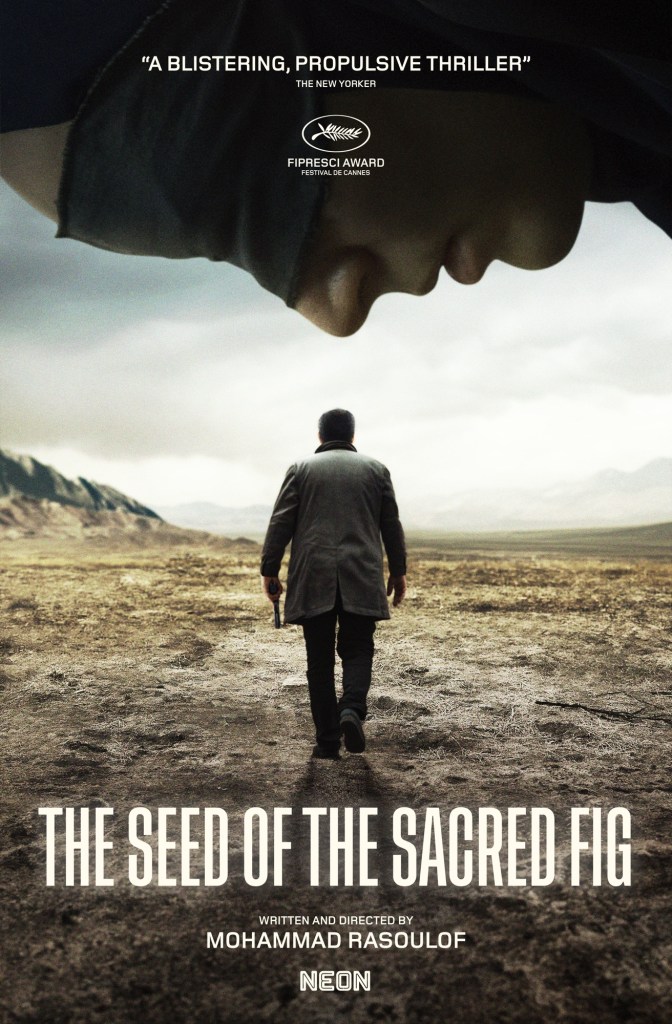
The Seed of the Sacred Fig Review


What is more detrimental than politics and culture? Is it expectations? Is it faith? Writer and director Mohammad Rasoulof painstakingly challenges these subjects. The Seed of the Sacred Fig is an anxiety-provoking journey of morals and sacrifices. Political unrest is deep below the surface while ethics are backwards. The Seed of the Sacred Fig diminishes the impact of its main character.

The story takes place in Tehran. The focus is on Iman (played by Missagh Zareh), a judge, husband, father, and liar. Iman hides political secrets for the safety of his job and his family. His wife is Najimeh (played by Soheila Golestani), and his daughters are Rezvan (played by Mahsa Rostami) and Sana (played by Setareh Maleki). The dynamic in the house is fueled by unrest thanks to the orders from Iman. His role involves bending the rules by creating propaganda in order to provide a home for his family.

The tension between politic and two worlds colliding is extraordinary. The conflicts in the authoritarian government are what fuel the frustration and lack of faith for Iman and his family. Their unsettling reality provides an intriguing structure. Iman knows they are in danger, but his career comes first, and his family knows it. His daughter’s rebelliousness causes The Seed of the Sacred Fig to go down a suspenseful rabbit hole. Once a gun goes missing, the clock of political corruption starts ticking.

With Iman’s gun missing, his job is on the line, and so is his family. The writing and continuity of the film made my head race with thoughts. Some people keep secrets to protect the ones they love, but other secrets open doors to darker alleys. The frustration of Iman’s daughters and his wife makes him question their respect and loyalty. They see the war in the media and know their dad is part of the chaos. The concepts of betrayal and sacrifice play off each other in The Seed of the Sacred Fig.

The film’s direction displays a portrait of tension and realism given the various events occurring which shift the characterizations. The Seed of the Sacred Fig does a stellar job of tying in the political factors to create suspense. With the many choices facing Iman, his world is rolled over as his expectations rotate. Who truly suffers?

The cultural components in the film form a connective and deceitful bond. The Seed of the Sacred Fig carries elementswhich reach their limits. With the family feeling brainwashed, the fight to find their voice delivers a breathtaking force. A powerful battle for change, honesty, and loyalty ensues. Iman’s fate is presented as non-negotiable, but his family may feel there is a way around that given their suffering. The Seed of the Sacred Fig is compelling, shocking, and politically empowering. It is one of the best thrillers of the year! Four out of four stars.